
Qianyi Aerospace aims to bypass terrestrial constraints by building a one-gigawatt orbital network, matching rival U.S. initiatives by Elon Musk and Jeff Bezos.
As U.S. technology groups race to move AI computing into orbit, a Chinese commercial space startup has unveiled plans for its own space-based computing network, highlighting growing competition over the infrastructure underpinning artificial intelligence.
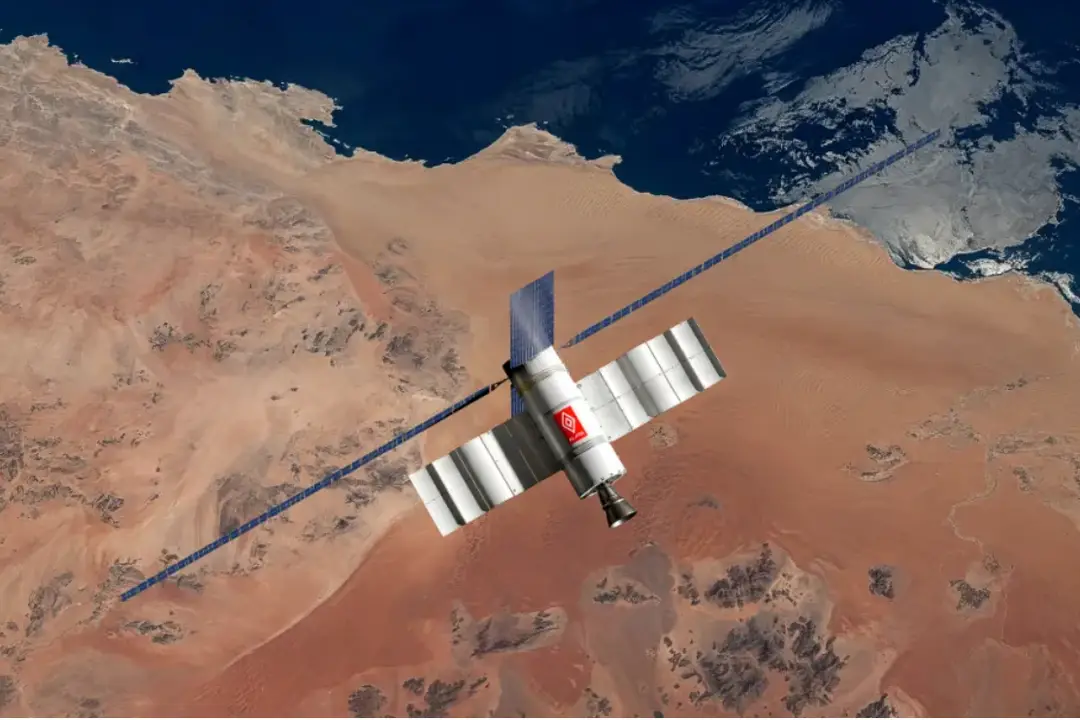
Beijing-based Qianyi Aerospace on June 29 unveiled Alaya, a proposed constellation of 12,500 computing satellites that would be launched by the company’s reusable rockets and linked through laser communications to create a distributed AI computing network. Named after a Buddhist term for the ultimate database, the mega-constellation represents China’s first integrated rocket-and-satellite project aimed at building a gigawatt-level artificial intelligence computing infrastructure in space.
The announcement follows a series of high-profile U.S. initiatives. In January, Elon Musk’s SpaceX applied to the Federal Communications Commission to develop Starmind, a constellation of as many as 1 million orbital data center satellites with a combined AI computing capacity of 100 gigawatts — equivalent to 20% of current U.S. electricity consumption. Amazon founder Jeff Bezos’s Blue Origin has separately proposed Project Sunrise to deploy 51,600 data center satellites, while Google has announced Project Suncatcher to test its Trillium AI chips in space. Nvidia has also introduced its Space-1 Vera Rubin space computing module for data-center-grade GPU workloads, and startup Starcloud has already demonstrated orbital GPU computing in collaboration with SpaceX.
The shift to space is driven by physical bottlenecks facing land-based data centers, which consume vast amounts of land, electricity, and water. According to a joint report by IDC and Inspur Information, in 2024 China’s intelligent computing capacity reached 725.3 exaflops, a measure of computing performance equivalent to one quintillion calculations per second, up 74.1% from a year earlier. Gartner forecasts that by the end of 2026 about 40% of enterprise applications will incorporate AI agents, which will exponentially increase inference workload demands.
The International Energy Agency estimates global data center electricity consumption will reach 945 terawatt-hours by 2030, exceeding Japan’s current annual electricity consumption. A study by the Tokyo-based United Nations University projects that cooling systems could consume 9.3 trillion litres of water annually by the end of the decade, equal to the basic living water needs of 1.3 billion people in sub-Saharan Africa for a year.
Lower launch costs
Advocates argue that low Earth orbit offers abundant solar energy, a naturally cold environment for heat dissipation and global coverage. The economics, however, depend largely on reducing launch costs.
Qianyi Aerospace, which operates under the brand name Nayuta Space, is developing the reusable Xuanniao-R rocket, which it says is designed to reduce launch costs to around 1,000 yuan ($147.5) per kilogram using aerodynamic deceleration and horizontal landing, although it didn’t provide a comparison with current launch costs. The company plans to launch the first Alaya demonstration satellite during Xuanniao-R’s maiden flight in the first half of 2027.
It says three initial launches will validate first-stage recovery before larger-scale deployment begins. The long-term goal is to place 12,500 satellites into dawn-dusk sun-synchronous orbits, where near-continuous sunlight would maximise power generation.
One of the project’s distinguishing features is an integrated rocket-satellite design. Instead of discarding the rocket’s second stage after launch, Qianyi Aerospace plans to convert it into the satellite itself, housing computing hardware inside the structure. The company says this would reduce weight, simplify manufacturing and increase the amount of onboard computing equipment.
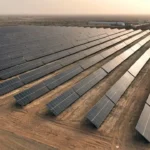
To solve the energy constraints that dictate satellite computing upper limits, Qianyi Aerospace partnered with Suzhou Sunrous New Energy to develop a 400-square-meter flexible perovskite solar array. The array would generate more than 120 kilowatts of electricity per satellite, supporting about 80 kilowatts of computing capacity. Collectively, the constellation would have around 1 gigawatt of generating capacity.
Orbital corridors are key
Qianyi Aerospace argues that controlling both launch vehicles and satellite manufacturing will allow it to deploy constellations more quickly than companies relying on third-party launch providers.
The company says this is particularly important because favourable orbital positions are limited. Dawn-dusk sun-synchronous orbits, which receive almost continuous sunlight, are among the most sought-after locations for space-based power generation.
The project is led by engineers from China’s state-owned space industry with experience in remote sensing, communications and synthetic aperture radar satellite programmes. The company says it is combining those capabilities with the faster development cycles of commercial aerospace.
While demonstrations by Nvidia and Starcloud suggest that operating GPUs in orbit is technically feasible, deploying thousands of computing satellites remains a far more ambitious challenge.
Qianyi Aerospace says the constellation could eventually support AI inference, high-performance scientific computing, climate modelling, remote sensing and distributed data storage, while also serving as a platform for future space-based solar power technologies.
Those ambitions remain some way from commercial reality. SpaceX spent nearly two decades developing reusable launch capabilities before proposing Starmind, while Qianyi Aerospace must still prove reusable rockets, integrated rocket-satellite architecture, large-scale constellation deployment and orbital computing management.
Even so, the company argues that competition over AI is shifting beyond chips and models to the underlying infrastructure needed to power future generations of artificial intelligence. Its Alaya project is China’s latest attempt to establish a presence in that emerging sector.
Source:
GeekPark