

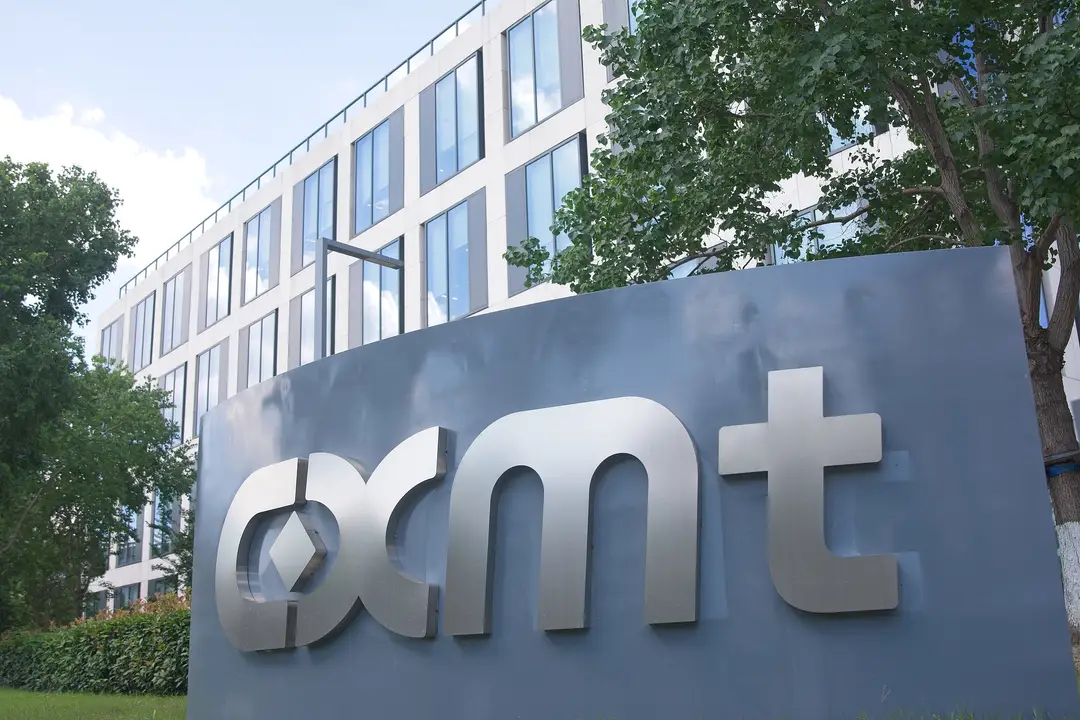
Leading DRAM maker’s IPO shines, but investors say long-term success depends on breaking into AI memory chips.
By Zhao Linan
China’s leading DRAM memory chipmaker, ChangXin Memory Technologies (CXMT) (688825.SH), surged 466% on its Shanghai STAR Market debut on July 27, becoming the most valuable company on the country’s A-share market with a market capitalization of 3.28 trillion yuan ($484 billion).
The company, which designs and manufactures dynamic random access memory (DRAM) chips, is China’s largest producer and the world’s fourth largest by production capacity. Its listing comes as Beijing continues to push semiconductor self-sufficiency amid tightening U.S. export controls on advanced chip technology.
Investors have embraced CXMT as China’s best chance to build a globally competitive memory chip champion. However, analysts warn that its ability to establish a foothold in high-bandwidth memory (HBM), a key component for artificial intelligence systems, will determine whether it can compete with the industry’s global leaders.
“Memory remains one of the biggest bottlenecks in the semiconductor supply chain, and the market is likely to remain supply constrained until 2028,” said Lin Jie, managing partner at Fujian-based private equity firm Tuofeng Fund Management. “CXMT has solved its survival problem, but whether it can commercialize HBM within the next 18 months will determine whether it becomes a new global force in memory.”
Riding China’s semiconductor tiger
Founded in 2016, CXMT operates three 12-inch DRAM wafer fabrication plants. According to market research firm Omdia, it ranks fourth globally in production capacity, shipments and revenue.
It intends to allocate 29.5 billion yuan of the IPO proceeds to upgrading memory wafer production lines, advancing DRAM technology and funding research into next-generation memory technologies.
The company’s financial performance has improved sharply over the past two years as memory prices recovered and production expanded.
CXMT posted a net loss attributable to shareholders of 16.34 billion yuan in 2023 and 7.15 billion yuan in 2024 before returning to profitability with 1.88 billion yuan in net income in 2025. In the first quarter of 2026 alone, net profit surged to 24.76 billion yuan, exceeding its annual earnings in any previous year.
The turnaround has been driven by rapid technological advances and expanding customer adoption. The company has progressed through four generations of manufacturing technology and now produces DDR4, DDR5, LPDDR4X and LPDDR5/5X memory chips.
Its customers include some of China’s biggest technology companies, including Alibaba Cloud, ByteDance, Tencent and Lenovo, along with mobile device manufacturers Xiaomi, Transsion, Honor, OPPO and vivo.
Lin said CXMT’s strengths lie in three areas: benefiting from China’s drive to replace imported chips, offering competitive pricing in mid-range products, and rapidly improving profitability.
He said domestic procurement of memory chips for Chinese smartphones and servers has been rising, giving CXMT a growing share of the domestic DDR5 and server memory markets while allowing it to compete on manufacturing yields and production costs.
HBM remains the biggest challenge
Despite its rapid progress, Lin said CXMT still faces three major obstacles.
The company remains two to three generations behind global leaders in manufacturing technology because it lacks access to extreme ultraviolet (EUV) lithography systems. Instead, it relies on more complex and costly deep ultraviolet (DUV) multi-patterning techniques, which have lower long-term scaling potential.
More importantly, CXMT has yet to establish a competitive position in HBM, the high-performance memory used alongside AI accelerators. Without HBM products, it is largely excluded from the fastest growing and most profitable segment of the memory market.
Lin also noted that CXMT remains focused almost entirely on DRAM and lacks a NAND flash memory business or a broader storage controller ecosystem, leaving it more exposed to cyclical downturns.
He said the company should prioritize four strategic initiatives: commercializing 12-layer HBM3E products within 18 months and validating them with Chinese AI chipmakers such as Huawei’s Ascend processors and Cambricon; signing long-term supply agreements with domestic cloud providers while memory prices remain high; expanding into NAND flash or Compute Express Link (CXL) controller chips to diversify its business; and increasing the share of domestically sourced manufacturing equipment from around 35% to more than 50% while seeking broader cross-licensing agreements for intellectual property.
Lin believes the current DRAM upcycle still has room to run. Samsung Electronics, SK Hynix and Micron Technology are directing 70% to 80% of new capacity toward HBM and DDR5 production, which has tightened supply of conventional DRAM chips. He estimated that inventories held by major manufacturers have fallen to between two and four weeks, well below the roughly 10-week level considered healthy.
He expects DRAM contract prices to continue rising through late 2026 and into 2027, although growth should moderate as downstream customers adjust their purchasing plans. By around 2028, however, new overseas production capacity and expanded Chinese output could push the market back into oversupply, with equity investors likely to anticipate that downturn six to 12 months in advance.
CXMT did not respond to requests for comment regarding the development of its HBM products.
Source:
National Business Daily