
By Da Cheung
China’s tech sector is witnessing a massive influx of capital into embodied AI — artificial intelligence systems that interact with the physical world through robotic bodies. In the first quarter of 2026 alone, the industry saw over 200 funding rounds and so far this year, analysts estimate more than 20 billion yuan ($2.76 billion) has been raised, according to Yuanzhou Robotics.
At the center of this frenzy is an unusual dynamic: Horizon Robotics (9660.HK), a leading supplier of computing solutions for autonomous driving, is systematically funding startups founded by its own departing executives.
An ecosystem built on talent drain
Horizon Robotics has shipped more than 10 million sets of smart driving systems, making it China’s largest in-car intelligent computing platform maker, according to Qbit AI. But in the robotics sector, it is increasingly known as “the West Point of embodied AI” due to the sheer number of executives leaving to start robotics ventures.
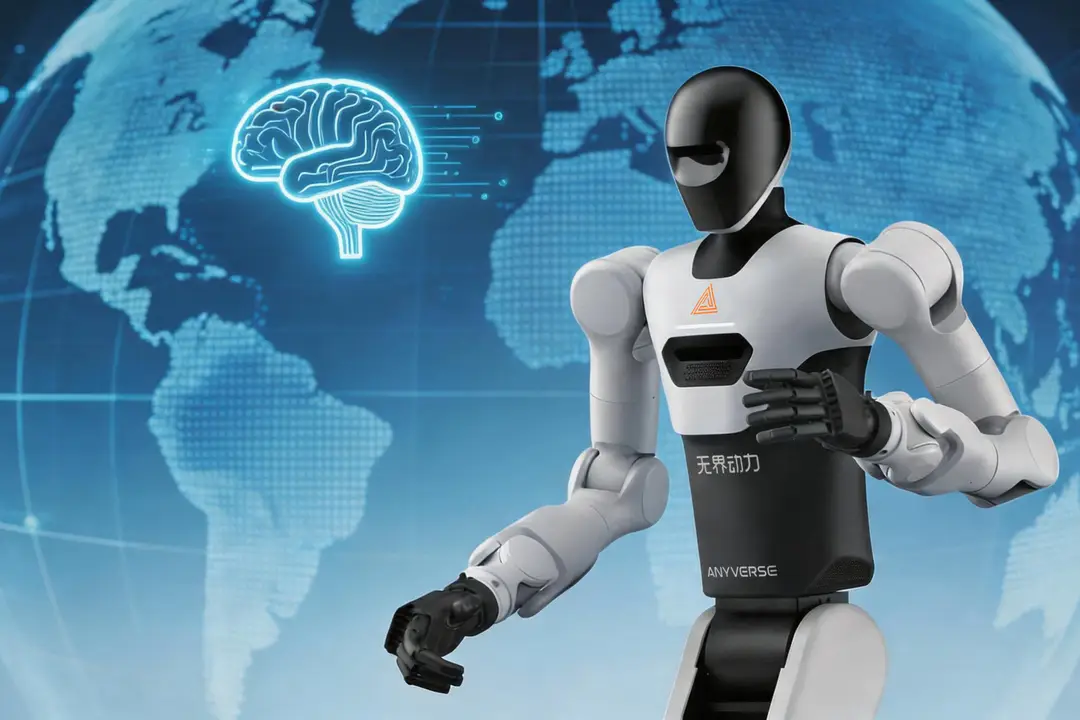
The company has spawned a wave of well-funded spinoffs in the sector. AnyVerse Dynamics, which focuses on developing a “general brain” for robotics, was launched in early 2025 by former vice president Zhang Yufeng. Vita Dynamics, which develops intelligent companion robots including dogs, was co-founded by former vice chairman Yu Yinan.
Rather than blocking these departures, Horizon Robotics has actively invested in them. Its strategy is to shift from being a developer of automotive chips to becoming a foundational infrastructure provider — often described by the company as the “Wintel for robots” — by establishing a massive ecosystem. The strategy also involves D-Robotics, a subsidiary spun off in 2024. Its computing chips and software shipments surged 180% in 2025 and it recently integrated its technology into Insta360’s Antigravity A1 drone.
Meanwhile, Horizon continues to develop its own foundational AI models, HoloMotion and HoloBrain, aiming to standardize the highly fragmented robotics development process.
However, this incubator approach is a double-edged sword. To counter the severe drain of core technical staff attracted by the robotics startup boom, Horizon announced in April that it had repurchased some 5.57 million shares at a cost of HK$39 million ($5 million) “to provide a source of shares for the implementation of future employee stock equity incentives and talent incentive plans.” It subsequently granted 59.2 million B-class shares (approximately 59 million shares worth roughly HK$414 million at current prices) to 1,073 employees.
Diverging technical paths
The startups emerging from this talent migration are pushing the boundaries of AI architectures. AnyVerse Dynamics, which announced the completion of its latest angel funding round on April 27 that pushed its cumulative early-stage financing to over $200 million, is making a contrarian technical bet.
Currently, much of the robotics industry relies on Vision-Language-Action (VLA) models, which translate visual and verbal instructions directly into robotic movements. However, AnyVerse Dynamics argues this mainstream approach leads to information degradation during the translation process. Instead, the company says it relies on a “latent space world model,” led by its co-founder and CTO who has over 15 years of experience in the field.
In simple terms, a world model allows the AI to inherently understand physics, spatial logic, and cause-and-effect relationships in a unified space, rather than just matching pictures to actions. The company claims this allows its robots to continuously learn through trial and error in dynamic environments, though this highly complex approach is still a minority pursuit in the industry.
Moving from labs to factory floors
Despite the theoretical nature of its core technology, AnyVerse Dynamics claims to be rapidly commercializing its products. Alongside its recent funding, the startup signed a 500 million yuan contract with one of its investors, Envision Technology Group, AI Tech Review reports. Billed as the largest overseas commercial contract for a Chinese embodied AI firm to date, the deal aims to deploy robots in complex industrial environments like renewable energy plants and AI data centers across Europe and Asia.
The company is also integrating its systems into traditional manufacturing. It has formed strategic partnerships with global automotive suppliers, including ZF Lifetec and Aumovio — a 2025 spin-off from Continental AG. According to a statement released by the company, the goal of the Aumovio partnership is to put its robots into highly precise assembly lines, where the demanding factory environment will provide valuable real-world data to further train its AI models.
The startup also claims to have partnered with a well-known international coffee chain to deploy robots in open service environments, although it did not disclose the brand name.
As tech giants and nimble startups alike race to give AI a physical form, the willingness of established players like Horizon Robotics to fund potential competitors suggests the industry is prioritizing ecosystem expansion over immediate consolidation. Whether this will lead to a new standard in robotic intelligence or simply scatter talent across too many fragmented projects remains to be seen.
Sources:
- 独家|拿下5亿元海外订单,无界动力完成天使++轮融资,天使轮累计融资超2亿美元
- 超2亿融资+5亿订单:具身智能新王诞生
- 普华资本投资「无界动力」超2亿元天使+轮融资|普华Portfolio
- 无界动力与全球汽车电子科技公司欧摩威集团AUMOVIO达成战略合作
- 5亿热钱砸向具身智能新玩家!地平线VP创业,余凯又投了
- 地平线,中国具身智能的“黄埔军校”
- 从智能驾驶到机器人:地平线的技术迁徙与生态扩张