
A record-breaking financing round for one of China’s premier generative AI startups masks a complex restructuring to shield its parent from soaring infrastructure expenses.
By Da Cheung
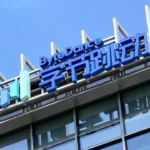
Kuaishou Technology (1024.HK) has announced a complex capital restructuring for its artificial intelligence video generation unit, Kling AI, valuing the loss-making subsidiary at $18 billion. The arrangement locks in a total funding ceiling of up to 20.45 billion yuan (approximately $3 billion). However, rather than representing a straightforward venture capital cash injection to challenge Western startups like Runway or Synthesia, the deal underscores the crushing cost of computational infrastructure and a stark valuation inversion with its parent company.
Under the terms announced on July 2, Kling AI will receive an initial capital increase of 13.82 billion yuan, with fifteen additional investors expanding the total funding pool. In exchange, external investors will take a maximum 16.67% stake, diluting Kuaishou’s ownership to 68.33%. Because Kuaishou retains a controlling interest, Kling AI’s financials will remain consolidated, meaning its substantial operational losses will continue to be absorbed by the parent group’s balance sheet.
A deep balance sheet hole
The restructuring comes amid severe financial strain at the AI unit. Kling AI generated approximately 1.1 billion yuan in revenue in 2025, but its net loss widened significantly to 1.9 billion yuan from 500 million yuan in 2024. By the end of 2025 held total assets of 244 million yuan against total liabilities of 253 million yuan, resulting in a negative net asset value of 9 million yuan.
The $18 billion post-money valuation exposes a glaring valuation inversion within Kuaishou’s corporate structure. The figure represents roughly 75% to 78% of Kuaishou’s own total market capitalization on the Hong Kong Stock Exchange. While Kuaishou’s mature short-video platform faces slowing growth and trades at a price-to-sales multiple of just 1.5 times, its high-growth AI business commands a massive premium. If Kling AI remained embedded within the parent company, its valuation would be heavily diluted by Kuaishou’s lower market multiple.
The funding round attracted an unusual syndicate of over 30 institutional investors, including state-backed entities and Kuaishou’s direct internet rivals. There are symbolic minority investments from Kuaishou’s main industry competitors including Tencent (0700.HK), which holds a combined 1.12% stake, Alibaba’s (9988.HK) Alibaba Cloud which holds 0.87%, and Baidu (9888.HK) with 0.22%. They are joined by private equity firms such as CPE, CITIC Goldstone, and HSG (formerly known as Sequoia China), alongside Chinese government guidance funds—state-backed investment vehicles designed to bankroll strategic domestic industries—such as Shanghai Guofang and the Beijing Artificial Intelligence Industry Investment Fund.
Hard exit conditions
This heavily subsidized capital structure comes with stringent exit conditions that contrast sharply with Western venture funding. External investors have been granted explicit equity buyback rights. If Kling AI fails to complete an IPO by Oct. 30, 2031, or fails to finalize its internal asset restructuring and regulatory algorithm filings on time, investors can demand that the company buy back their shares at the original principal plus an 8% annual simple interest yield.
To prepare for this timeline, a comprehensive asset reorganization has been set in motion. Kuaishou will spend the next nine months consolidating its scattered research, development, and operational subsidiaries into Kling AI, while stripping out non-AI video businesses. The company must also secure full domestic algorithm registrations, value-added telecommunications licenses, and overseas investment approvals.
To maintain operational agility under this pressure, Kling AI is adopting a dual-class share structure common among technology startups. Chief executive Gai Kun will receive a 3% equity stake under a new 15% employee incentive pool but will wield 10 times weighted voting rights, capped at 4% of total stock. Chairman Cheng Yixiao received a 1% stake at zero cost with a three-year lock-up and six-year clawback provision.
Intense domestic rivalry
Operationally, Kling AI has shown rapid growth. Its annualized recurring revenue run rate reached $500 million in March 2026, up from an annualized $240 million in December 2025. In the first quarter of 2026, revenue exceeded 650 million yuan, a year-on-year increase of over 300%. Global users surpassed 100 million by June 2026, covering 224 countries and regions, while the number of corporate clients grew to nearly 50,000. Over its two-year existence, the model has gone through 26 iterations, yielding 122 published papers and 21 open-source projects.
Despite these metrics, Kling AI faces intense competition in its domestic market, primarily from ByteDance‘s Seedance. Backed by the massive traffic ecosystems of Douyin—the Chinese counterpart to TikTok—and the CapCut video editing suite, Seedance commands an estimated $2 billion in annualized recurring revenue and controls 80% of China’s domestic market. In contrast, Kuaishou remains the second-largest domestic short-video platform with 380 million monthly active users, trailing Douyin’s 730 million users.
On the global stage, Kling AI must contend with Google’s Veo model, which benefits from the tech giant’s vast proprietary YouTube video data and top-tier computing infrastructure.
Industry practitioners note that Chinese models are highly competitive. Jiuzi, the owner of a video production company in Shanghai, told The Insight Asia that Seedance and Kling AI are currently the two best AI video generators in the world. He noted that while Seedance offers better video quality, Kling AI is much more accessible. Kling AI usually generates a video clip within a few minutes, but Seedance often keeps users waiting in a queue for much longer.
While Kling AI aims at commercial sectors through both consumer subscriptions and corporate application programming interfaces, analysts warn that the immense cash burn of AI video models will squeeze smaller startups, predicting a wave of industry consolidation. The deal includes a five-year non-compete clause preventing Kuaishou from launching rival video models, locking its corporate focus entirely onto Kling AI’s survival as global text-to-video market values are projected to climb from $1.23 billion in 2025 to over $21.61 billion by 2034.
By bringing in outside capital and government guidance funds, Kuaishou has found a way to absorb the immediate, asset-heavy computing expenses of AI video generation. While it shields its own core public balance sheet from unmitigated cash burn, it retains absolute operational and administrative leverage over its most critical technological asset.
Sources: