By Da Cheung
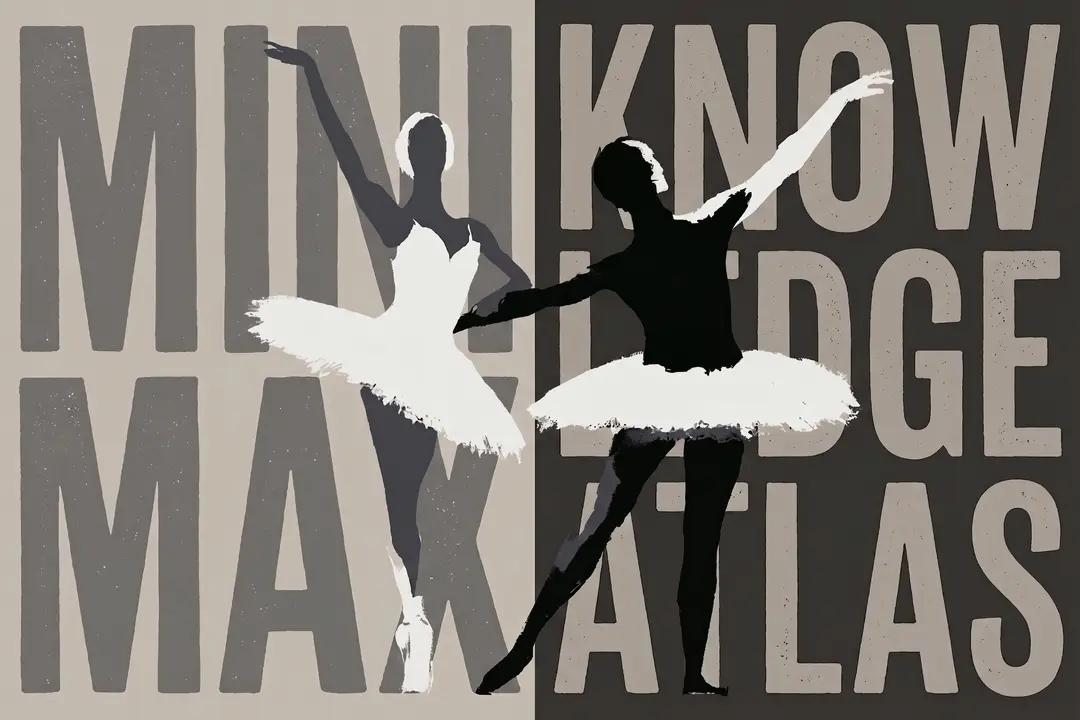
Six months ago, they were known as the “Two Heroes” of China’s generative AI scene, arriving on the Hong Kong Stock Exchange with a bang. Knowledge Atlas Technology (Zhipu AI) (2513.HK), which listed on Jan. 8, saw its share price rocket almost 14-fold from its HK$116.20 ($14.8) IPO price to a peak of HK$1,618 by the end of May. Its Shanghai-based rival MiniMax (0100.HK), which went public the following day, surged from an IPO price of HK$165 to HK$1,238 in mid-March, an almost 10-fold increase, although by the end of May it had dropped back to HK$840.
But the euphoria that drove those extraordinary gains is now meeting the cold wall of market mechanics. In July, millions of shares in both companies will be released into the market due to the expiration of what’s known as a lockup period — a pre-determined timeframe during which early investors and company insiders are prohibited from selling their shares. The “real” float of shares available to the public was under 6% of total equity when the companies listed, a scarcity that made it easy for small amounts of capital to drive prices to dizzying heights.
Now, as the floodgates open, the market is bracing for a potential exodus of early backers looking to cash out. On June 10, Knowledge Atlas’s stock plummeted nearly 8% while MiniMax, whose shares have been falling steadily since their mid-March peak, saw a more modest 2.7% drop.
Two paths to the same rainbow
While they are often grouped together, Knowledge Atlas and MiniMax represent two distinct philosophies in the race for Artificial General Intelligence (AGI) — the point at which AI can perform any intellectual task a human can.
Knowledge Atlas, founded in 2019 by Zhang Peng and Tang Jie, is the “academic” of the pair. Zhang, who spent two decades at Tsinghua University, positions Knowledge Atlas as the “AGI Goalkeeper,” focusing on the Model-as-a-Service (MaaS) business model. MaaS is essentially a rental system where businesses pay to access Knowledge Atlas’s powerful underlying AI via an API (Application Programming Interface), a digital bridge that allows different software programs to talk to each other. Instead of chasing viral consumer apps, Knowledge Atlas focuses on heavy-duty enterprise clients. By March 2026, the company reported over 4 million registered users and enterprises across 218 countries and regions.
MiniMax, founded in 2022 by Yan Junjie, a former vice president at the computer vision giant SenseTime, has taken the opposite approach. At the time, Yan argued that AI was “too far from the average person.” Consequently, MiniMax focuses on consumer-facing products like “Glow” and “Hailuo AI” that emphasize user experience and viral social interaction. This strategy has paid off in raw numbers: by the end of 2025, MiniMax products had accumulated 236 million users globally, with 70% of its revenue generated outside China.
The high cost of MaaS
Despite the stratospheric valuations, the duo’s underlying financials reveal a grueling battle of attrition. Knowledge Atlas’s first annual report as a public company, released in March, showed that the business is bleeding while running. Although total revenue grew 131.9% to 724 million yuan ($107 million) in 2025, its R&D expenses of 3.18 billion yuan sent its adjusted net loss surging 29.1% to 3.182 billion yuan.
In simple terms, for every 1 yuan Knowledge Atlas brought in, it spent more than 4 yuan on R&D. Most of this went toward talent and “compute”—the raw processing power required to train and run massive AI models. While Knowledge Atlas’s gross profit rose 68.7% and its gross profit margin reached a healthy 41%, far outpacing MiniMax’s 25.4%, the sheer scale of its losses highlights the capital-intensive nature of the industry.
The challenge for these companies is that the U.S. model of AI monetization, especially the model of Anthropic — where users and developers pay a premium for high-performance models — is difficult to replicate in China. Domestic price wars have driven the cost of tokens, the units used to process AI prompts and generate responses, down to near-zero levels. In China, MaaS has become a volume game for massive government and corporate contracts, rather than a thriving ecosystem of independent developers.
Seeking a ‘premium’ refuge
As the Hong Kong lockup expirations loom, the companies are already eyeing an exit — or rather, a second entry. In the last two weeks, both Knowledge Atlas and MiniMax have announced plans to list in Shanghai on the tech-heavy STAR Market.
Knowledge Atlas intends to raise up to 15 billion yuan in its A-share listing, more than double the amount it raised in Hong Kong. This is a strategic move. According to analyst Lei Jianping, mainland Chinese markets often grant “hard tech” companies a valuation premium of 30% to 40% over their Hong Kong share price. For these startups, listing in Shanghai is not just about more money; it is about finding a more stable, government-aligned investor base as they navigate the capital race of AI development.
As Knowledge Atlas and MiniMax prepare for more shares to hit the open market in Hong Kong, they are no longer just fighting for “intelligence” — they are fighting to maintain their valuations amid the brutal volatility of public trading.
Sources
