

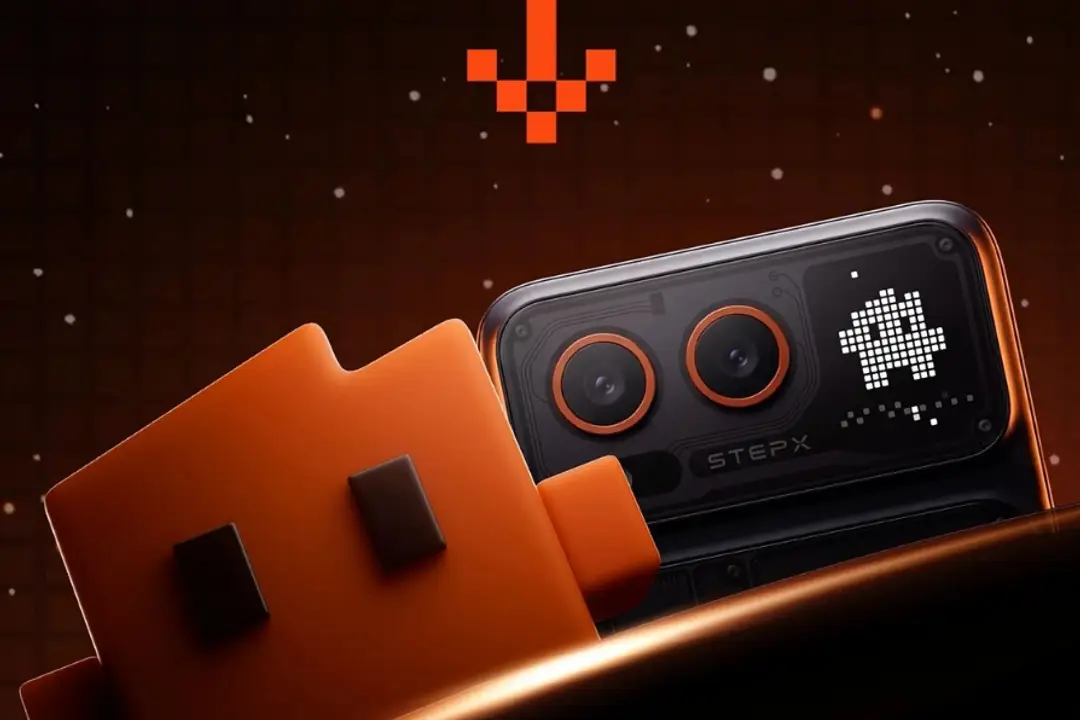
Facing shrinking software margins, the Tencent-backed company is building “agent-native” smartphones to bypass traditional apps and secure new revenue streams.
By Brent Li
The artificial intelligence industry is facing a harsh reality in the summer of 2026: selling software is becoming a race to the bottom. As brutal price wars drive down the cost of AI application programming interfaces (APIs) — the software intermediaries that allow outside developers to plug directly into advanced machine-learning models — startups are desperately searching for new ways to make money.
For some, the answer is a massive gamble: building their own smartphones.
On July 13, Chinese AI startup StepFun announced its entry into the highly competitive and shrinking smartphone market with the STEPX Neo AI phone. The company claims it is building an “agent-native” operating system designed from the ground up for AI and also claims that the new hardware will be the “word’s first native LLM agentic phone.”
While today’s smartphones require you to act as the project manager—manually opening separate apps to compare flights, check calendars, and book tickets—an agent-native phone does the work for you. It understands a single conversational request and orchestrates those apps in the background to deliver the finished result
StepFun, which recently raised over 5 billion yuan ($689 million), did not showcase a physical device at its launch event, revealing only a partial image and video of the phone. The company, whose backers include tech giant Tencent (0700.HK), says the hardware will be unveiled at the World AI Conference 2026 on July 17, the same day as ByteDance and ZTE (000063.SH) (0763.HK) are scheduled to debut the second generation of the Doubao AI Phone.
The hardware gamble for AI monetization
StepFun’s pivot highlights a broader industry consensus: to fully monetize AI, companies need to control the hardware gateway. While tech firms have experimented with AI glasses, earbuds, and rings, smartphones remain the ultimate entry point due to their screens, portability, and capacity for real-time interaction.
Yin Qi, chairman of StepFun, argued at the launch that existing operating systems treat AI as a mere guest. In traditional systems, AI is confined to a chatbot app or a voice assistant that still relies on the user to navigate the phone. StepFun’s proposed Step Agentic-native OS (Step AOS) aims to make AI the native controller, breaking down the walls between different apps to allow the AI to seamlessly book flights, order food, or manage schedules in the background.
Entering the smartphone market is a perilous move. Global smartphone shipments have been declining, and the market is dominated by entrenched giants. StepFun says it has assembled a hardware team of over 500 people and is backed by major supply chain players, including Qualcomm, the world’s dominant maker of high-end smartphone chips. Yet, the company admits it does not expect to profit from hardware sales or traditional pre-installed app advertisements in the first phase.
Clashing with the ad-based internet
The transition from app-centric phones to AI-agent phones introduces a fundamental conflict with the traditional internet’s business model.
If an AI agent can compare prices, fill out forms, and complete purchases in the background, users no longer need to open apps or look at screen-based advertisements. This threatens the “attention economy” that sustains most consumer tech platforms.
This conflict has already derailed early AI phone attempts. Last year, Chinese tech giant ByteDance partnered with ZTE to launch the Doubao AI phone. While early testers were shocked by the AI’s ability to control the device on their behalf, the phone was quickly blocked by major app developers, rendering its AI features largely useless.
StepFun claims to have learned from this cautionary tale. The company says it has already secured partnerships with 18 major apps — including Alibaba’s Alipay, Baidu, and Meituan — to support its system, though notably missing is Tencent’s WeChat. It’s unclear how StepFun convinced these platforms to allow AI agents to bypass their traditional interfaces, or how the revenue conflict will ultimately be resolved.
A global race to rebuild the operating system
The push to rebuild operating systems around AI is not limited to Chinese startups. Global tech giants are aggressively retooling their platforms to ensure they do not lose control of the user gateway.
Google is arguably leading the charge. At its Android Show in May, the company outlined plans to transition Android 17 into an “Intelligence System” powered by its Gemini AI. Google demonstrated features where the AI could execute complex, multi-step tasks, such as booking a vacation based on a photo of a travel brochure.
Apple, meanwhile, is fighting to maintain its grip on the system-level entry point. At its Worldwide Developers Conference in June, the iPhone designer introduced a rebuilt Siri AI, utilizing Google’s Gemini models for backend processing while keeping personal data on-device or in private cloud servers. Apple’s goal is to ensure users rely on Siri to navigate their phones rather than defaulting to third-party apps like ChatGPT. However, market reaction was lukewarm, with investors concerned that Apple is merely playing catch-up. Furthermore, regulatory hurdles have delayed Siri AI’s rollout in the European Union and China.
In the Chinese market, challengers are attempting to build AI-first systems on top of Android’s open-source foundation. While startups like StepFun make bold claims, established players are moving more cautiously. Xiaomi (1810.HK) possesses some of the strongest proprietary AI models among phone brands but has yet to make a radical shift in its hardware interface. Huawei still remains focused on adapting traditional apps to its proprietary HarmonyOS and hasn’t made any big moves yet.
The industry is flooded with aggressive marketing. For instance, some Chinese AI executives have been claiming that tiny, edge-based AI models, which run directly on a physical device rather than on the cloud, can match the intelligence of massive cloud models like OpenAI‘s GPT-4o — a claim that industry experts flag as highly exaggerated for broad, real-world applications.
The smartphone industry may be approaching an “Apple vs. Nokia” paradigm shift. However, it is too early to tell who will dominate the AI phone era. The winner could be an established giant, an ambitious startup like StepFun, or possibly a player that has yet to enter the arena.
Feature photo: Concept illustration of STEPX, by StepFun.
Sources