
The Shenzhen-based company has become the latest Tsinghua University-founded technology company to go public as China’s elite engineering talent continues to produce a growing pipeline of semiconductor and AI listings.
By Lu Zhigao
China’s Basic Semiconductor (9971.HK) has made a strong debut on the Hong Kong Stock Exchange, becoming the latest high-profile listing from the country’s growing network of Tsinghua University entrepreneurs.
The Shenzhen-based silicon carbide (SiC) power semiconductor specialist began trading on July 8. Its shares, which were priced at HK$31.62, at the top of their expected range, rose 5.1% to close at HK$34.9, giving the company a market capitalisation of more than HK$11 billion ($1.4 billion).
The listing underscores investor confidence in the fast-growing market for next-generation power devices and highlights a broader trend. More than 10 companies founded by Tsinghua University alumni have gone public so far this year, while another group of high-profile technology firms is preparing for IPOs.
From top student to semiconductor entrepreneur
Basic Semiconductor’s story begins with founder Wang Zhihan, who entered Tsinghua University’s Department of Electrical Engineering in 1999 after achieving full marks in physics in Guangdong’s university entrance examination. He later earned a PhD in power electronics from the University of Cambridge.
Although Wang considered entrepreneurship while studying, he first stayed at Cambridge as a postdoctoral researcher before returning to China to commercialise power semiconductor technology. In 2009, he founded Shenzhen technology company Qingtongjian (Bronze Sword), at a time when China’s power semiconductor market was dominated by overseas suppliers.
The company spent several years developing and mass-producing one of China’s first high-power insulated gate bipolar transistor (IGBT) driver chips with independent intellectual property. These products gradually replaced imported components in sectors including photovoltaic power generation, smart grids and new energy vehicles.
Betting early on silicon carbide
As the semiconductor industry shifted towards silicon carbide, Wang recognised the material’s potential to replace conventional silicon in many high-power applications.
Silicon carbide offers significant advantages for devices operating under high temperatures, high voltages and large currents, making it particularly attractive for electric vehicles, renewable energy systems and industrial electronics.
In 2016, Qingtongjian and Swedish silicon carbide specialist Ascatron AB jointly set up Basic Semiconductor in Shenzhen to focus exclusively on SiC power devices. Two years later, Ascatron transferred its entire shareholding, leaving the Chinese business to continue independently.
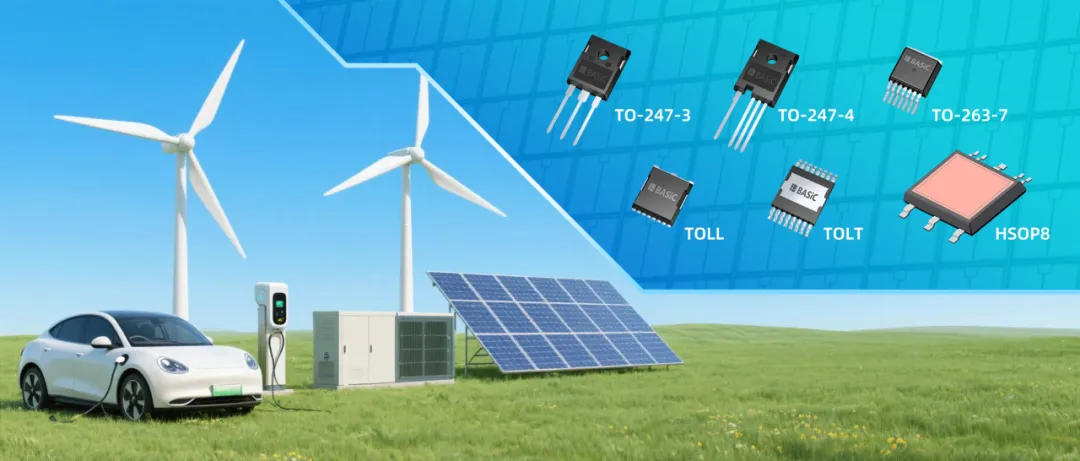
Today, Basic Semiconductor develops automotive-grade and industrial-grade SiC power modules, discrete SiC devices and gate driver products used across electric vehicles, industrial automation and renewable energy applications.
The company says its products have been designed into more than 80 vehicle models from over 20 automotive manufacturers, giving it a growing presence in one of the world’s fastest-expanding semiconductor markets.
Revenue increased from 221 million yuan ($32.5 million) in 2023 to 311 million yuan in 2025 as customer adoption accelerated.
Heavy R&D spending keeps profits elusive
Like many advanced semiconductor companies, Basic Semiconductor remains loss-making as it continues investing heavily in research and development.
According to its IPO prospectus, the company recorded net losses of approximately 342 million yuan in 2023, 237 million yuan in 2024 and 335 million yuan in 2025. Over the same three-year period, it invested more than 275 million yuan in research and development, reflecting the substantial costs associated with developing cutting-edge semiconductor technologies.
Management believes continued growth in the global silicon carbide market will provide significant opportunities following the company’s public listing.
No shortage of investors
Basic Semiconductor has attracted support from a wide range of Chinese strategic and financial investors throughout its development. The company completed its angel financing less than a year after its establishment before raising successive Series A, B, C and D funding rounds.
Among the investors were Leaguer Capital, Bosch Venture Capital, GAC Capital, China Merchants Capital International, Wingtech Technology, Shenzhen Investment Holdings and several government-backed industrial funds.
The capital enabled the company to expand manufacturing capacity in Wuxi and Shenzhen, increase automotive product shipments and strengthen its testing capabilities for power semiconductor gate drivers.
In 2025, Basic Semiconductor completed a Series D financing round that valued the business at more than 5.1 billion yuan.
The Tsinghua incubator
Basic Semiconductor is part of a broader wave of successful technology companies founded by Tsinghua University graduates.
According to CVSource data, 12 of the 122 companies that listed on mainland Chinese or Hong Kong stock markets during the first five months of 2026 were founded by Tsinghua alumni, more than any other Chinese university.
Companies that have already listed include Z.AI (Zhipu AI), formerly known as Knowledge Atlas Technology, GigaDevice, OmniVision Group, Aixin Technology, Yunyinggu Technology, Wingtech and Huaqin Technology.
Several other Tsinghua-linked companies are also advancing towards public listings, including ChangXin Memory Technologies (CXMT), QingTao Energy, Enflame Technology, Moonshot AI, Infinigence AI, ShengShu Technology, Galbot and Xinghaitu.
With China’s semiconductor and artificial intelligence industries continuing to attract investment, the pipeline of Tsinghua-incubated technology companies entering the public markets appears set to continue.
Source:
ChinaVenture