

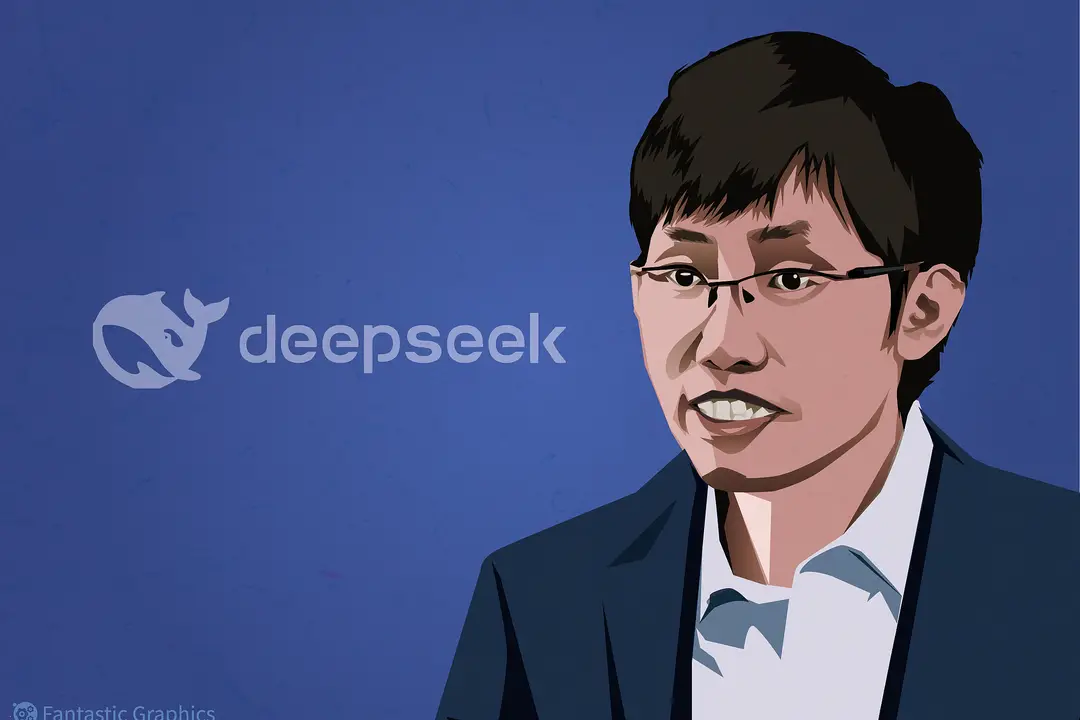
Chinese AI startup DeepSeek is preparing for a mainland IPO while seeking another 10 billion yuan in funding, underscoring investor confidence in its rapid expansion plans.
By Chen Luyao
DeepSeek is preparing for an IPO in mainland China and aims to list in 2027 after launching a new fundraising round that could value the artificial intelligence startup at about 480 billion yuan ($71 billion) before the offering, according to people familiar with the matter.
The Hangzhou-based company could submit its IPO application as early as this year. Before going public, DeepSeek is said to be seeking to raise at least 10 billion yuan in a second external financing round.
The valuation would place DeepSeek among China’s most valuable AI startups, although still below rival Z.AI (Zhipu AI) (2513.HK), formerly known as Knowledge Atlas Technology, which has a market capitalization of more than HK$810 billion ($104 billion), but well ahead of another competitor, MiniMax (0100.HK), which has a market value of HK$82.9 billion.
If completed, the IPO would mark an unusually rapid progression from raising outside capital to pursuing a public listing. DeepSeek completed its first external fundraising only in June, when it raised about $7.5 billion at a post-money valuation of $52 billion.
Founder could see fortune surge
Investors included Tencent, CATL, JD.com, NetEase and IDG Capital, but founder Liang Wenfeng was the largest single participant in the round, reportedly contributing about $3 billion himself.
That has sent his personal wealth soaring. According to the Bloomberg Billionaires Index, Liang still holds about 78% of DeepSeek following the financing. That would value his stake at around $36 billion, a fortune that ranks 63rd globally and eighth in China, having grown by $19.3bn this year.
He has already overtaken the co-founders of OpenAI and Anthropic to become the wealthiest founder in the global AI industry.
If the next fundraising is completed at the reported valuation and Liang does not participate, his stake would fall modestly to about 76.5%, but its value would rise to roughly $55.4 billion.
That would make Liang the third-richest person in China, behind only ByteDance founder Zhang Yiming and bottled water billionaire Zhong Shanshan.
Capital aimed at infrastructure
The aggressive fundraising has prompted speculation that investors or founders may be seeking liquidity, but Liang has reassured potential backers that DeepSeek remains focused on developing open-source AI models and pursuing artificial general intelligence (AGI), rather than prioritizing near-term monetization.
People familiar with the matter said the intense fundraising drive is primarily aimed at accelerating the expansion of DeepSeek’s computing infrastructure. The company is also understood to be working on developing its own AI inference chips.
With capital and direction in place, the pressing constraint now is talent. Over the past month, DeepSeek has been hiring aggressively.
According to job postings on DeepSeek’s website, the company is hiring engineers to help design what it described as a planned gigawatt-scale data center, covering everything from site selection and architectural design to construction planning.
A newly established internal team known as Harness is also recruiting researchers, engineers and product managers for both full-time and internship positions. The team’s head, Cui Tianyi, wrote in an online recruitment post that the department remained significantly understaffed and that he was interviewing candidates daily.
Competitive pressure builds
DeepSeek’s target listing date of 2027 is not arbitrary but appears strategically chosen.
That year is widely expected to mark the breakout moment for AI agents — digital employees capable of autonomously executing complex tasks. With further improvements in foundational model capabilities, AI is set to penetrate core business processes across industries, from autonomous driving and embodied intelligence to medical diagnosis and financial research.
By going public at that juncture, DeepSeek appears to be positioning itself to complete its capital accumulation on the eve of the industry’s take-off and cement its leadership.
For other domestic large-model start-ups, however, this amounts to a stress test. Just recently, the industry was debating a survival crisis among AI ventures. Data show that China’s AI large-model sector posted aggregate losses of about Rmb18bn in 2025.
As investment euphoria fades, primary-market funding has become harder to secure, while the cost of training and inference remains prohibitive. Without sustained capital injections, many companies may struggle to survive the winter.
DeepSeek’s IPO preparations will intensify this winner-takes-most dynamic. A successful listing would give it a steady flow of capital to acquire computing power, recruit talent and expand its ecosystem. Rivals still scrabbling for primary-market funding would face significant valuation overhang risks.
Over the past two decades, China’s internet landscape has produced BAT (Baidu, Alibaba, Tencent) and TMD (Toutiao, Meituan, Didi). But in hard technology — particularly in foundational software — the country has lacked a giant on the scale of Microsoft or Oracle.
DeepSeek offers a glimpse of that possibility. It does not rely on demographic dividends or traffic monetization, but has earned international respect through pure technological innovation and engineering capability.
Source:
Yijian Finance
investorscn.com