
By Brent Li
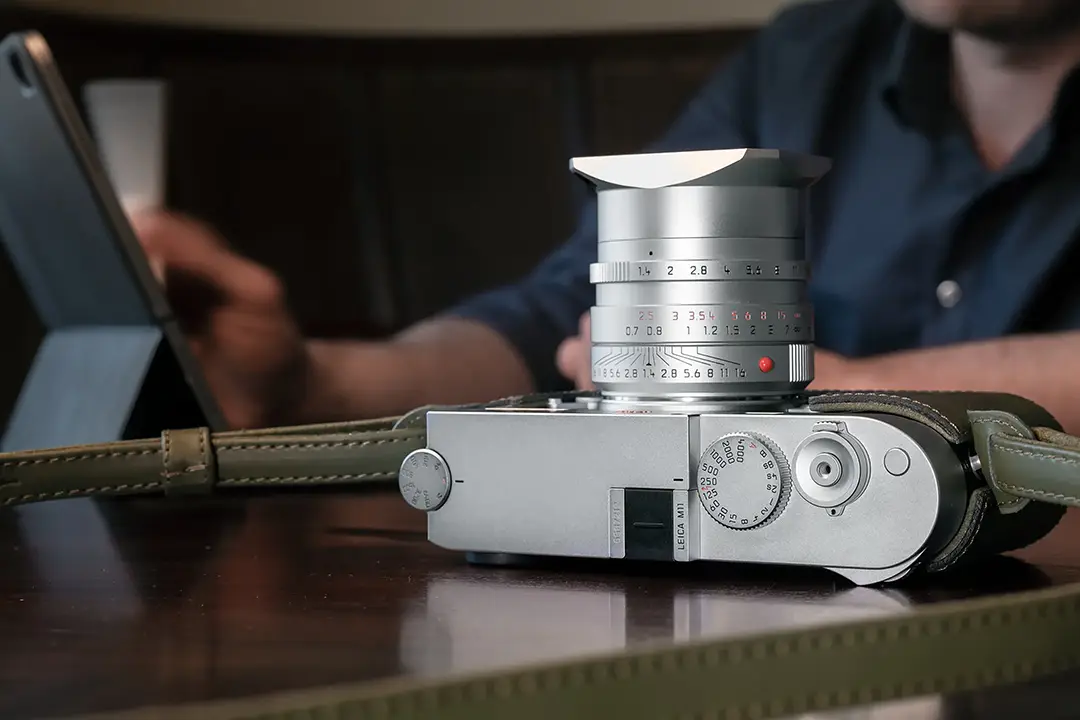
Leica Camera AG has turned to Chinese chipmaker Gpixel Changchun Microelectronics (3277.HK) to co-develop a bespoke image sensor for its next generation of cameras, in a partnership that underscores shifting power dynamics in the global optical industry. The collaboration, announced on April 20, will focus on a high-performance CMOS designed to meet Leica’s demanding standards for dynamic range, colour fidelity and low-light imaging.
The tie-up brings together a 150-year-old German photography icon and a relatively young Chinese semiconductor company whose roots trace back to a post-war optics institute built in a factory abandoned by Japanese occupying forces — an early symbol of China’s efforts to rebuild technological capability from foreign legacies. Today, that same lineage feeds into Beijing’s push for self-reliance in advanced imaging chips.
The rise of a niche challenger
The Leica partnership is the crowning achievement in a milestone-heavy month for Gpixel. On April 17, the company listed on the Hong Kong Stock Exchange with a market value of HK$33.3 billion ($4.2 billion).
Unlike many semiconductor start-ups that rely heavily on continuous venture capital funding while operating at a loss, Gpixel has followed a distinct path. Founded in 2012 in the northeastern rustbelt city of Changchun, the company spent nearly a decade without venture backing, relying instead on industrial capital from state-linked shareholders. It reported net profit of 170 million yuan ($21.5 million) in 2023 and 197 million yuan in 2024.
That profitability stems in part from a deliberate decision to avoid the fiercely competitive smartphone image sensor market, long dominated by Sony and Samsung. Instead, Gpixel focused on technically demanding, low-volume, high-margin niches in scientific and industrial imaging.
Today, it ranks among the leading global suppliers in these segments and is the top domestic player in China, producing sensors used in applications such as DNA sequencing and high-energy physics detection — areas where performance requirements outweigh cost considerations.
A proven formula in the optical industry
Leica’s decision to entrust sensor development to a Chinese partner reflects a broader pattern of Sino-European collaboration in high-end imaging.
In 2017, Chinese drone maker DJI acquired a majority stake in Swedish camera manufacturer Hasselblad, best known for supplying cameras used in NASA’s Apollo moon missions. At the time, Hasselblad faced financial strain and limited production capacity. Under DJI’s ownership, the brand retained its premium positioning while benefiting from supply chain integration and shared research and development, helping restore profitability.
Leica has also benefited directly from Chinese partnerships. According to analysis by 36Kr, the company’s recent run of record revenues — reaching €596 million ($631 million) last fiscal year — has been supported in part by licensing agreements with Chinese smartphone makers.
An initial partnership with Huawei, beginning in 2016, allowed the telecoms group to command premium pricing while generating significant licensing income for Leica. After U.S. sanctions curtailed Huawei’s global ambitions, Leica shifted its collaboration to Xiaomi, helping the company strengthen its presence in the high-end smartphone market.
Now Leica itself may be approaching a turning point. Private equity firm Blackstone, which holds a 45% stake, is reportedly exploring a sale that could value the company at between €1.2 billion and €1.5 billion. With Asian optical groups and Chinese private equity firms among the potential bidders, deepening ties with Chinese technology partners such as Gpixel could help strengthen both its technological positioning and its strategic appeal.
The cycle of technology independence
Gpixel’s emergence — and its integration into Leica’s future products — reflects a broader cycle of technological development and globalisation.
Founders Xinyang Wang and Yanxia Zhang studied in Europe before gaining experience at international semiconductor companies including Philips, Cypress and CMOSIS. They later returned to China to build domestic capabilities aligned with the country’s push for greater self-reliance in advanced technologies.
The company has already played a role in closing key gaps in China’s imaging supply chain. In 2021, it partnered with DJI to develop the country’s first domestically produced 8K full-frame image sensor, designed to significantly improve processing speeds in high-end imaging applications.
That trajectory has deeper historical roots. One of Gpixel’s ultimate shareholders is the Changchun Institute of Optics, Fine Mechanics and Physics, part of the Chinese Academy of Sciences. The institute was founded in 1952 by a group of overseas-trained Chinese scientists who returned home and began their work in a factory left behind by Japanese forces at the end of the war.
From those modest, post-war beginnings in a repurposed industrial site to co-developing bespoke “digital eyes” for Leica’s cameras, Gpixel’s trajectory captures a broader cycle in the global technology industry: absorbing international expertise, building domestic capability, and ultimately returning as a partner — rather than a follower — to the heritage brands that once defined the market.
Sources: