
Backed by an $8.4 billion international licensing deal with Bristol Myers Squibb, Biokin’s groundbreaking dual-target therapy faces a high-stakes test in Western markets.
By Da Cheung
A Chinese pharmaceutical company has secured the first regulatory approval anywhere in the world for a next-generation cancer treatment, establishing a multi-year lead in a highly competitive sector of oncology. But as the company looks to translate its scientific breakthrough into financial success, its ultimate test will lie in navigating Western markets.
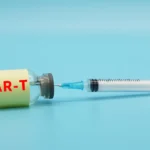
Late last month, China’s National Medical Products Administration approved Izalontamab brengitecan — known as Iza-bren — developed by SystImmune, the U.S. unit of Sichuan Biokin Pharmaceutical (688506.SH). The drug is the first approved bispecific antibody-drug conjugate (ADC), a new class of precision cancer therapies.
Traditional ADCs are often described as biological missiles. They work by combining a targeting mechanism that seeks out specific proteins on cancer cells with a toxic chemotherapy payload, delivering the poison directly to the tumor while sparing healthy tissue. However, tumors can often mutate and hide the single protein the drug is looking for, leading to drug resistance.
Iza-bren attempts to solve this by being bispecific — meaning it is designed to lock onto two different proteins, EGFR and HER3, simultaneously. According to the company, this dual-target approach cuts off the tumor’s escape route, reducing drug resistance and minimizing toxic side effects compared to traditional treatments. Clinical data cited by the company shows a permanent discontinuation rate due to adverse events of only 2.6%.
The drug’s initial approval in China is for patients with recurrent or metastatic nasopharyngeal carcinoma, a type of head and neck cancer prevalent in South China and Southeast Asia. However, the company and its international partners are betting on a much broader global application.
The billion-dollar U.S. connection
While Biokin developed the drug, its global viability is heavily tied to a massive licensing deal with Bristol Myers Squibb. In December 2023, the U.S. pharmaceutical giant acquired the exclusive rights to develop and commercialize Iza-bren outside of China in a deal worth up to $8.4 billion.
That partnership is already yielding financial dividends. On July 2, Bristol Myers Squibb registered a new global Phase III clinical trial to test the drug against lung cancer, a move that triggered a $250 million milestone payment to Biokin, according to Chinese biopharma industry platform PharmaDJ. This brings Biokin’s total collected payments from its U.S. partner to over $1 billion.
The U.S. drugmaker has drafted a broad global development roadmap, launching multiple late-stage clinical trials covering lung, breast, and other solid tumors. Its continued investment serves as a direct endorsement of the drug’s potential in the global market.
Financial pressures and the overseas gamble
Despite the scientific milestones and a massive stock rally that pushed Biokin’s market valuation near 93.9 billion yuan, the company remains deeply unprofitable.
Biokin reported a net loss of 1.05 billion yuan ($144 million) in 2025, following a steep 56% drop in revenue. In the first quarter of 2026, the company reported an additional net loss of 775 million yuan.
Because of these mounting losses at home, industry observers warn that the drug’s ultimate financial success depends much more on Western markets. An unnamed industry insider told the STAR Market Daily, that the domestic Chinese market’s financial contribution will be relatively limited for a blockbuster drug of this scale.
This reliance on overseas commercialization sets up a significant regulatory gamble. The insider cautioned that Iza-bren’s licensing deal was based entirely on clinical data from Chinese patients. Whether that data can successfully replicate the drug’s efficacy in overseas trials — which feature different patient baselines and clinical quality control standards — remains to be seen.
Biokin’s top management, however, project confidence. Chairman Zhu Yi told The Bamboo Works that top-tier clinical data generated in China can win endorsement from the U.S. Food and Drug Administration under international mutual data recognition principles. Zhu claimed the company merely needs to conduct bridging studies to supplement population data and prove there are no significant racial disparities in the drug’s effectiveness.
A generational lead in a crowded field
For now, Biokin enjoys a comfortable head start. While the broader ADC development space is crowded — with over 2,300 projects in the global pipeline — the bispecific ADC arena is still in its infancy.
Biokin’s closest competitors in this specific technological track, including domestic rivals Huadong Medicine (000963.SZ) and DualityBio (9606.HK), are currently only in Phase I clinical trials. This gives Biokin a multi-year generational lead to establish its product before competitors can get to the market.
“We anticipate global commercialization of Iza-bren by 2028,” Zhu said at a press conference, adding that the company plans to build a fully owned global commercialization ecosystem by that time.`
Whether Biokin can meet its ambitious 2028 timeline will depend heavily on the ongoing trials managed by its U.S. partner, and whether its biological missile can successfully navigate the complex regulatory defenses of the Western market.
Sources