By Lian Ran
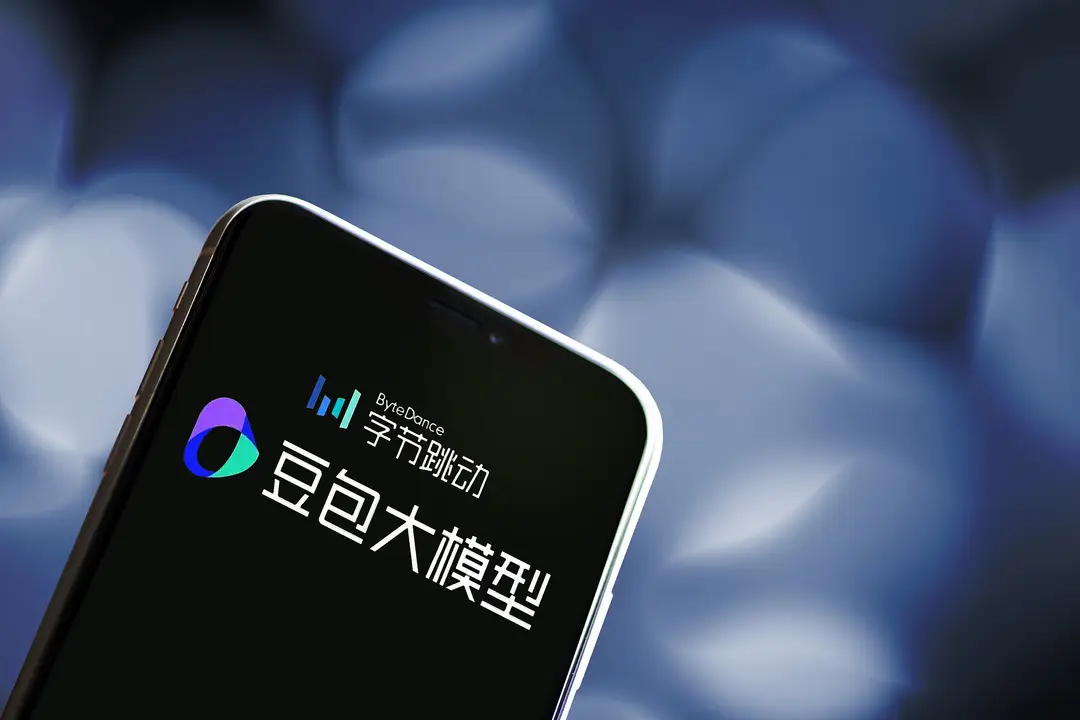
ByteDance’s AI assistant Doubao is preparing to charge users — a move that has reignited debate over whether China’s mass-market AI boom can sustain itself on free access alone.
On May 4, Doubao quietly updated its App Store page to introduce a tiered subscription model, while keeping a free version. The monthly pricing spans three levels: 68 yuan ($10) for a standard plan, 200 yuan for an enhanced version and 500 yuan for a professional tier.
The announcement triggered immediate online pushback. Some users fear the end of generous free access; others say the pricing overshoots expectations. Yet many observers see the shift as inevitable. With 345 million monthly active users, relying entirely on a free model has long looked unsustainable.
At a fundamental level, the move reflects a consensus across China’s AI sector: large language model (LLM) services cannot remain free indefinitely. Rival platforms have already begun experimenting with subscriptions, and ByteDance — with one of the country’s largest consumer AI user bases — has long had the capability to follow. The question has been timing rather than feasibility.
From free access to premium tiers
Doubao has stressed that its free tier will remain intact for routine tasks such as fact-checking, basic copywriting and daily Q&A. The subscription system is aimed at “complex and high-value” productivity work, including PowerPoint generation, data analysis and video production. These tasks demand significantly greater computing power and inference time, making them costly to deliver at scale.
This “freemium” strategy mirrors that of global leaders such as ChatGPT and Claude, which use free access to build user habits before monetising advanced capabilities.
The pricing structure broadly aligns with market norms. The 68 yuan entry tier sits close to domestic competitors, while the 200 yuan level targets heavy users in a similar bracket to mid-range global subscriptions. The 500 yuan option, which sets a new high for China’s general-purpose AI assistance, is effectively a test of how much professional users — such as developers, content creators and small business owners — are willing to pay for an always-available digital assistant.
ByteDance’s calculated bets
Compared with rivals such as Baidu and Kimi, ByteDance’s move into subscriptions has come relatively late. But it suggests a deliberate calculation and two dynamics appear to have converged.
First, user growth is plateauing. According to industry data, Doubao’s monthly users reached 345 million by March 2026, making it China’s most widely used consumer AI app. The marginal return on using free access to acquire users has dwindled, while each additional conversation incurs real computing costs.
Second, user willingness to pay has improved. In the early phase of China’s generative AI boom in 2023, many users treated such tools as novelties and resisted paying. By 2026, however, the market has undergone a full cycle of user education. Paid conversion rates have risen, particularly among professionals who rely on AI for productivity.
This means ByteDance can now tap into an existing pool of users already accustomed to paying for advanced features, rather than having to build that behaviour from scratch.
Structural challenges remain
Despite its advantages, ByteDance faces significant obstacles. Consumer subscription businesses in China are notoriously difficult: annual renewal rates for tools typically hover around 30%, far below levels seen in overseas markets.
Decades of free internet have ingrained a transactional mindset. Most users subscribe only when they need a specific function — a proposal, a project — then cancel immediately. ByteDance has no proven playbook here: its successes have come from advertising, e-commerce and live streaming, not consumer subscriptions.
The core challenge lies in balancing revenue with computing costs. Heavy users — those most likely to pay — are also the most expensive to serve. ByteDance’s technical strengths, including improvements in inference efficiency and lower per-token costs, may help. But the underlying tension remains unresolved across the industry.
There is also the question of differentiation. Many of Doubao’s paid features — long-document analysis, presentation generation and image creation — are increasingly standard across competitors, including free offerings and open-source tools. Without clear, irreplaceable advantages, users may be reluctant to maintain subscriptions.
Finally, the spectre of price competition looms. China’s tech market has a history of rapid commoditisation: once one player proves a business model, rivals tend to follow with aggressive discounts. ByteDance, which has often competed on price in other sectors, now finds itself at the higher end of the pricing spectrum — a more difficult position to defend.
A test case for China’s AI business model
In the short term, Doubao’s scale gives it a strong starting point. Even a modest 1% conversion rate would translate into more than 3 million paying users.
Over the longer term, however, success will depend on two deeper questions: whether ByteDance can turn its ecosystem into a source of indispensable value, and whether it can escape the cycle of low pricing, low retention and rising costs that has plagued consumer subscription services in China.
For China’s entire LLM sector, Doubao’s experiment carries significance beyond any single company. If it works, it will show a viable path for consumer AI monetisation that does not rely on undercutting rivals. If it fails, every domestic player will have to ask whether the subscription model is fundamentally broken for Chinese users. Either way, the outcome will shape the next phase of the country’s AI industry.
Source:
GeekPark Go