
By Xu Yang
China’s two biggest internet groups are pouring unprecedented sums into artificial intelligence, sacrificing profits and cash flow in a high-stakes battle to secure their place in the country’s next technological era.
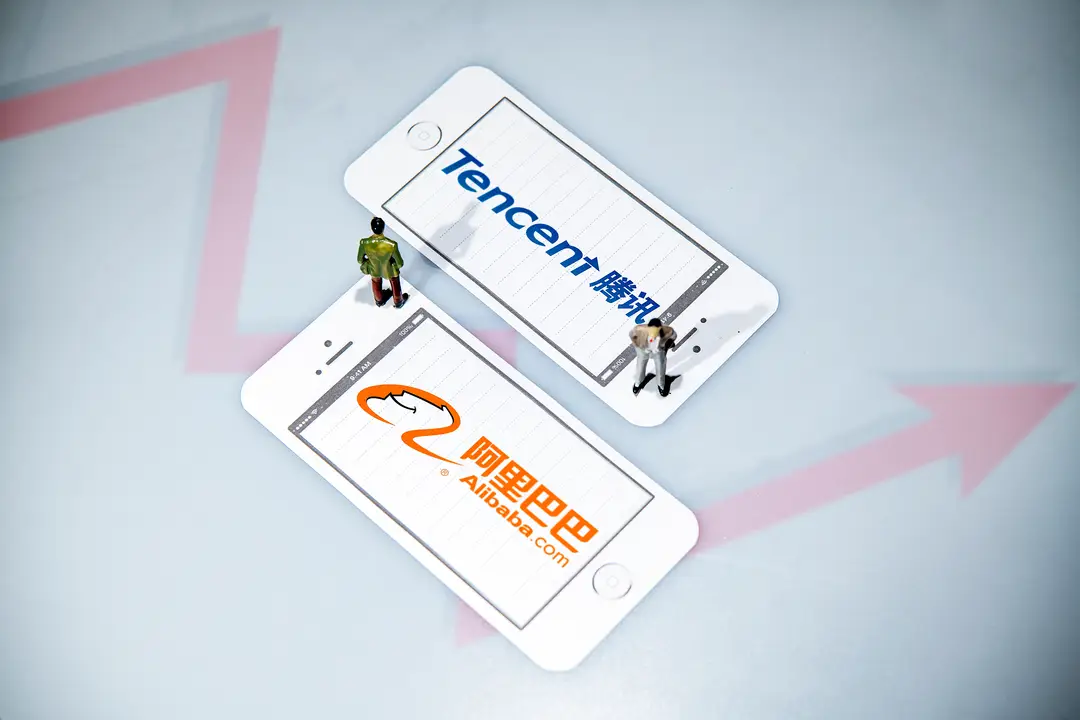
On the same day this week, Alibaba Group (9988.HK) (BABA) and Tencent Holdings (0700.HK) released earnings that laid bare the scale of the spending spree.
Alibaba reported capital expenditure of 26.9 billion yuan ($3.95 billion) in the quarter to March 31, while Tencent disclosed spending of 37 billion yuan, largely tied to AI infrastructure. Combined, the two groups spent nearly 64 billion yuan in a single quarter.
The figures underline the dilemma confronting China’s technology champions: they must continue investing heavily in AI while still funding existing businesses and defending market share in ecommerce, gaming, and advertising.
Profits squeezed by AI investment
The cost of the AI push is already weighing heavily on earnings.
Alibaba said adjusted net profit for the quarter collapsed to just 86 million yuan, down from 29.8 billion yuan a year earlier. The company blamed spending on cloud infrastructure, AI capabilities, instant retail operations and customer experience improvements.
Operating cash flow fell 66% year on year, while free cash flow swung to a net outflow of 17.3 billion yuan during the quarter.
Speaking on an earnings call, Alibaba CEO Eddie Wu compared AI infrastructure to manufacturing plants, saying the industry required facilities for both AI model training and inference computing. “Almost every graphics card in Alibaba’s servers is occupied,” he said, adding that customer demand still exceeded supply.
Tencent’s spending surge has been similarly aggressive. First-quarter research and development spending rose 19% year on year to 22.5 billion yuan, while capital expenditure reached 37 billion yuan.
The company also revealed that new AI products, including its Mixture-of-Experts large language model (LLM) Hunyuan3, consumer AI assistant Yuanbao and productivity AI agent WorkBuddy, reduced quarterly operating profit growth by roughly 8.8 billion yuan.
Speaking on May 13, Tencent co-founder and CEO Pony Ma acknowledged the company’s uneven progress in AI. “A year ago we thought we had boarded the ship,” he said. “Then we realised the ship was leaking.”
New revenue streams emerge
Despite the heavy cash burn, both companies are beginning to show signs that AI investments can generate meaningful revenue.
Alibaba’s cloud intelligence division posted quarterly revenue of 41.6 billion yuan, up 38% year on year, helped by rising demand for AI-related services. Revenue from AI products reached 9 billion yuan and has now recorded triple-digit growth for 11 consecutive quarters.
Wu said Alibaba’s growth engine was shifting away from traditional storage and computing services towards AI models, computing power and agent-based applications. He predicted annual recurring revenue from Alibaba’s AI model and application services would exceed 30 billion yuan by year-end.
Alibaba is also betting heavily on instant retail services through Taobao Flash Delivery, which management said now processes 120 million daily orders. Quarterly revenue from instant retail rose 57% to 20 billion yuan.
Tencent, by contrast, is relying more heavily on upgrading existing businesses with AI tools.
Its marketing services division generated 38.2 billion yuan in quarterly revenue, up 20% year on year. The company said improved AI-driven recommendation systems boosted advertising performance and increased pricing power.
Gaming remains another stabilising force. Domestic games revenue rose 6% to 45.4 billion yuan, supported by long-running titles including Honor of Kings and Peacekeeper Elite.
Race intensifies across China tech sector
The AI race is also reshaping corporate structures inside China’s technology giants.
In March, Alibaba created a new business unit called Alibaba Token Hub, directly overseen by Wu, combining several AI teams under a single structure focused on models, applications and infrastructure.
Tencent has undertaken an even more dramatic overhaul, dismantling its decade-old AI Lab and folding staff into its Hunyuan LLM division under chief AI scientist Yao Shunyu.
The competitive pressure is intensifying across China’s technology sector. According to a recent report by the South China Morning Post, ByteDance has raised planned AI infrastructure spending by 25% this year to 200 billion yuan.
For Alibaba and Tencent, the challenge is no longer whether to invest in AI, but whether the enormous outflows of cash can eventually be matched by sustainable new inflows of revenue.
Source:
Lunchbox Finance