
By Da Cheung
Chinese neurovascular medical device maker Wallaby Phenox completed a new equity financing and debt restructuring round, the company announced on March 18. The funding was led by investors including Yunfeng Capital, Hillhouse Investment, and Gaorong Capital. Notably, cardiovascular device developer Enlight Medical participated in this round, which effectively led to a strategic merger between the two firms aimed at improving its capital structure and operational flexibility.
Wallaby Phenox CEO Dr. Zhao Ruilin said the financing is a critical milestone for the business, according to a statement published by Gaorong Capital. Zhao stated that while the company is consolidating its financial base, it will use the funding to combine its existing neurovascular technology with ongoing clinical projects to reach a broader patient base globally.
The last major deal by California- and Shanghai-based Wallaby Phenox, formerly known as Wallaby Medical, was the acquisition of Germany-based phenox GmbH in 2022 for 500 million euros ($540 million). Enlight Medical, also based in Shanghai, has been out of the news since securing a Series B funding round of hundreds of millions of yuan in 2020.
Tackling the stroke epidemic
Founded in December 2015, Wallaby Phenox historically focused on developing neuro-interventional devices to treat stroke victims. Back in 2016, China accounted for 5.51 million new stroke cases, representing nearly half of the global burden, according to the Global Burden of Disease Study (GBDS), an international research project that maps human health. Neuro-intervention is a minimally invasive treatment — positioned between traditional open surgery and internal medicine — that navigates thin instruments through blood vessels to diagnose and treat brain conditions.
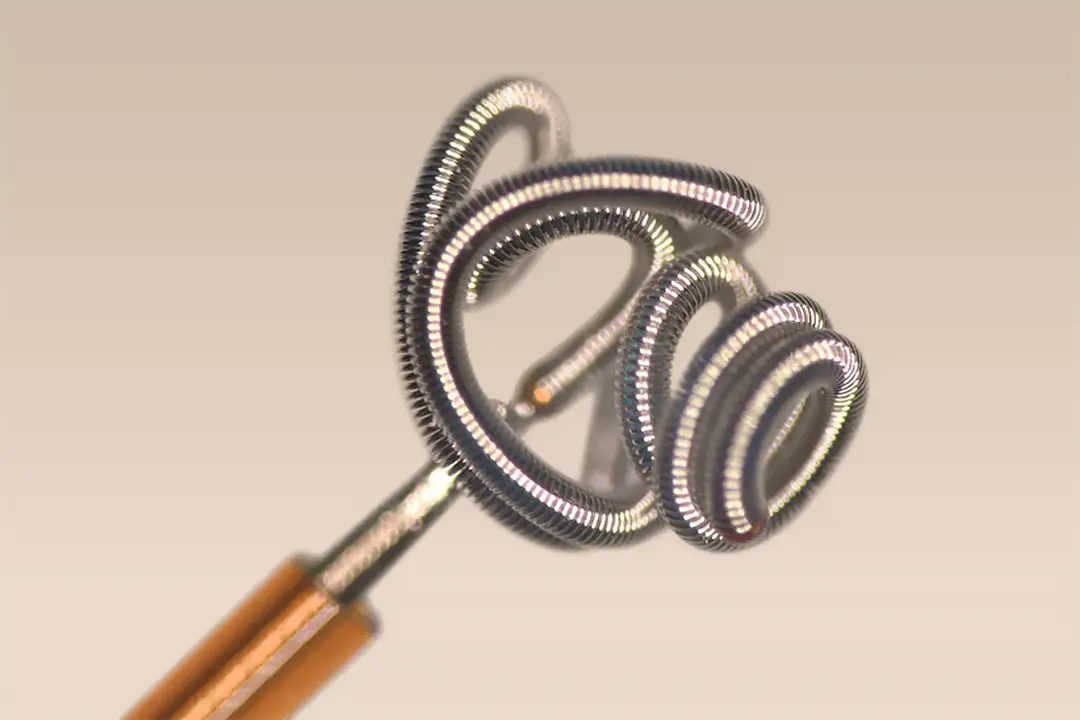
By 2016, Wallaby Medical was developing proprietary neurovascular technologies, including the prototype of its flagship Avenir Coil System.
Although the latest GBDS report shows new stroke cases in China fell to 4.1 million in 2021, 34% of the global total, the Chinese neuro-interventional market is worth around 30 billion yuan ($4.2 billion), according to estimates cited by 36kr, a Chinese media and business services platform. Historically, the sector was dominated by foreign manufacturers, with companies like Medtronic, Stryker, and Penumbra controlling over 80% of the market. Wallaby Phenox aimed to capture market share by developing domestic alternatives that meet international standards.
Global expansion
Wallaby’s acquisition of phenox was aimed at improving the global recognition of Chinese neuro-interventional enterprises, its then-CEO, Michael Alper, told financial news outlet Yicai at the time. “Merged together, the company will take root in the key markets of China and Europe and further expand into the U.S. and Japanese markets.” Today, Wallaby operates five research and development centers and sells its stroke medical devices in over 60 countries.
The merger between Wallaby phenox and Enlight Medical will help advance the firm’s clinical trial processes. The company says it expects to soon enroll the first U.S. patient for a landmark clinical trial for PIANO, which will test the broader application of flow diversion therapies, minimally invasive procedures that use specialized stents to treat brain aneurysms. This is one of the fastest-growing segments in the US neuromuscular market. The company has also launched the TRUST registry study in Europe to evaluate various neurovascular treatments using real-world clinical data.
Beyond traditional stroke treatments, the company says it is extending its research into early-stage brain-computer interface (BCI) platforms, an operational shift that stems from the merger with Enlight Medical. Initially founded with a focus on structural heart disease and peripheral vascular intervention, Enlight Medical already has a BCI platform and had announced plans to develop neural stimulation products through cross-disciplinary research.
Sources