
The mid-tier EV battery maker is turning to domestic investors to finance an aggressive capacity expansion as it seeks to compete in an increasingly consolidated market
By Edith Terry
Jiangsu Zenergy Battery Technologies (3677.HK) is seeking a stock-market listing in mainland China as strong profit growth gives the mid-tier electric vehicle battery maker momentum for an aggressive expansion.
Zenergy has completed initial registration procedures with the Jiangsu securities regulator and entered the IPO tutoring process required for a planned listing on the Shenzhen Stock Exchange’s ChiNext board, according to Chinese media reports.
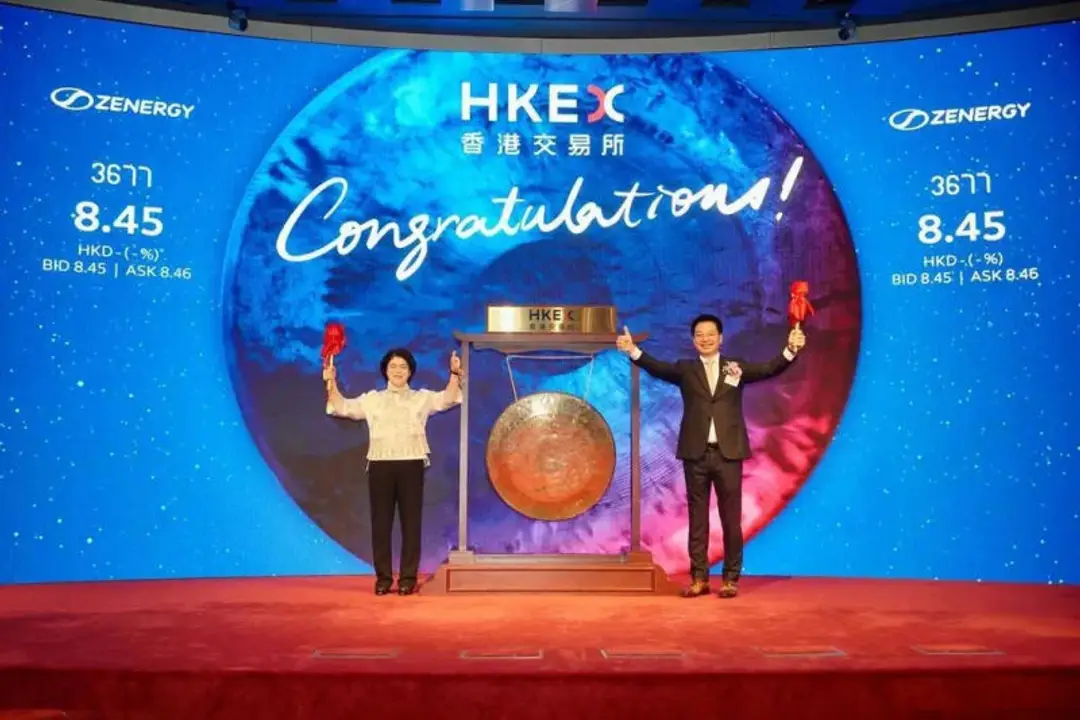
The move comes 15 months after the company raised nearly $200 million through its April 2025 Hong Kong IPO and a private placement last October. A Shenzhen listing would give Zenergy access to a broader pool of domestic investors as it seeks to finance capacity expansion and diversify beyond its core EV battery business.
The company said last week that it expects net profit for the first half of 2026 to have risen between 45.5% and 81.8% from a year earlier, to between 320 million yuan ($47.4 million) and 400 million yuan. Its shares rose 4.2% the next trading day, although they have fallen 33% this year.
The earnings increase reflects the gradual ramp-up of new production capacity and higher utilization rates, Zenergy said. Shipments of both EV and energy storage system (ESS) batteries increased substantially, while ESS revenue recorded a significant increase. The company also benefited from a lower expense-to-revenue ratio.
Scaling up
Zenergy has moved rapidly from losses into profitability. It recorded net income of 91 million yuan on revenue of 5.13 billion yuan in 2024, after losing money in 2023. Profit increased to 809 million yuan last year as revenue jumped 58% and gross margin expanded by 3.8 percentage points to 18.4%.
Goldman Sachs said in a July research report that Zenergy was positioned to become one of the fastest-growing companies in China’s battery industry. It set a target price of HK$13 for the Hong Kong-listed shares, more than double their latest close of HK$5.585.
The growth outlook comes with substantial financing requirements. Zenergy plans to double annual production capacity to 70.5 gigawatt-hours this year from 35.5 GWh at the end of 2025, and increase it again to 120 GWh by 2027.
That remains small compared with industry leader Contemporary Amperex Technology (CATL) (3750.HK), which had 772 GWh of capacity at the end of 2025, with another 321 GWh under construction. The gap illustrates the challenge facing smaller battery manufacturers to ramp up as the industry consolidates around companies with greater scale and financial resources.
Zenergy is seeking growth in areas beyond EV batteries to reduce its reliance on the increasingly competitive automotive market. It sees opportunities in ESS batteries, which store electricity generated by renewable energy projects, as well as batteries for electric vertical takeoff and landing (eVTOL) aircraft.
ESS demand has strengthened as battery technology improves and electricity consumption rises among residential and industrial customers. Demand is also being driven by data centers supporting artificial intelligence applications, which require large and stable power supplies.
Zenergy’s ESS business accounted for 5.2% of revenue last year, down from 9.1% in 2024, a drop the company attributed to production capacity constraints. It said expansion should allow the business to grow.
IPO to fund diversification
The Shenzhen listing is central to Zenergy’s plans to build manufacturing scale. Its flexible production lines can manufacture different battery products for EVs, energy storage and aviation applications, while the company is also developing batteries for marine electric vehicles.
Zenergy had used about two-thirds of the proceeds from its Hong Kong IPO that had been allocated to construction by the end of 2025. It still had 350 million yuan from last October’s private placement earmarked for capacity expansion.
A Shenzhen listing could also improve the company’s valuation. Mainland Chinese investors have often assigned higher valuations to companies operating in emerging industries than investors in Hong Kong. Zenergy received a temporary boost after its Hong Kong shares became available to mainland investors through a cross-border investment program last September, although the stock has subsequently come under pressure.
The company’s development strategy is closely associated with its chairwoman and co-founder, Cao Fang, who has extensive experience in China’s automotive industry.
Cao is the younger sister of Cao Dewang, founder of Fuyao Glass and one of China’s best-known entrepreneurs. She joined Fuyao in 1997 and later became a vice president. In 2013, she and Fuyao executive director Chen Jicheng established Changshu Sinogy Venture Capital.
The pair also invested that year in a joint venture with Toyota to supply battery packs for hybrid vehicles in China. They left Fuyao in 2014 and acquired the assets of Tafel, a battery manufacturer founded by former CATL employees, in 2016. Tafel became Zenergy three years later.
With support from Cao Dewang, who holds a 2.5% stake in the company, and his extensive automotive industry network, Zenergy developed relationships with major Chinese automakers including FAW Hongqi, GAC Trumpchi, Leapmotor, SAIC-GM-Wuling, SAIC-GM, GAC Toyota and Volkswagen.
Zenergy’s ability to execute its diversification strategy will determine whether it can translate rapid recent growth into sustainable scale. Its experience in China’s large automotive market provides an important advantage, but the company still faces a difficult competitive environment as battery manufacturers compete for customers, capacity and capital.
To subscribe to Bamboo Works weekly free newsletter, click here