

As domestic sales plunge and price wars backfire, China’s hyper-competitive EV market is driving a record-breaking export boom.
By Da Cheung
China’s domestic auto market is experiencing a historic contraction. In the first half of 2026, passenger car retail sales plunged 19% year-on-year to 8.8 million units. The downturn is disproportionately crushing gasoline-powered cars while pushing pure electric vehicles to record market shares. But the pain doesn’t stop at China’s borders — it is forcing automakers to export aggressively, a trend that is now reshaping the global industry and leading to pushback, especially in Europe.
The gasoline collapse and dealership crisis
The overall market decline is largely driven by the rapid collapse of conventional fuel-powered, predominantly gasoline, vehicles. High oil prices triggered by geopolitical conflicts have severely damaged the baseline market for gasoline cars, whose domestic sales dropped by 27.8% year on year in the first half of 2026. In June, pure gasoline-powered car sales plummeted 42% year on year.
This contraction has triggered a “metabolic shock” across the entire automotive ecosystem. Dealerships are bearing the brunt of the crisis. In the first half of 2026 alone, approximately 1,800 authorized dealer stores shut down. A staggering 81.9% of dealerships are caught in a price inversion, forced to sell vehicles for less than the price they paid when they bought from the manufacturer. This has dragged the industry’s average gross profit margin on new car sales to an eye-popping minus 25.5%.
The pressure is also moving up the supply chain, with some automakers demanding price cuts of as much as 18% from their suppliers and delaying payments for up to nine months. Overall, auto manufacturing profit margins have shrunk to just 3.4%, with automakers themselves scraping by on a 1.5% margin.
The price war backfires and subsidies fade
For the past two years, automakers in China have been engaged in a brutal price war. However, aggressive discounting has failed to stimulate demand. According to a 2026 report from consultants McKinsey, the price war has become “noise that consumes confidence,” with 57.4% of dealerships reporting that consumers are increasingly adopting a wait-and-see attitude, terrified that the retail price of a new car will drop the moment they buy it.
But for electric cars, the price war is now coming to an end. Squeezed by a 130% spike in lithium prices — from about $10,300 to over $23,400 per ton — and soaring semiconductor chip costs, automakers are being forced to raise prices. Companies including Tesla, BYD (002594.SZ) (1211.HK), and Xiaomi (1810.HK) have all recently increased prices on popular models.
At the same time, the central government is pulling the plug on the state-subsidized growth era. As electric vehicle (EV) penetration crosses the 50% threshold, it threatens traditional tax revenues tied to gasoline-powered cars and even road maintenance funds. In response, the government has halved the EV purchase tax break from a maximum of about $4,100 to about $2,000 per vehicle. Additionally, a lithium battery consumption tax is being reinstated starting in September, which will force battery makers to pass costs on to automakers.
Nevertheless, the EV transition is accelerating. EV (pure electric and plug-in hybrid) penetration in June reached a record 63%. While overall new energy vehicle sales declined by 14.24% in the first half of 2026 due to the broader market slump, pure EV sales still managed to grow 4% in June. Consumers are increasingly favoring pure EVs over plug-in hybrids as range anxiety diminishes and fast-charging infrastructure improves. Pure EVs accounted for 67.6% of the EV mix in the first half of the year, marking a strong return to dominance as subsidies on plug-in hybrid cars are set to be phased out completely.
A smartphone-like ‘death valley’ for new cars
The rapid development cycle of Chinese EVs — heavily reliant on battery and software upgrades rather than traditional redesigns — has left the market flooded with cars. According to Caixin, domestic automakers launched 542 new models in the first five months of 2026, an average of more than three a day, a pace that outstrips even the smartphone industry.
This hyper-competition has created what Nio (9866.HK) (NIO.US) CEO William Li calls the “new-car death valley.” By the time production lines and supply chains complete their capacity ramp-up, the peak sales window has already passed, leaving the entire industry chain with massive waste — including parts inventories and overstretched supplier capacity — from the preparations made for the new model.
The shift in consumer preferences is also reshaping vehicle formats. SUVs now hold complete domination over sedans and have captured a market share of nearly 56%, driven by demand for spacious family vehicles, or people carriers.
Faced with shrinking profit margins, automakers are starting to slash their bloated product lineups. Changan Automobile (000625.SZ), for example, plans to cut its product offerings from 63 models to 36.
The competitive landscape is also shifting. BYD remains the dominant player with a single-brand market share of 18.18%, leading by a wide margin — although that represents a year-on-year decline of 10.43 percentage points. But while BYD is maintaining its market share, albeit a shrinking one, the real story is the surge in sales from “new forces” — a term used to describe China’s EV startups. Stellantis-backed Leapmotor (9863.HK) emerged as a dark horse with a 73.47% jump in deliveries in the first half of the year, positioning itself to soon challenge state-owned giants like SAIC and Changan. Xiaomi and Nio also saw growth of more than 36% in deliveries.
The export escape valve under pressure
Faced with a collapsing domestic market, Chinese automakers are increasingly looking abroad. In the first half of the year, China’s auto exports surpassed the 5 million mark for the first time, totaling 5.096 million units—a 65.3% increase year-on-year — with new energy vehicles accounting for 46.2% of the total. June was a milestone month, with exports exceeding 1 million vehicles for the first time
However, this critical escape valve is increasingly threatened by political barriers. The European Union has imposed anti-subsidy tariffs of up to 35.3% on pure EVs imported from China, and discussions are reportedly underway to expand these measures to hybrid vehicles. While Europe remains a core market, Chinese brands are also rapidly expanding into Southeast Asia, the Middle East, and Latin America to diversify their risks.
As Chinese automakers attempt to offset domestic losses with international expansion, these geopolitical hurdles could determine which brands survive the coming shakeout in the world’s most crowded auto market. The leaders and some startups have deep pockets and good brands to enable them to weather the storm. The real casualties are likely to be the second- and third-tier domestic brands with no global presence, no scale, and no government backing.
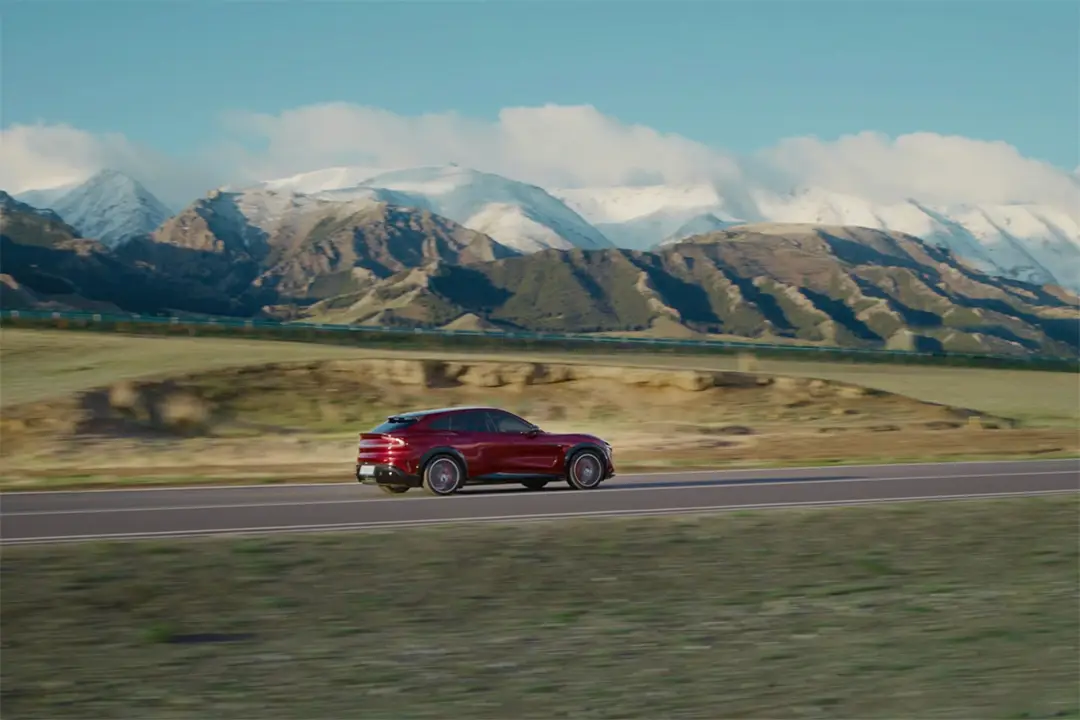
Feature photo: Xiaomi’s YU7 SUV, by Xiaomi
Sources