Li Shufu will remain chairman of Geely’s parent, while An Conghui takes over the listed automaker as the group reports strong first-half profit and overseas growth.
The founder of Chinese automaker Geely is stepping back from the direct management of its Hong Kong-listed automotive business, Geely Automobile (0175.HK), handing the chairmanship to a longtime company executive while retaining control of the wider group.
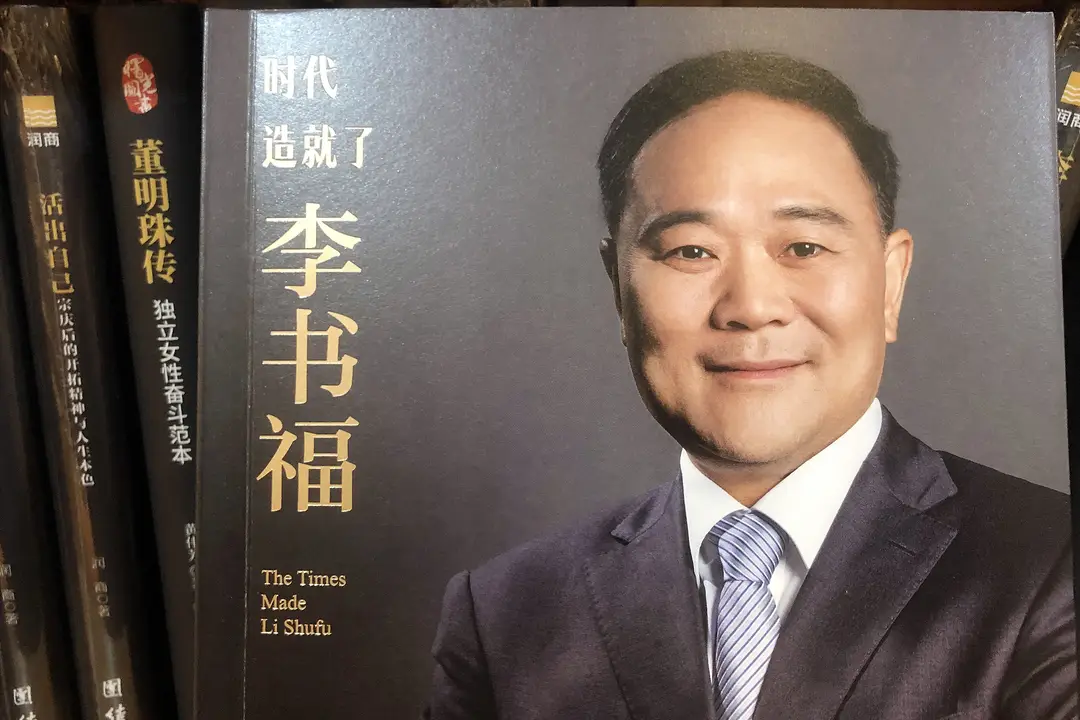
Li Shufu, one of China’s most prominent private-sector entrepreneurs, will resign as chairman and executive director of Geely Automobile from Aug. 18, the company said in a statement Monday. He will become the company’s lifetime honorary chairman.
The move is part of an effort to strengthen corporate governance and give professional managers greater responsibility for running the listed business. Li, however, is not retiring from Geely. He will remain chairman of Zhejiang Geely Holding Group, the parent company and controlling shareholder of Geely Automobile, where he will continue to oversee group strategy.
That distinction is important. Li is stepping away from the boardroom of the listed automaker but will continue to have a central role in the broader Geely empire.
Handing over the reins
An Conghui, also known as Andy An, a longtime Geely executive who has held senior positions across the group, will succeed Li as chairman of Geely Automobile. Gan Jiayue will become chief executive and take responsibility for the company’s day-to-day operations.
Gui Shengyue, who is stepping down as chief executive, will become vice chairman while remaining an executive director. Li Donghui will also leave his position as vice chairman but remain an executive director.
The changes follow Geely’s efforts to integrate its businesses under its “One Geely” strategy, including the incorporation of Zeekr, its luxury EV brand, into the listed company. The latest reshuffle further separates ownership and strategic oversight from the day-to-day running of the listed automaker.
Li, 63, built Geely from a small private business into a global automotive group. He pushed into passenger-car manufacturing in the late 1990s, secured a production license in 2001 and took Geely Automobile public in Hong Kong in 2005.
His most consequential move came in 2010, when Geely acquired Volvo Cars for $1.8 billion. He subsequently expanded the group through investments and acquisitions involving Proton, Lotus and Daimler AG, while building brands including Zeekr and Lynk & Co, a Chinese-Swedish automotive and mobility brand.
Geely has shifted from its roots as a conventional Chinese automaker toward electric vehicles, hybrids and increasingly intelligent vehicles, while expanding overseas.
The management transition comes against a backdrop of strong financial performance.
‘One Geely’ strategy
Geely Automobile reported first-half revenue of 173.6 billion yuan ($25.8 billion), up 15% from a year earlier and a record for the company. Core attributable profit rose 46% to 9.68 billion yuan, well ahead of revenue growth.
Core net profit margin reached 5.6%, while gross margin improved to 17.9%. The company had 69.56 billion yuan in cash and other financial reserves at the end of June.
Geely attributed the improvement partly to the deepening implementation of its “One Geely” strategy, an initiative to transform the company from a collection of independent brands into a unified, globally competitive automotive group, driving growth through integration and shared resources across its various brands.
Its administrative expense ratio fell 0.2 percentage point from a year earlier to 1.7%, while its research and development expense ratio declined 0.3 percentage point to 5.2%.
At the same time, Geely continued to increase its absolute spending on technology. Research and development expenditure rose 8% to 9.06 billion yuan in the first half, as the company invested in electric vehicles and intelligent-driving technology.
Sales rose only 1% to 1.423 million vehicles, but the headline figure masks significant changes in the business.
Zeekr deliveries almost doubled, rising 97% to 178,400 vehicles, making the premium EV brand a major contributor to Geely’s growth. Geely Galaxy, which targets the mass-market new-energy segment, sold 519,800 vehicles, down 5%, while Lynk & Co sales fell 6% to 144,215 units.
The overseas business was a much stronger growth engine. Geely’s international sales jumped 158% to 474,200 vehicles in the first half, with monthly exports exceeding 100,000 units for the first time in June.
Geely is now selling electric and hybrid models across Europe, Southeast Asia and the Middle East, giving overseas expansion an increasingly important role alongside its domestic and new-energy businesses.
Can the new structure deliver?
The new management team faces a familiar set of challenges: defending Geely’s position in China’s fiercely competitive auto market, expanding overseas, improving its product mix and maintaining profitability while accelerating its push into AI and intelligent vehicles.
Li’s continued position at the parent company means he is not making a clean break. Rather it creates a clearer division between strategic oversight and operational management. Li said he had confidence in An, describing him as a talented professional manager developed within the Geely system.
The change nevertheless marks an important step for a company that has been closely identified with its founder for more than three decades. The test now will be whether Geely’s professional management structure can turn Li’s long-term strategy into sustained growth without losing the entrepreneurial culture that helped build the group
Source:
autochat.com.cn