
A bizarre battle over parallel imports highlights how European automakers’ Chinese joint-venture EVs are threatening their home markets.
By Da Cheung
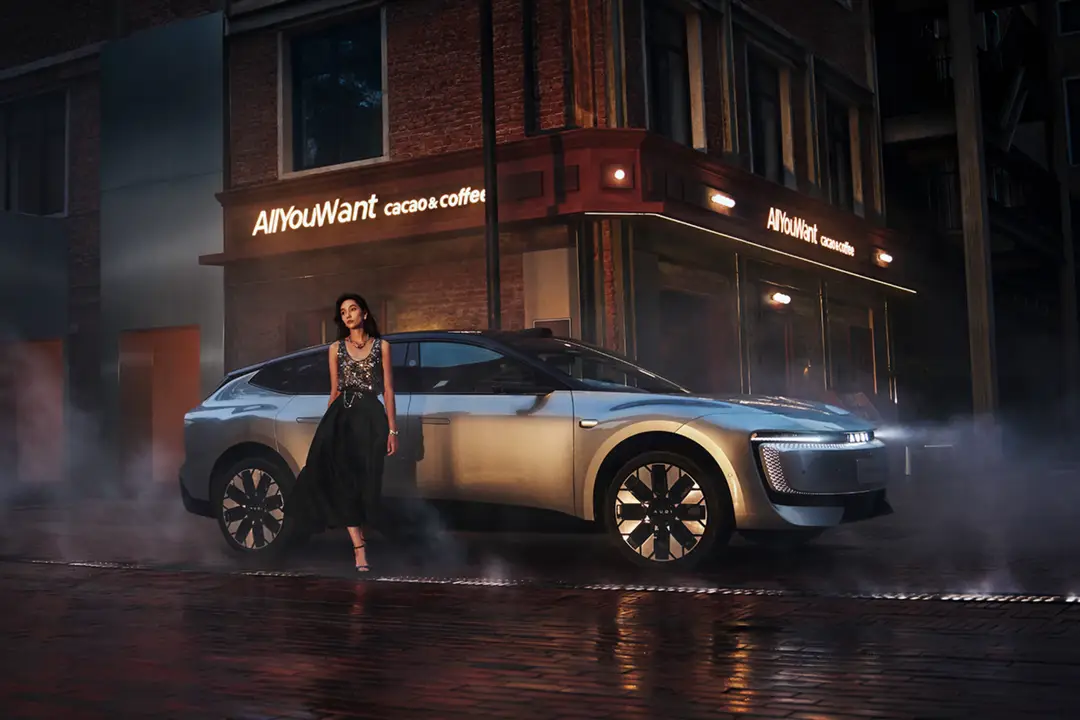
A Munich-based car dealer recently listed a new electric vehicle that looked like an Audi, drove like an Audi, and was built by an Audi joint venture. But when the dealer tried to sell it in Germany, Audi’s global headquarters sued to stop it.
The core of the conflict is bizarre: Audi is actively blocking imports of its own “AUDI” branded EVs — a distinct sub-brand without the iconic four rings that’s been developed for the Chinese market with its local joint venture partner, SAIC Motor (600104.SH).
The cars are being shipped to Germany by a parallel importer, Auto China, without AUDI’s authorization, driven by a massive price arbitrage. The Chinese-made AUDI E5 Sportback retails in China for around 319,900 yuan (about $47,600) for the top-specification trim, while the basic model starts at 235,900 yuan. Auto China listed the vehicle for 59,980 euros (about $68,300). Even with the hefty markup, the vehicle remains highly competitive in Europe, yielding high margins for importers.
This legal dispute highlights a profound dilemma for legacy European automakers. The advanced, cost-effective EVs they co-develop in China to survive brutal local competition now pose a direct cannibalization threat to their own higher-priced, lower-tech domestic lineups.
The parallel import loophole
In August 2026, Auto China listed the AUDI E5 Sportback and E7X on its website. The dealer had previously used this method to import Chinese EVs from brands like Xiaomi (1810.HK) and Zeekr (ZK.US).
Audi quickly retaliated using European Union trademark laws. Specifically, the automaker invoked the “regional exhaustion” principle, a legal rule meaning a trademark owner only loses control over a product’s distribution after it officially authorizes its first sale within the European Economic Area, a bloc comprising the 27 members of the EU and three members of the European Free Trade Association. Because the AUDI vehicles were meant only for China, Audi retained the right to block their sale in Germany.
According to the company, AUDI branded cars aren’t authorized for export and its European dealerships are simply not equipped to provide after-sales service, software updates, or technical support for parallel-imported AUDI vehicles. Audi China told the Economic Observer that the legal action targets unauthorized dealers on the grounds of consumer protection and serviceability and does not signal a rejection of the AUDI brand itself.
Following the lawsuit, Auto China removed the listings. Media reports claim the dealer received 127 pre-orders within 72 hours of listing the cars, though this figure remains unverified and lacks authoritative public data.
A brand divided
The existence of an AUDI brand without the signature rings logo stems from the automaker’s desperate need to reverse declining sales in the world’s largest auto market. In the first half of 2026, Audi’s deliveries in China fell 19% year-on-year.
To stop the bleeding, Audi is radically restructuring its China operations. The company is dedicating its traditional four-ring logo to legacy models managed by its other joint venture partner, FAW Group. Meanwhile, it is spinning off the ringless AUDI brand to focus purely on smart EVs. According to the company, the AUDI brand is designed to leverage China’s mature EV supply chain to offer advanced technology at lower prices.
Whether these vehicles will ever officially reach Europe remains a point of contention. Johannes Roscheck, president of Audi China, told Cailian Press in early September that there are currently no plans to export the AUDI brand. However, this contradicts claims made by Chinese media outlet Auto Business Review, which reported that future official export channels “are not yet closed,” citing the display of an AUDI E5 at the company’s German headquarters as proof of global backing.
The cannibalization threat
The AUDI incident is a microcosm of a larger anxiety gripping the European auto industry. Chinese EV exports are surging. In the first half of 2026, five major Chinese carmakers doubled their share of the European market — the EU and EFTA countries and the UK — to 8.9%. In Germany alone, Chinese vehicle brands captured a 4% market share in the first seven months of the year.
European automakers are increasingly terrified of their own Chinese creations. Volkswagen Group, Audi’s parent company, reportedly debated importing its own cheaper, Chinese-developed EVs to fill gaps in its European lineup. The idea faced internal opposition over fears that the highly competitive Chinese models would destabilize Volkswagen’s domestic pricing and sales network.
Meanwhile, Chinese brands like BYD (1211.HK) (002594.SZ) are shifting from exporting to localized European manufacturing partly to dodge rising EU tariffs. However, this is a high-stakes profitability gamble. Localized production requires massive fixed costs for labor and energy, meaning factories must operate at near maximum capacity just to break even.
The initial demand for parallel imports of AUDI vehicles suggests that European consumers are hungry for affordable, high-tech EVs. But for legacy automakers, bringing their best Chinese-made technology back home might be a cure that kills the patient.
Feature photo: AUDI E5 Sportback made by SAIC, source: saic-audi.cn
Sources