
ProLogium has begun production of a 381 Wh/kg all-solid-state cell, but scaling it into a cost-competitive EV battery remains the bigger test.
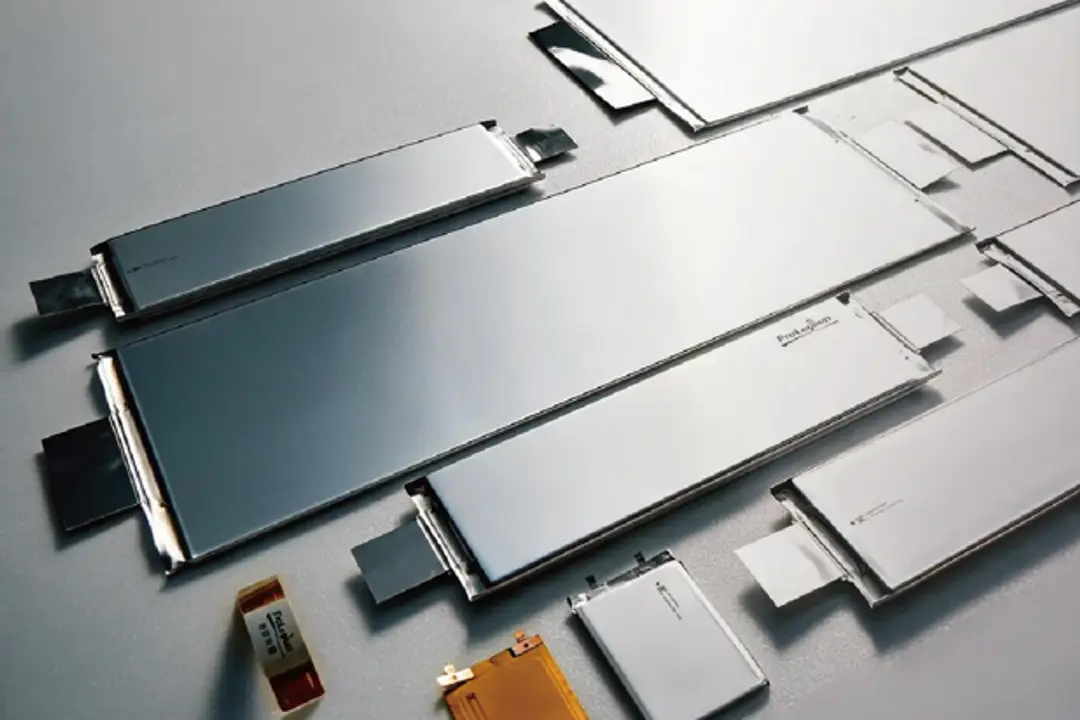
Taiwanese battery maker ProLogium Technology has begun mass production of its third-generation (Gen 3.5) lithium ceramic cell (LCB), marking a significant step toward commercializing an all-solid-state battery with an energy density of 381 watt hours per kilogram (Wh/kg). ProLogium says the cell can charge from 5% to 80% in about 6.4 minutes.
The company, which is preparing to list on the Nasdaq through a merger with Translational Development Acquisition Corp., said on Sept. 2 that Gen 3.5 production had started at its Giga-level manufacturing facility in Taiwan. A test report by a third party, TÜV Rheinland, put the energy density of a 185.4 Ah large-format cell at 381 Wh/kg by weight and 903 watt-hours per liter by volume.
Energy density measures how much energy a battery can store for a given weight or volume. A figure of 381 Wh/kg means the cell can store 381 watt-hours of energy per kilogram of its weight. Higher energy density can allow an EV to travel farther without increasing battery weight, or achieve the same range with a smaller, lighter battery.
The figures are notable, but the bigger question is whether ProLogium can translate cell-level performance into batteries that can be manufactured at competitive cost and volume for mainstream electric vehicles.
What makes it all-solid-state?
ProLogium’s LCB technology takes a different route from the sulfide-based solid-state batteries being developed by many major battery and automaking groups.
The company uses an inorganic ceramic electrolyte and describes its technology as a solid structure with liquid-like lithium-ion conduction. It says its electrolyte is entirely inorganic and contains no flammable liquid electrolyte.
A separate test by UL Solutions provides an important benchmark for ProLogium’s claim that the cell is genuinely all-solid-state. Under China’s GB/T 43568-2026 standard, the cell was held under continuous vacuum at 120°C for six hours. ProLogium said it recorded less than 0.05% mass loss, compared with the standard’s 0.5% threshold.
China has also submitted the standard to the International Electrotechnical Commission as a reference for international standardization.
The distinction matters because the term “solid-state battery” has been used for several different battery architectures, including systems that retain some liquid electrolyte. The standard provides a measurable basis for classifying cells as all-solid-state and distinguishing them from hybrid designs that retain liquid electrolyte.
From laboratory technology to production
ProLogium has been developing its LCB platform since 2012 and says it has moved through four generations of battery technology and three generations of manufacturing processes.
It began commercial production in 2013 with a sheet-by-sheet manufacturing line, supplying applications including consumer electronics, wearables, medical equipment and semiconductors. A second-generation roll-to-roll production line followed in 2017, while its third-generation Giga-level manufacturing platform began operating in 2024 to support large-format cells.
The company says cumulative shipments of LCB cells have now exceeded 2.4 million.
That figure needs some context. The shipments span consumer, specialized and automotive applications and should not be interpreted as 2.4 million high-voltage EV traction cells. ProLogium says its LCB products are already used in automotive audio systems and have been supplied for vehicles made by a Japanese automaker. It has also entered the unmanned-systems market, where high energy-density, high-rate discharge and fast charging are valuable.
ProLogium has obtained IATF 16949 automotive quality-management certification.
The company’s current manufacturing scale, however, remains modest relative to the battery plants needed for mass-market EVs. Its Taiwan facility has initial operational capacity of about 0.5 gigawatt hours (GWh), with plans to expand to more than 1GWh.
That makes the meaning of “mass production” important: ProLogium has crossed from development and pilot production into manufacturing, but it has not yet demonstrated the volumes associated with mainstream EV battery production.
The harder test is scaling
The headline energy-density figures are significant. At 381 Wh/kg and 903 Wh/L, ProLogium’s cell is designed to store more energy within a given weight and volume than many conventional automotive lithium-ion cells.
But cell-level figures do not translate directly into vehicle-level gains. A battery pack also requires structural components, cooling systems, electrical protection and battery-management hardware. The ultimate benefit to an EV depends on the performance of the complete pack.
Cost and manufacturing yield are equally important.
Solid-state batteries require different electrolyte materials and manufacturing processes from conventional liquid-electrolyte cells. ProLogium has pursued a ceramic-based approach, which avoids some of the air- and moisture-sensitivity associated with sulfide electrolytes, but ceramic materials also present their own manufacturing and interface challenges.
For the technology to become mainstream, ProLogium will need to demonstrate competitive costs, consistent yields, durability and pack-level performance at much greater volumes.
From Taiwan to France
The next test will come as ProLogium expands beyond Taiwan.
The company plans to use Taiwan as a technology-development and manufacturing-validation base while building larger-scale production in France and eventually developing localized supply and manufacturing capabilities in North America.
Its Dunkirk factory held a groundbreaking ceremony for its first phase in February 2026. The initial phase is planned to reach annual production capacity of 4 GWh, progressively ramping toward 2030. The entire site has a maximum designed capacity of 44 GWh.
If achieved, the first phase alone would represent a substantial increase from the 0.5 GWh initial capacity of the Taiwan operation.
That is why ProLogium’s September announcement is best viewed as a milestone rather than the arrival of mass-market solid-state batteries. The company has demonstrated that a large-format all-solid-state cell can move into production. The harder step is turning that cell into a high-volume automotive battery at a competitive cost.
For the solid-state industry, the technology has moved another step from laboratory promise toward manufacturing reality. Whether it can make the much bigger journey from production line to millions of mainstream EVs remains to be proven.