Divergence in China’s lithium battery sector widens as automakers diversify supply chains away from the dominant player.
By Li Yiwen
China’s listed lithium-ion battery sector split sharply on Sept. 16, with smaller manufacturers rallying as industry leader CATL came under heavy selling pressure.
By midday, Sunwoda Electronic (300207.SZ) had jumped over 13%, with Tianhong Lithium (871991.BJ), Jinyang Precision (301210.SZ), Guoxuan High-Tech (002074.SZ) Farasis Energy (688567.SH) and Penghui Energy(300438.SZ) all rising in tandem.
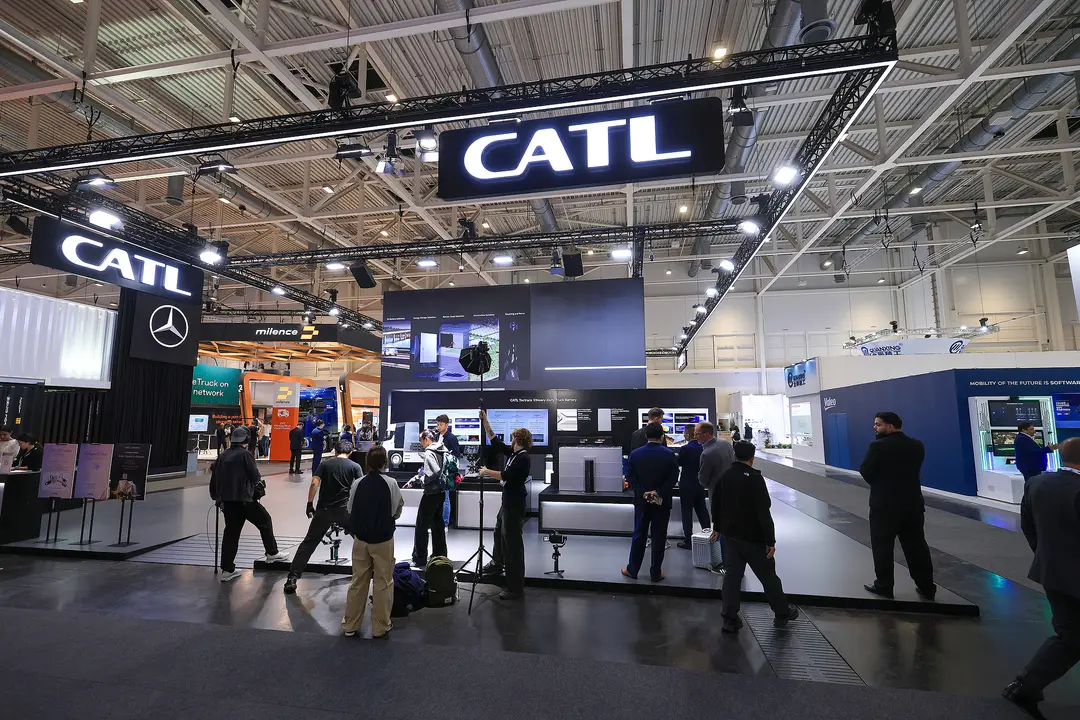
Meanwhile, CATL (300750.SZ) (3750.HK) fell more than 5% intraday in Shenzhen trading, its shares briefly dropping below the 300 yuan mark to a near one-year low.
The divergence reflects two shifts in the power-battery industry: solid underlying demand and a changing supply-chain landscape.
Automakers diversify suppliers
China’s power-battery market continues to grow. Domestic battery installations reached 79.0 GWh in August, up 5.9% from July and 26.3% from a year earlier, according to data released on Sept.15 by the China Automotive Battery Innovation Alliance.
But investors are increasingly focused on changes in the customer base for those batteries. The “de-CATL” trend is moving from industry rumor to reality, as several leading automakers break the longstanding practice of using CATL batteries as standard in high-end new energy vehicles, actively diversifying supply chain risk.
In June, Li Auto (2015.HK) switched all versions of its redesigned L8 to cells supplied by Sunwoda Power, a Sunwoda Electronic subsidiary. The battery packs are produced by a joint venture between the two companies, effectively removing CATL from the model’s supply chain.
Huawei’s Aito EV brand has expanded beyond its previous sole-supplier relationship with CATL to include CALB(3931.HK) and Gotion High-tech (002074.SZ). Xiaomi’s (1810.HK) first model under its new sub-brand has cut CATL out of the picture entirely, with battery orders split between Sunwoda Power and CALB. Xpeng (9868.HK) has also made CALB its largest battery supplier across its lineup, while CATL remains on only some premium, long-range versions.
Automakers are also deepening these relationships. Xiaomi has said its battery suppliers now include CATL, BYD (1211.HK) (002594.SZ) subsidiary FinDreams Battery, CALB and Sunwoda Power. Li Auto plans to invest 2.65 billion ($395 million) in Sunwoda Power, giving it an 11.17% stake and making it the company’s second-largest shareholder. Ministry of Industry and Information Technology filings also show that the 2026 Li Auto i6 will use CALB batteries.
All about margins
The shift may partly reflect an imbalance in profit distribution between automakers and battery suppliers.
Batteries are the most expensive component of an electric vehicle, while margins across the industry have diverged sharply. CATL reported a comprehensive gross margin of 23.93% in the first half of 2026, compared with an automotive gross margin of just 9.4% at Li Auto in the second quarter, 10 percentage points lower than a year earlier.
The gap is even clearer in absolute profits. CATL generated revenue of 276.9 billion yuan in the first half, up 54.8%, and attributable net profit of 43.3 billion yuan, up 42%. For the whole of 2025, it reported revenue of 423.7 billion yuan and net profit of 72.2 billion yuan.
By comparison, the combined attributable net profit of 22 listed Chinese automakers tracked by 21st Century Business Herald was 17.8 billion yuan in the first half of 2026 and 59.4 billion yuan for 2025 as a whole.
CATL’s market position remains strong
Despite the growing “de-CATL” narrative in financial markets, there is not yet clear evidence that it has materially eroded the battery maker’s operating performance.
Data cited by Shanghai Securities News from a third-party source showed CATL accounted for 46.7% of China’s passenger-vehicle battery installations in the first half, up 5.6 percentage points from a year earlier. Its overseas market share was 33.7% in the first five months, up 3.7 percentage points.
UBS recently reiterated its buy rating on CATL and set a 600-yuan target price for the A-share. It said CATL’s domestic market share remained above 40% and forecast potential earnings growth of 20% to 30%.
CLSA said CATL lacked positive near-term catalysts but argued that its share price already reflected much of the pessimism. It maintained its “high-conviction outperform” rating and a HK$770 target price, adding that falling lithium prices should ease some cost pressures.
It also said cheaper sodium-ion batteries could help CATL regain a cost advantage, and found no evidence that the company was being systematically displaced by competitors.
Source:
21st Century Business Herald