
Sales collapse forces a strategic recalculation for domestic automotive manufacturers, even as technology giant Xiaomi moves forward with its entry into the segment.
By Yang Jie
China’s extended-range electric vehicle (EREV) market has experienced an abrupt reversal of fortune. After five years of explosive growth that established the powertrain as a dominant force in the domestic new energy vehicle (NEV) sector, wholesale volumes have plunged, challenging the core valuation logic of several prominent Chinese automotive startups.
EREVs are a transitional automotive segment utilizing small gasoline engines solely as on-board generators to charge battery packs. Data from the China Passenger Car Association show volumes fell 13.1% year-on-year to 504,000 units during the first half of 2026. In June alone, wholesale figures tumbled 25.2% year on year, the sharpest single-month drop in five years, rendering EREVs the sole contracting technology pathway within China’s broader expanding NEV ecosystem.
The sudden deceleration stands in stark contrast to the segment’s performance over the preceding five years. Between 2021 and 2025, annual sales volumes and market share rose consistently, with peak growth reaching 218%. By 2025, the annual volume had expanded to 1.235 million units, accounting for more than 10% of the domestic NEV market. This momentum turned the powertrain into a strategic anchor for manufacturers like Li Auto and Seres’ Aito brand, which relied on the dual-energy format to capture market share in premium price brackets.
Market shifts hit manufacturers
The localized nature of the decline is heavily concentrated among the segment’s traditional leaders. In May, Li Auto (2015.HK), once considered the EREV king in China, delivered 33,350 vehicles, but pure electric models accounted for 22,911 units of that total, leaving EREV sales at roughly 10,000 vehicles. During the same period last year, Li Auto delivered 40,856 units, almost entirely composed of its EREV L-series models. This structural pivot by a single leading manufacturer accounted for the vast majority of the wider market’s volume decline.
Industry analysis suggests that three distinct structural factors are undermining the historical advantages of range-extended EVs. First, consumer anxiety regarding infrastructure limits is steadily dissipating. The widespread commercialization of 800V high-voltage architectures allows main-tier battery-electric vehicles (BEVs) to recover more than 300 kilometers of range within 15 minutes of charging. Furthermore, China’s public charging network has surpassed five million installations, achieving a 98% coverage rate at highway service stations.
Second, the economic rationale for purchasing EREVs has deteriorated. A sustained drop in raw material costs has lowered commercial battery pack pricing, nearly eliminating the historical retail price gap with BEVs. Concurrently, operational costs favor pure electric models; local data shows that a BEV user charging at home spends between 1,600 yuan ($236) and 2,400 yuan annually on energy, compared with roughly 6,500 yuan for an EREV driven under typical mixed-use scenarios. The latter also require routine internal combustion engine maintenance, raising long-term service costs.
Policy changes and new entrants
Third, targeted government support mechanisms are beginning to expire. The government has confirmed that vehicle and vessel tax exemption for plug-in hybrids and EREVs will end on Jan. 1, 2027. While BEVs will retain their exempt status, EREVs will be taxed based on engine displacement, signaling a broader regulatory retreat from supporting transitional powertrains.
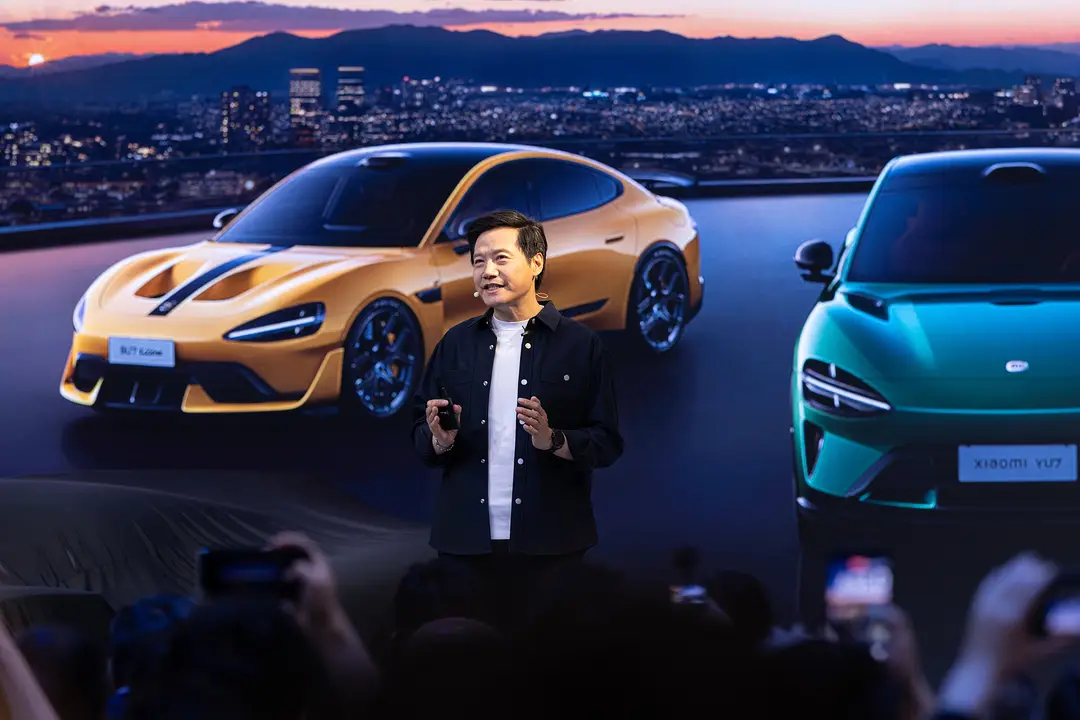
Despite the market contraction, tech giant Xiaomi (1810.HK) is proceeding with plans to enter the EREV arena. Public regulatory filings show it has secured administrative approval to expand its production scope to include range-extended passenger vehicles. Corporate disclosures indicate that its upcoming SUV line, designated SkyNomad, will feature dimensions between 5.2 and 5.3 meters, directly positioning the brand against established market leaders such as the Aito M9 and Li Auto L9.
The strategy reflects Xiaomi’s broader volume requirements. After delivering more than 410,000 vehicles in 2025, the company has targeted 550,000 deliveries for 2026. Given the capital constraints of expanding solely via pure electric sedans and crossovers, EREVs offer a rapid path toward higher production volumes. However, Xiaomi enters a highly saturated segment; during the first half of 2026, automakers launched 21 new EREV models in China, 11 more than in the prior-year period, converting a once lucrative niche into an intense arena of defensive pricing as demand weakens.
The defensive perimeter
Even so, some automakers believe EREVs still have a future, particularly in large SUVs and MPVs used for long-distance family travel, and in regions where charging infrastructure remains less developed.
Leapmotor (9863.HK) Chairman Zhu Jiangming noted that demand remains robust for specific uses, revealing that orders for the brand’s first MPV, the D99, remain skewed 60% in favor of the range-extended option over the pure electric version. MPV buyers often prioritize absolute range certainty for multi-passenger long-distance travel where charging delays are highly disruptive. Li Auto estimates that 65% of Chinese consumers still lack access to home charging, making gasoline backup attractive.
Manufacturers are fitting larger batteries and faster charging capabilities into EREVs, effectively optimizing them to run on electric power for the vast majority of urban trips. Yet, this super range-extended shift presents a distinct commercial paradox: as battery capacities increase, the overall bill-of-materials cost rises significantly due to the redundancy of dual propulsion systems. An EREV equipped with an 80kWh battery package often carries a higher total manufacturing cost than a BEV utilizing a 100kWh pack, compressing corporate profit margins on vehicles priced below 200,000 yuan.
The long-term viability of the segment remains tied to the pace of infrastructure development outside major metropolitan hubs. While EREVs continue to find utility in China’s western provinces and colder northern regions where charging networks are less dense, the window of opportunity for the technology is narrowing as high-speed infrastructure expands downward into lower-tier markets.
Source:
Huxiu