

By Da Cheung
The dream of hydrogen-powered cars may be stalling, but new growth drivers are emerging that could be a lifeline for the fuel source — industrial decarbonization, storage, and power systems.
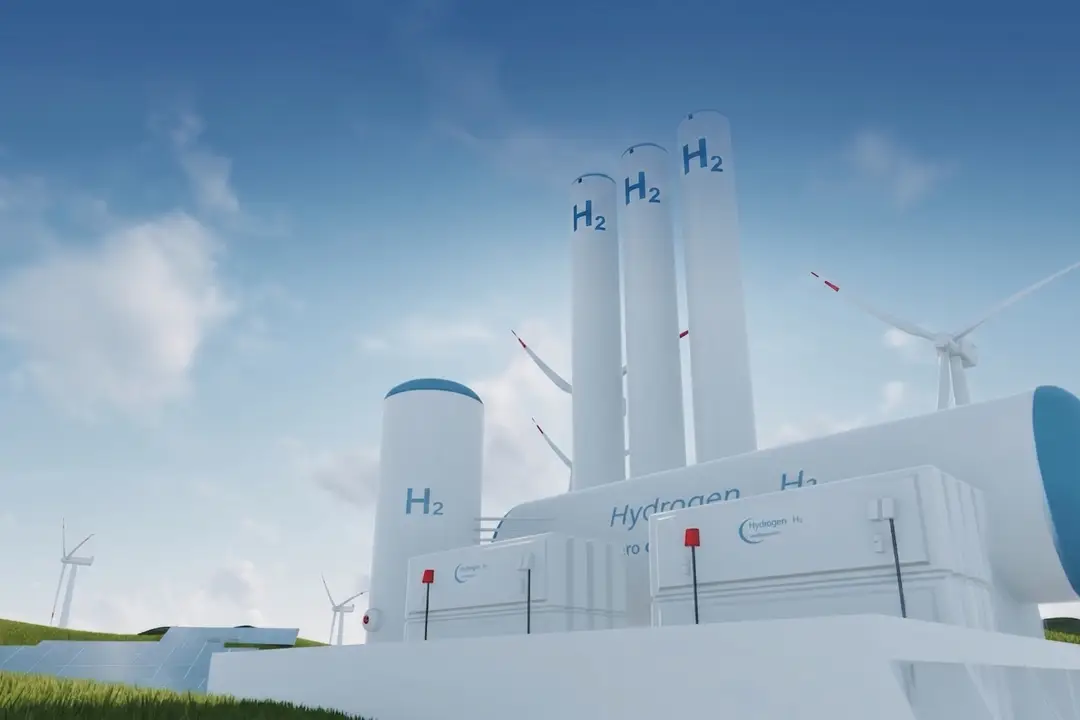
The shift is boosting demand for equipment used to produce “green hydrogen” — hydrogen generated using zero-emission renewable electricity rather than highly polluting fossil fuels like natural gas. Earlier this month, Guofu Hydrogen Energy (2582.HK) announced a 150-million-yuan ($21 million) contract to supply equipment for a massive 300−megawatt green hydrogen project — a scale of industrial power that dwarfs the needs of thousands of passenger cars. The deal pushed its parent company’s total order book to 560 million yuan.
Across the industry, the backlog is growing. “Our equipment schedules are locked in through 2027, with orders from some key clients stretching into 2028,” said one executive at a leading firm.
From highways to factory floors
The sudden surge in demand reflects a profound pivot. For more than a decade, hydrogen was heralded as the ultimate clean fuel for passenger and commercial vehicles. But faced with a range of obstacles including extreme energy loss during production, high costs, and storage problems, the market — both in China and globally — has delivered a harsh verdict.
In June 2025, Hype, a French company focused on hydrogen-powered mobility, officially ceased operation of all its hydrogen-powered taxis in Paris. In July 2025, global automotive giant Stellantis announced the termination of its fuel cell development. In October 2025, General Motors in the United States also suspended research and development of its next-generation hydrogen energy system.
In China, pure electric and plug-in hybrid models have dominated sales of new energy vehicles. In the first 11 months of 2025, hydrogen-powered heavy trucks accounted for a negligible 1.65% of the new energy heavy truck market, according to Auto Business Review.
Recognizing the market reality, the Chinese government issued a second phase of hydrogen pilot programs in March 2026. The new guidelines officially broaden the sector’s scope from solely fuel cell vehicles to a vast ecosystem of industrial applications. Global Carbon Zero notes that decarbonizing heavy industrial sectors — such as metallurgy, refining, and coal chemicals — will demand tens of millions of tons of hydrogen.
The export factor
One of the main drivers of this industrial transition are tumbling equipment costs. Over the past two years, the price of mainstream alkaline electrolyzers — mature devices that use a liquid alkaline solution and electricity to split water into hydrogen and oxygen — has plummeted by around two-thirds to 2.5 million yuan per set.
In regions with abundant renewable resources like wind and solar, the production cost of clean green hydrogen has fallen to 18 to 25 yuan per kilogram, close to the 15 yuan per kg cost of polluting gray hydrogen.
The urgency behind these multi-million-yuan orders isn’t just about domestic policy—it’s about survival in the global market. In 2026, the European Union’s Carbon Border Adjustment Mechanism officially moved from a reporting phase to a full-tax reality. The policy imposes a de-facto carbon tax on energy-intensive goods like steel, aluminum, and chemicals entering member states.
Replacing traditional gray hydrogen with green hydrogen can eliminate roughly 20 tons of carbon dioxide for every ton of hydrogen produced, helping Chinese exporters slash their carbon footprint and avoid the border tariffs. International energy developers are aggressively scaling up; Saudi Arabia’s ACWA Power says its global renewable expansion has already yielded over $5.5 billion in supply contracts for Chinese equipment manufacturers.
Salt caverns and green certificates unlock the market
While the factory-gate cost price of hydrogen has fallen significantly, the cost of storing and moving the fuel remains prohibitive. Transporting raw hydrogen gas via traditional tube trailers can push the total delivered cost to above 50 yuan per kg.
Hydrogen is also a nightmare when it comes to logistics. As the universe’s lightest element, it is famously difficult to contain; it can seep into the structure of metal pipes and tanks, making them ‘brittle’ and prone to cracking under pressure. To bypass these hurdles, energy companies are looking deep underground, specifically to salt caverns — vast underground voids left over from salt extraction — which offer highly sealed and stable environments. Converting them into storage tanks slashes capital construction costs by 80% compared with building high-pressure surface tanks, and the facilities boast lifespans of more than 30 years.
Industry insiders project this subterranean infrastructure transforms hydrogen from a speculative concept into a tangible financial asset. Instead of being just a fuel, it becomes a massive industrial battery: companies can store cheap energy when demand is low and sell it back to the grid at a premium during peak hours. This “buy-low, sell-high” model creates a stable revenue stream that finally makes green hydrogen cost-competitive with its more polluting rivals.
Last month, China Pingmei Shenma Group (600810.SH) commissioned Asia’s first commercial million-cubic-meter underground salt cavern for hydrogen storage in central China. Utilizing a 1,418-meter-deep abandoned cavity, the company says the project was completed with investment of just 78 million yuan.
Yet physical infrastructure is only half the battle; the sector also requires a mature market framework to thrive. As Sci-Tech Innovation Daily notes, the industry’s long-term viability hinges on “green certification” and carbon trading. When a steel mill purchases green hydrogen, it is buying more than just a fuel—it is acquiring a verifiable claim to carbon reduction. Until these “green attributes” can be easily traded and turned into cash, the investment case for hydrogen remains an open loop.
Distributed power generation takes the spotlight
With consumer vehicles largely pivoting to electric battery systems, hydrogen’s role in the transport ecosystem is being redefined. Rather than operating individual cars, industry experts emphasize hydrogen’s value as a balancing mechanism for the broader power grid.
Modern fast-charging technology for electric vehicles places sudden, massive loads on urban electrical infrastructure. To buffer these surges, urban planners are turning to localized microgrids, according to Auto Business Review. In remote regions, intermittent solar and wind energy can be converted into green hydrogen, then chemically transformed into stable liquid carriers like methanol or ammonia — which are easier to handle than raw gas — to prevent hydrogen embrittlement during transport. Once delivered, these liquida can be reformed back into hydrogen and utilized by stationary fuel cells to generate electricity locally, circumventing the need for expensive upgrades to municipal power grids.
China’s hydrogen market landscape could shift again with the slated 2027 opening of the country’s first “West-to-East” hydrogen pipeline. The 23-billion-yuan investment project stretching 1,145 kilometers aims to slash long-distance transport costs by 80%. By abandoning the struggle to put hydrogen inside passenger cars and using it instead as a foundational pillar for industrial decarbonization and grid stability, the sector may have finally found a sustainable future.
Sources: