
By Da Cheung
As the EV batteries in the first massive wave of electric cars reach the end of the road, China is moving to formalize what has long been a Wild West industry of recycling and disposal. On April 30, five of the country’s most powerful regulatory bodies — including the Ministry of Industry and Information Technology (MIIT) and the Ministry of Ecology and Environment — launched a joint Special Action to clean up the chaotic trade in spent lithium-ion cells.
The stakes are high. By the end of 2026, China will have accumulated an estimated 980,000 tons of retired EV batteries, a figure expected to surpass 1.5 million tons in 2030, according to industry data based on typical vehicle retirement windows. Globally, that number is expected to swell to 14 million batteries by 2040. China’s struggle to manage this “urban mine” offers a window into the environmental and economic challenges facing any nation that bets its transportation future on electricity.
The rise of the battery refiners
Two decades ago, Li Changdong was a scrap merchant in the southern province of Guangdong, scouring neighborhoods for discarded electronics. Today, he is the president of Brunp Recycling Technology, a subsidiary of the world’s largest battery maker, CATL (3750.HK) (300750.SZ).
Brunp now handles one out of every three retired EV batteries in China. The company’s trajectory mirrors China’s broader strategy: dominating not just the production of new batteries, but the “closed-loop” recovery of the minerals inside them. A report by the European Patent Agency and the International Energy Agency reveals that Chinese companies accounted for 70% of all patent applications in battery metal refining in 2023.
The report also pointed out that Western giants like Umicore and BASF focus on high-tech approaches — chemical conversion and automation — to recover battery-grade metals efficiently. But they face a more fundamental problem: not enough dead batteries to process. China controls roughly 80% of the world’s battery production capacity, but that doesn’t automatically translate into control over global battery waste. Retired batteries tend to accumulate where EVs are driven, not where cells are made. However, because China’s domestic EV fleet is older and larger than those in the U.S. or Europe, China currently generates significantly more end-of-life batteries. As a result, some experts say that even if the U.S. and Europe build their own recycling plants, they will likely lack adequate supplies of retired batteries for years to come.
The “White List” vs. the “Black Market”
Despite the dominance of giants like Brunp, the domestic Chinese market remains fractured. The government maintains a “White List” — a registry of 156 companies, including Shanghai-based Z Cycle, that meet strict environmental and safety standards.
However, these legitimate players are often outbid by unlicensed small workshops. These illicit operators avoid the heavy costs of wastewater treatment and fire-prevention infrastructure, allowing them to offer higher prices to car owners and middle-men. “We are being ‘killed’ by the small shops,” one White List entrepreneur told Yicai. “They have no costs. We have to meet national environmental and safety requirements.”
In these illegal workshops, batteries are often dismantled with power saws — a practice that risks what’s known as thermal runaway, when a battery heats up uncontrollably and potentially explodes. Toxic electrolytes and heavy-metal-laden wastewater are sometimes dumped directly into sewers.
This underground trade is fueled by the volatility of raw material costs. The price of lithium carbonate, a key battery ingredient, peaked at nearly $83,000 per ton in 2022 before crashing by around 90%. As of May 2026, prices have stabilized around $22,000 per ton. For legitimate recyclers, the speed of price drops often outpaces their processing time, leading to losses and leaving factories sitting idle for months at a time.
Rethinking the ‘second life’
Not every battery needs to be ground into powder immediately. At Z Cycle’s facility in Shanghai, retired batteries undergo a “physical” to check their health.
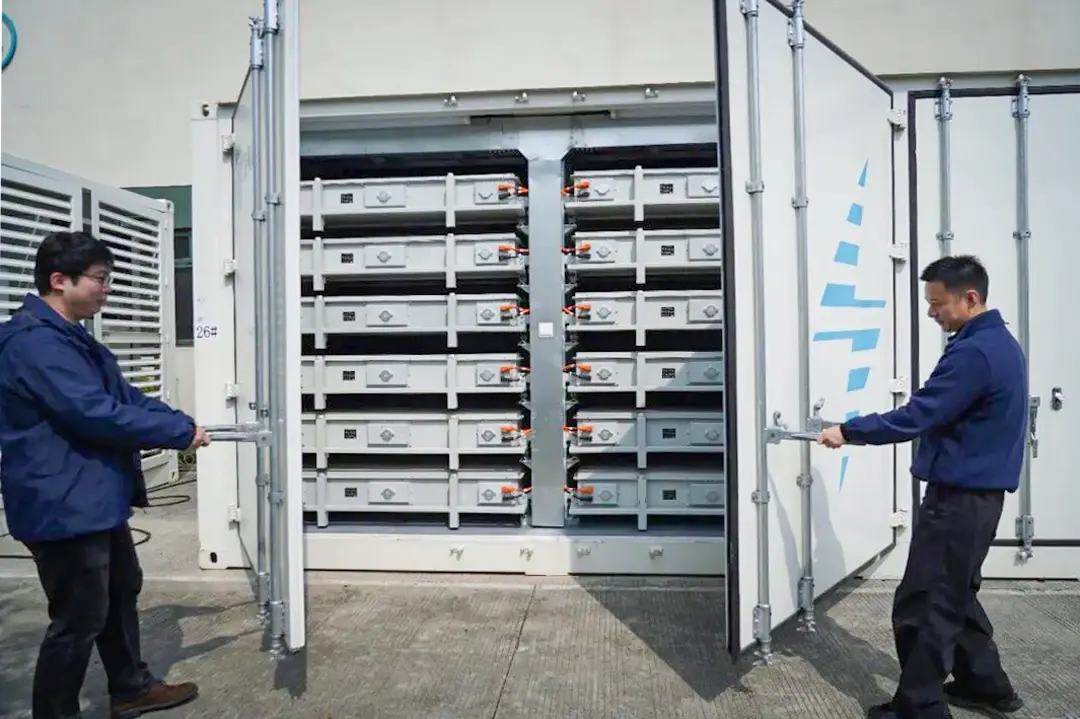
Batteries that still hold significant capacity are repurposed into stationary energy storage units. These “second-life” batteries power hospitals, schools, and industrial parks, helping to balance the power grid during peak hours.
However, the industry is moving away from repurposing. China introduced new regulations effective April 2026 that require batteries to be treated as a standardized product regardless of their history.
As Professor Wei Xuezhe of Tongji University told Yicai that the challenge is that batteries don’t age uniformly. One cell might be healthy while its neighbor is dry of electrolyte, making it difficult to guarantee safety or assign liability if something goes wrong.
The shift means fewer batteries will be repurposed for second-life applications. Instead, more will go straight to shredding and chemical recovery — simpler and safer from a liability standpoint, but less energy-efficient and less circular. By shifting liability back to manufacturers, the new rules discourage creative reuse in favor of a cautious, standardized model.
The MIIT has also banned the use of second-life batteries in electric bicycles, citing safety concerns following a string of fires.
A cleaner exit
The environmental promise of EVs depends on what happens at the scrapyard. If batteries end up in the black market, the carbon savings of driving an electric car are offset by soil and water pollution.
China’s new Special Action aims to enforce a “car-and-battery-as-one” policy, preventing the separate sale of batteries from scrapped vehicles — a move designed to cut off the supply to illegal workshops.
Long-term, the shift toward “urban mining” — extracting minerals from scrap rather than the earth — could reshape the global lithium market. As Brunp and Z Cycle refine their hydrometallurgy (a process using liquid chemicals to extract metals at high purity), the need for new mines in South America or Australia may fall significantly.
For the rest of the world, the lesson from China is clear: building the cars is only half the story. The real test of the green revolution will be whether the industry can clean up its own mess.
Sources