

By Da Cheung
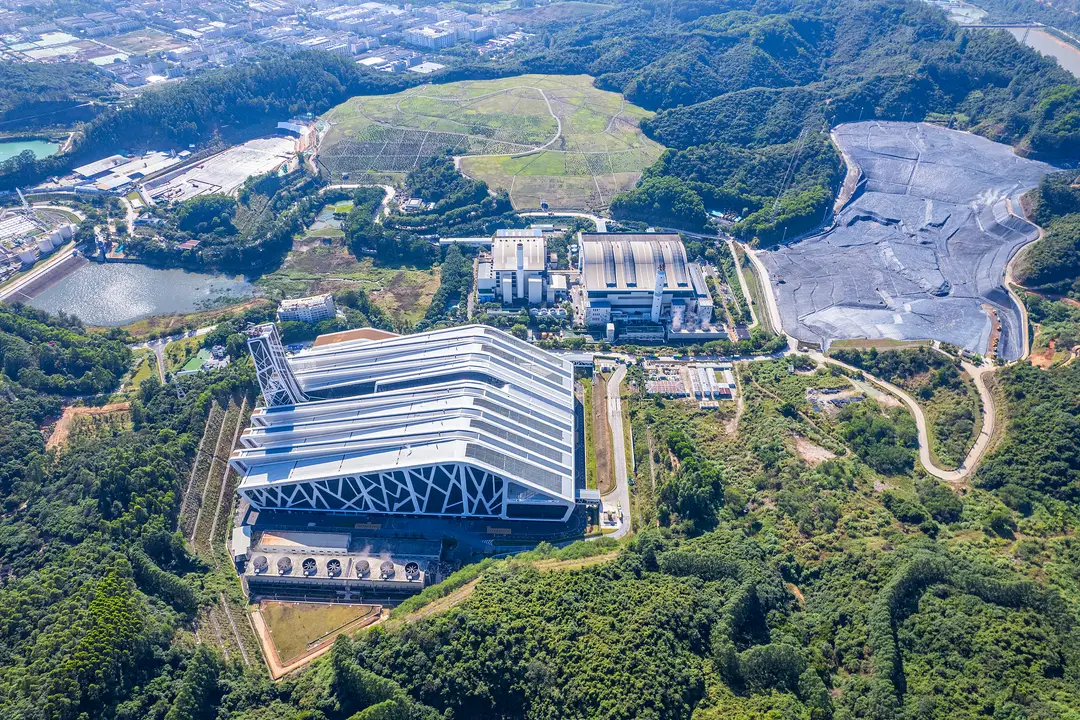
In Shenzhen, excavators are currently tearing through the Yulong landfill beneath a massive green canopy, systematically dissecting an old garbage mountain the size of two and a half stadiums. This project, which involves investment of around 2.17 billion yuan ($300 million) and is slated to be completed by late 2026, is unearthing four million tons of trash buried decades ago. The goal is simple: sift out anything combustible to feed the city’s ravenous waste incinerators.
For decades, Chinese cities were besieged by garbage. But a massive government-backed pivot to incineration has literally changed the landscape. China’s waste incineration plants now have an installed capacity of around 25 gigawatts and can generate over 100 billion kilowatt-hours of electricity, equivalent to the massive Three Gorges Dam. Yet, this state-sponsored industrial machine has been so aggressively efficient that a bizarre problem has emerged: there isn’t enough trash left to burn. Overcapacity, coupled with shrinking profit margins, is forcing Chinese environmental tech companies to dig up old landfills and export their expertise to neighboring Southeast Asian countries, even as some Western nations view the technology with deep suspicion.
The gold rush of burning trash
China’s waste crisis came to a head following the 2010 release of “Beijing Besieged by Waste,” a documentary that cataloged more than 400 illegal dumps surrounding the capital. Before incineration gained a foothold, simple landfills were the default solution, according to a report by the Earth Knowledge Bureau. China’s largest landfill, Jiangcungou, in a suburb of the ancient city of Xi’an, stretches over 165 acres, equivalent to some 100 standard football fields. Opened in 1994, it was projected to reach its capacity in 2044, but filled up far faster and closed in 2020.
In addition to requiring vast amounts of land, these dumps also produced hazardous leachates and highly potent methane gas. The dangers led the central government to roll out aggressive incentives to encourage alternatives. A 2012 policy guaranteed a lucrative power tariff of 0.65 yuan per kilowatt-hour for waste-to-energy projects, alongside favorable tax breaks and municipal processing fees of around 150 yuan per ton.
The policies transformed environmental regulation into a commercial gold rush. From 2005 to 2023, the number of incinerators across the country skyrocketed from 67 to over 1,000. Companies such as Everbright Environment (0257.HK) and Grandblue Environment (600323.SZ), as well as peers like Sanfeng Environment (601827.SH) and Dynagreen Environmental Protection (601330.SH) (1330.HK), grew into dominant publicly traded entities. Incineration’s share of municipal waste disposal ballooned to 82.5%, while landfill’s share dropped to 7.5% from 85.2%.
However, the rapid expansion created an overhang. By 2024, the national capacity utilization rate for incinerators languished at around 60%, with over 100 furnaces idle for more than six months. Desperation to boost utilization rates has fueled a domestic price war, with some plants offering zero-yuan bids to local governments just to secure trash volume.
Meanwhile, an economic dilemma persists in rural areas. Burning trash deals with city waste flawlessly, but rural collection is another story due to the lack of local authority funding. This represents a classic “negative externality” popularized by economist Arthur Pigou — actors often dump waste illegally in caves or rural fields because they do not have to personally bear the indirect social costs of their pollution. Urban residents generally pay roughly 30 yuan annually in waste treatment fees, leaving massive collection shortfalls that only heavy government subsidies can cover. Without centralized funding, rural collection lags behind, creating localized dumping crises even as national incinerators are starved of fuel.
Expanding south for survival
The supply of cheap raw materials dried up after China banned foreign waste imports in 2018 and excavating mature landfills locally yields poor economic returns. Old, decomposed waste has low energy value and requires costly sorting.
With domestic growth stalling, Chinese firms are now making a strong push into Southeast Asia. According to the Zhengjie Bureau, Chinese players are capitalizing on a perfect alignment of geographic need and technical suitability. Southeast Asian municipalities are grappling with exploding urban waste; Vietnam, for example, generates 68,000 tons of solid waste daily, but less than half is adequately treated, leaving the country heavily reliant on heavily polluting landfills.
Fortunately for Chinese players, Asian municipal solid waste shares a common trait: high moisture and high organic content due to local diets. Western equipment designed for dry waste has historically struggled in the region. Chinese companies, using robust mechanical grate furnace technology originally optimized to handle high-moisture domestic waste, can successfully keep the wet waste rolling and burning steadily at temperatures of over 850°C — efficiently destroying toxic byproducts like dioxins while making up for the poor calorific value of the garbage.
The economic returns abroad are proving highly attractive. China Tianying (000035.SZ) launched the region’s largest waste-to-energy plant in Hanoi, investing over 4 billion yuan in a facility designed to process 4,000 tons of waste daily. According to the company, the project is backed by a generous 10.05 cents per kilowatt-hour tariff and substantial tax exemptions from the Vietnamese government. SUS Environment and other domestic peers are similarly accelerating their overseas footprints, locking in long-term concession agreements across the region.
A global divide on environmental justice
The aggressive expansion of the Chinese incineration model contrasts starkly with growing skepticism in the U.S. In late 2024, California shut down its last two solid-waste incinerators, bringing the curtain down on an era heavily criticized for its adverse health and equity impacts.
As the waste industry grew in the 20th century, research consistently found that American incinerator emissions — including particulate matter, furans, and heavy metals — led to increased respiratory and cardiovascular issues in surrounding communities, according to Rethink Waste. In California, a disproportionately high number of these plants were built in low-income neighborhoods, catalyzing community-led environmental justice movements that successfully lobbied for stricter state regulations which eventually drove the industry out of the region.
While Europe and Japan — which share geographical land constraints with Asia — have invested heavily in sophisticated filtration systems for their waste-to-energy plants, California currently relies almost entirely on landfills and methane capture, prioritizing zero-waste initiatives and the protection of vulnerable communities over localized energy recovery.
The divergence reveals how governments are answering the same modern problem. China found a commercial and environmental fix in incineration, turning trash into a massive utility business. But maintaining this industrial machine now requires exporting the flames far beyond its borders.
Sources