

By Song Sihang
Inside the Beijing headquarters of Chinese AI startup Zero One, also known as 01.AI, the mood has shifted from survival to expansion, after it abandoned the costly race to build frontier AI models in favour of enterprise applications.
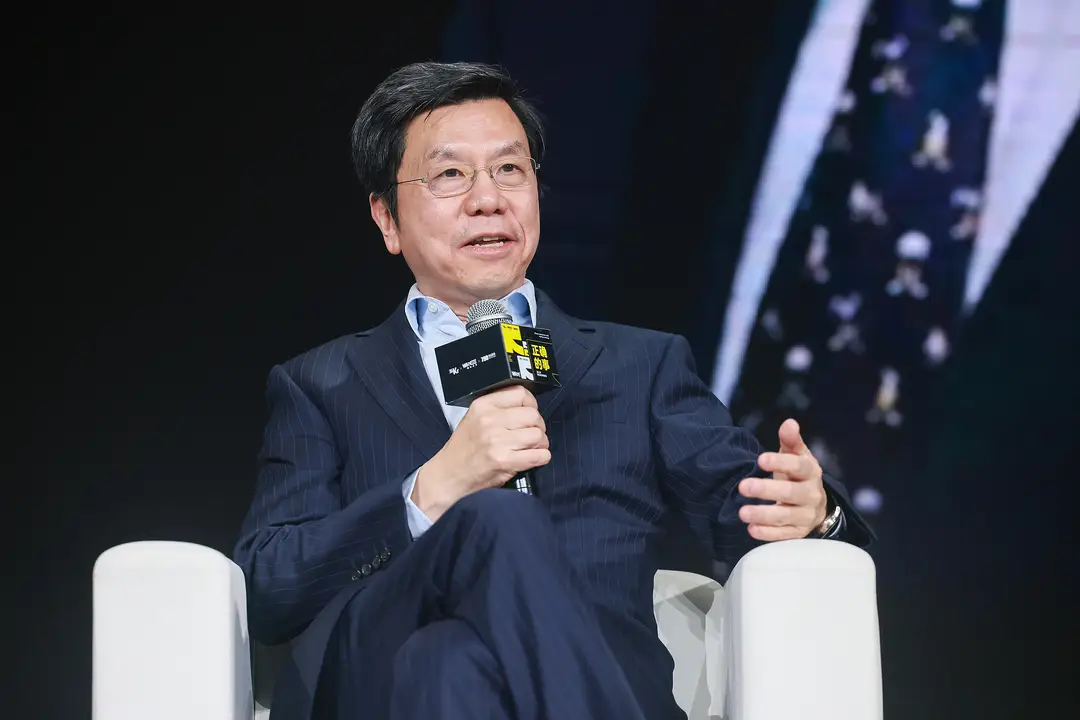
At an internal address marking the company’s third anniversary, chief executive and former Google China president Li Kaifu told employees the business was now targeting a stock market listing in 2027, after securing 1.5 billion yuan ($210 million) in orders in the first five months of 2026 — double the figure for the whole of 2025.
Li, founder and CEO of venture capital firm Sinovation Ventures, said the startup aimed to become “China’s first profitable AI 2.0 company” and revealed plans for a fresh employee stock option scheme ahead of a new fundraising round, according to a transcript seen by Huxiu.
The remarks offer a rare glimpse into the growing divide within China’s AI sector, as companies confront mounting investor pressure to prove they can generate sustainable revenues rather than simply burn cash training ever larger models.
A restructuring not a retreat
Since 2025, Chinese AI startups have increasingly split into two camps. One group — including Zhipu (2513.HK), MiniMax (0100.HK), Moonshot AI, and StepFun — has continued investing heavily in pre-training large language models and graphics processing infrastructure. The other camp has retrenched from the frontier model race and shifted toward commercial deployment. Zero One has become the clearest example of that strategy.
In January 2025, the company transferred much of its pre-training and AI infrastructure teams to Alibaba Group, effectively withdrawing from direct competition with China’s largest model developers. At the time, many in the industry viewed the move as a retreat.
But the launch later that month of DeepSeek’s reasoning-focused R1 model reshaped the competitive landscape, intensifying pressure on smaller foundation model groups. Zero One’s earlier strategic pivot gave it more room to reposition itself around commercial applications rather than a costly technological arms race.
Li acknowledged internally that the transition had been painful. At one point, roughly one-third of desks in the company’s offices sat empty, according to the speech transcript. Employees reportedly reacted coolly when management first outlined plans to pivot toward business-focused AI services.
Over the past year, however, the company has concentrated almost entirely on the enterprise market, with Li personally taking on a more sales-oriented role, travelling extensively across Central Asia, the Middle East and Africa to meet corporate and government clients.
The company now positions itself as an “AI deployment company” rather than a pure model developer, benchmarking itself against U.S. data analytics group Palantir Technologies.
Show me the money
“To survive, companies need customers willing to sign real contracts with real money,” Li told employees.
While much of the AI industry remains focused on the pursuit of artificial general intelligence, Zero One is betting that investors will reward companies capable of turning AI into measurable gains for customers. “Others use AI to improve workflows; we use AI to improve customers’ financial statements,” Li said in the speech.
Investors are increasingly scrutinising whether AI groups can establish viable business models rather than rely indefinitely on fundraising to finance computing costs.
Li said that Zero One’s revenue growth was driven by high-margin enterprise subscription contracts and repeat business rather than subsidised user acquisition. The company expected to reach break-even profitability in at least one quarter next year.
Internally, the company is also restructuring around a more aggressive performance culture. Li announced plans to distribute an additional 20 million stock options to employees and said a larger round of equity incentives would follow before the IPO.
Ambitious targets ahead of IPO
The company is also introducing a “directly responsible individual” management system, under which employees are given greater authority — and accountability — for projects regardless of seniority.
Li framed the coming year as the start of a “second founding” for the company. He set a target of securing between 1.5 billion yuan and 2 billion yuan in contracts this year, alongside an unspecified but “considerable” volume of recognized revenue, while preparing to go public.
Despite the commercial emphasis, Li said the company’s long-term ambition remained broad: using AI to modernize traditional industries, improve public services, and expand access to education.
But after two years in which China’s AI sector has largely been defined by escalating spending on chips and foundation models, Zero One is now attempting to convince investors that the next phase of the industry may depend less on technological supremacy than on building a profitable business.
Source:
Huxiu