

By Hu Minghe
AI startup SiliconFlow has raised more than 2 billion yuan ($294 million) in a new funding round to expand its model-as-a-service (MaaS) platform, capitalising on China’s booming artificial intelligence sector without developing a foundation model of its own.
The company is positioning itself as a neutral intermediary in a fragmented hardware landscape. Its platform hosts and optimises models from external developers—including DeepSeek, Alibaba’s Qwen, Knowledge Atlas Technology (Zhipu AI), and Moonshot — allowing enterprise clients to run large language models (LLMs) across a diverse mix of domestic and international chip architectures.
The fifth funding round since the company’s inception less than three years ago drew backing from prominent strategic investors. Participants included online travel platform Trip.com, AI developer SenseTime, state-owned telecom operator China Unicom, and Nio Capital, joining existing investors Alibaba Cloud and Knowledge Atlas Technology.
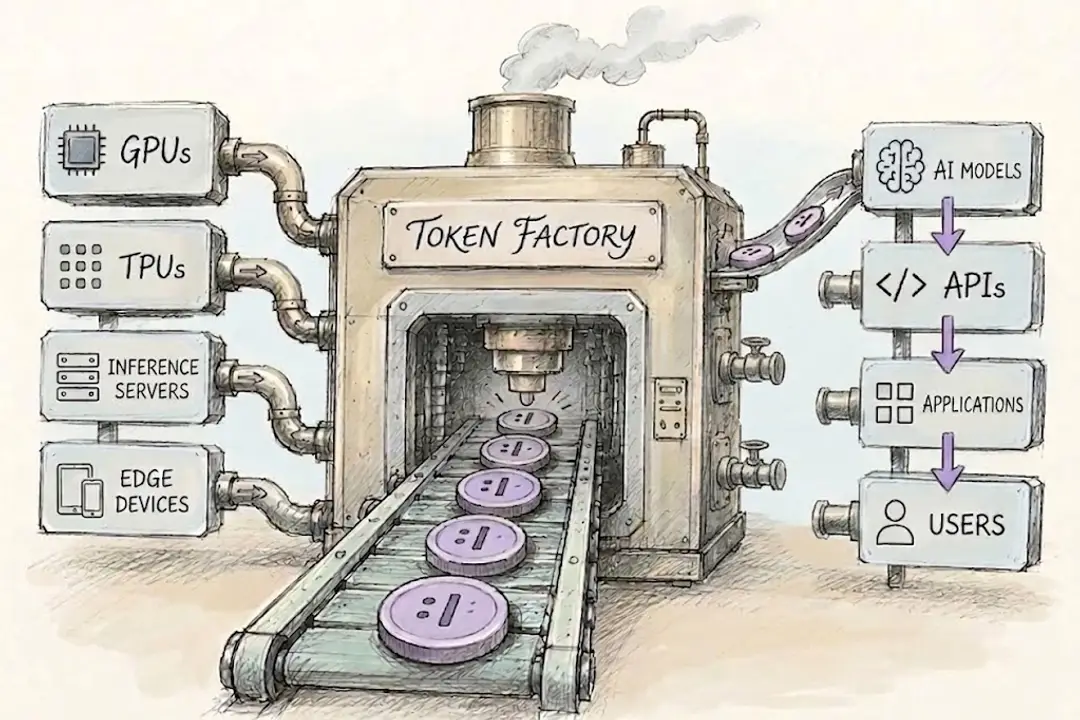
SiliconFlow’s core value proposition lies in the infrastructure layer that sits between AI models and physical hardware. Operating what it terms a “token factory,” the company uses proprietary software to manage memory, batching, and workload distribution across disparate processors and data centres, streamlining inference tasks for over 10 million users and 10,000 enterprise customers.
Infrastructure focus and the DeepSeek boom
The strategy reflects the long-term focus of founder Yuan Jinhui on AI infrastructure. After earning a doctorate at Tsinghua University and working at Microsoft Research Asia, Yuan founded Oneflow, which was later acquired by tech giant Meituan. He then established SiliconFlow with former colleagues, shifting focus from model training to runtime execution.
This technical background proved critical during the early 2025 DeepSeek boom. When surging demand for DeepSeek’s R1 and V3 models overwhelmed public services, SiliconFlow collaborated with Huawei Cloud to launch versions optimized for Huawei’s Ascend processors. Researchers from both firms later detailed how they served DeepSeek-R1 on Huawei’s CloudMatrix384 supernode, demonstrating SiliconFlow’s capacity to engineering-optimize workloads rather than merely resell access.
China’s fragmented computing market amplifies the opportunity for neutral middleware. Domestic enterprises frequently run Nvidia processors alongside hardware from domestic suppliers like Huawei, Biren, Moore Threads, and Metax. Each supplier uses distinct software stacks, making a cross-compatible integration layer highly valuable.
However, the domestic MaaS market remains intensely competitive. According to data from market research firm IDC, Chinese enterprise MaaS consumption surged from 114 trillion tokens in 2024 to 1.94 quadrillion in 2025. Public-cloud MaaS revenue reached 3.07 billion yuan during the period.
Despite the big market opportunity, SiliconFlow faces some formidable domestic rivals. ByteDance’s Volcano Engine, Alibaba’s (BABA.US; 9988.HK) Alibaba Cloud, and Baidu’s (BIDU.US; 9888.HK) Baidu AI Cloud ranked ahead of it by token volume in China’s public-cloud MaaS market in 2025. Those rivals have an advantage in their ability to bundle model access with storage, databases, security and existing enterprise contracts. Ppio, Infinigence AI and Luchen Technology compete more directly in inference optimization, multi-chip deployment and their ability to work with private AI infrastructure.
While SiliconFlow ranked fourth by token volume, it fell outside IDC’s top five providers by revenue, indicating rapid technical deployment but slower monetization. Major cloud providers maintain a structural advantage by bundling model access with storage, databases, security, and existing enterprise contracts.
Funding tailwinds and long-term viability
Abundant capital is entering the broader AI value chain. The Hong Kong stock exchange recorded 12 recent listings from firms including Knowledge Atlas Technology (2513.HK), Minimax (0100.HK), and Biren Technology (6082.HK), raising a combined $4.9 billion. Privately owned DeepSeek reportedly secured over 50 billion yuan in its initial external round in early June.
This capital influx poses a structural risk to middleware providers. Cash-rich model developers may utilize their funds to build proprietary optimization tools, potentially bypassing third-party intermediaries.
To mitigate this, SiliconFlow is expanding beyond public APIs into private enterprise services, offering dedicated capacity, security governance, and hardware management. While the company plans to deploy its new capital toward overseas expansion, international markets present distinct challenges. SiliconFlow faces established U.S. specialists like Together AI, Fireworks AI, and Baseten, which already offer advanced routing and dedicated infrastructure.
Furthermore, the overseas market lacks the hardware fragmentation that drives SiliconFlow’s domestic adoption, as the international ecosystem remains largely standardized around Nvidia architecture. Consequently, the company’s long-term margin sustainability likely depends on embedding its software directly into private corporate infrastructure rather than relying on commoditized API transactions.
Source:
Bamboo Works
To subscribe to Bamboo Works free weekly newsletter, click here