
China’s third-largest contract chipmaker is expanding beyond display driver chips with a 35.5 billion yuan investment, betting autos and AI demand will bolster flagging profits.
By Hu Hao
For more than a decade, the eastern Chinese city of Hefei has pursued an industrial strategy built around filling gaps in strategically important supply chains. From display panels and electric vehicles to semiconductors, local authorities have sought to develop the industries they lacked rather than compete directly in areas where China already had strength.
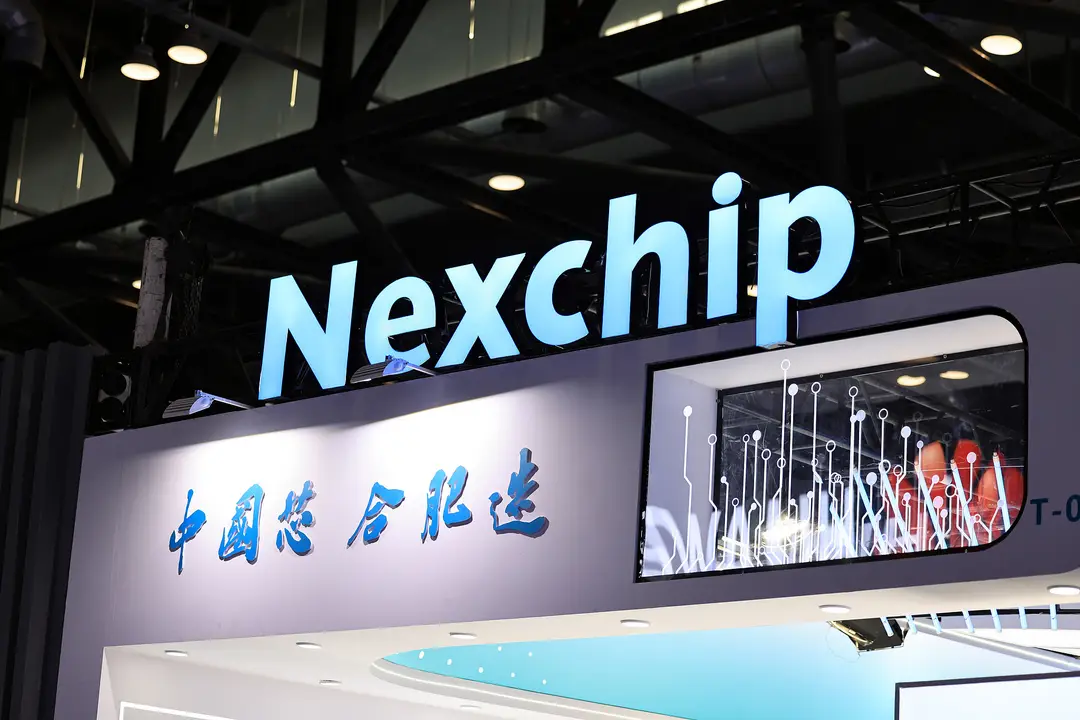
That strategy gave birth to Nexchip Semiconductor (688249.SH) (2249.HK) in 2015. Created to supply display driver integrated circuits (DDICs) for local display maker BOE Technology Group (000725.SZ) (0710.HK), the foundry has since grown into the world’s largest contract manufacturer of display driver chips by revenue.
Now, however, the company faces a different challenge. Having dominated a relatively mature market, it is seeking to diversify into automotive, industrial and AI-related chips while convincing investors that it should be valued as a growth platform rather than another cyclical semiconductor manufacturer.
The transition has taken on added significance after Nexchip, already trading on Shanghai’s STAR Market, listed in Hong Kong on July 10, raising $891 million and giving it access to international capital as it embarks on an ambitious expansion.
Built to plug a supply chain gap
Nexchip’s origins are closely tied to Hefei’s industrial planning.
More than a decade ago, the city promoted an industrial development strategy centred on semiconductors, display panels, manufacturing equipment and industrial clusters. Officials identified a critical weakness: while BOE was producing large volumes of display panels in Hefei, the display driver chips controlling those panels still had to be sourced from overseas suppliers.
Nexchip was established to localize that part of the supply chain rather than compete at the leading edge of semiconductor manufacturing. Instead of chasing the most advanced process technologies dominated by companies such as Taiwan Semiconductor Manufacturing Co., it focused on mature-node production for display driver chips used in televisions, smartphones and other display products.
The strategy proved successful. By 2025, Nexchip accounted for 23.3% of global DDIC foundry revenue, making it the world’s largest contract manufacturer in the segment despite a change in industry reporting methodology from the previous year, when its share stood at 26.6%.
Its customer base expanded beyond BOE to include leading chip designers such as Novatek, Chipone Technology, Himax Technologies and Raydium Semiconductor, while its location alongside one of the world’s largest display manufacturing clusters allowed close collaboration with panel makers.
Searching for new growth
Market leadership has also exposed the limits of Nexchip’s core business.
The global DDIC foundry market is expected to grow at a compound annual rate of just 0.3% between 2021 and 2025, leaving limited room for further expansion even for the market leader. Profitability has already weakened as demand growth slowed, with gross margins falling from around 45% in 2021-22 to roughly 20%-25% since 2023.
The company’s answer is diversification into complementary mature-node semiconductor technologies, particularly CMOS image sensors (CIS) and power management integrated circuits (PMICs), both of which have stronger long-term growth prospects than display driver chips.
The shift also reflects Hefei’s changing industrial priorities. The city has assembled a large electric vehicle manufacturing base, including operations by Volkswagen, BYD, Nio, JAC, Changan and Ankai, supported by more than 500 suppliers. Those vehicles require increasing numbers of image sensors, power management chips and other semiconductors for intelligent cockpits, advanced driver assistance systems and increasingly complex vehicle electronics.
Nexchip has built CIS manufacturing capabilities spanning 90-nanometer to 55-nanometer processes and has begun volume production of stacked image sensors used in smartphone and automotive cameras. CIS accounted for 23% of revenue in 2025, up nearly 17 percentage points from 2023, while PMIC products generated more than 12% of revenue.
High utilization, weak profits
The company’s transformation has created a paradox. While factories are running at full capacity, profitability has deteriorated.
Capacity utilization climbed from 72.5% in 2023 to 94% in 2024 and exceeded 100% in 2025, yet margins remained under pressure. In the first quarter of 2026, revenue rose 13.4% year-on-year to 2.91 billion yuan ($430 million), but gross margin fell to 21.3% from 27.3%, while net profit dropped 62.6% to just 51 million yuan.
The principal reason is the economics of semiconductor manufacturing. Depreciation has surged as the company invests in new production lines, rising from 1.18 billion yuan in 2021 to 3.75 billion yuan in 2025, equivalent to 34.5% of annual revenue. At the same time, newer CIS and PMIC businesses have yet to achieve the production scale needed to match the margins of the mature DDIC business, while research and development spending continues to rise.
A 35.5-billion-yuan wager
The company’s next phase depends on a fourth production project costing 35.5 billion yuan, more than three times its 2025 revenue.
The facility is designed to produce 55,000 12-inch wafers a month using 40-nanometer and 28-nanometer process technologies for image sensors, OLED driver chips and logic devices targeting AI smartphones, AI personal computers, automotive electronics and artificial intelligence applications. Equipment installation is scheduled to begin in late 2026, with full production expected by the end of 2028.
For investors, the central question is whether Nexchip should still be viewed as a foundry tied primarily to the cyclical display market or as an emerging specialty manufacturing platform with broader exposure to automotive, industrial and AI demand.
The answer will depend less on near-term earnings than on whether its newer businesses achieve sufficient scale, margins recover as depreciation peaks and the new production platforms begin generating meaningful revenue. The Hong Kong listing gives Nexchip access to the capital needed to pursue that strategy, but the market has yet to decide whether the company deserves a higher-growth valuation.
Source:
Late Post