

By Da Cheung
3D printing is moving rapidly from industrial applications and niche geek workshops into the home. China’s manufacturing hub of Shenzhen has become a global hub for consumer 3D printing, supplying most of the world’s entry-level machines, which allow users to create physical objects from digital models by layering materials like plastic or resin.
But while the market is flourishing, so are the growing pains facing the sector’s top hardware companies.
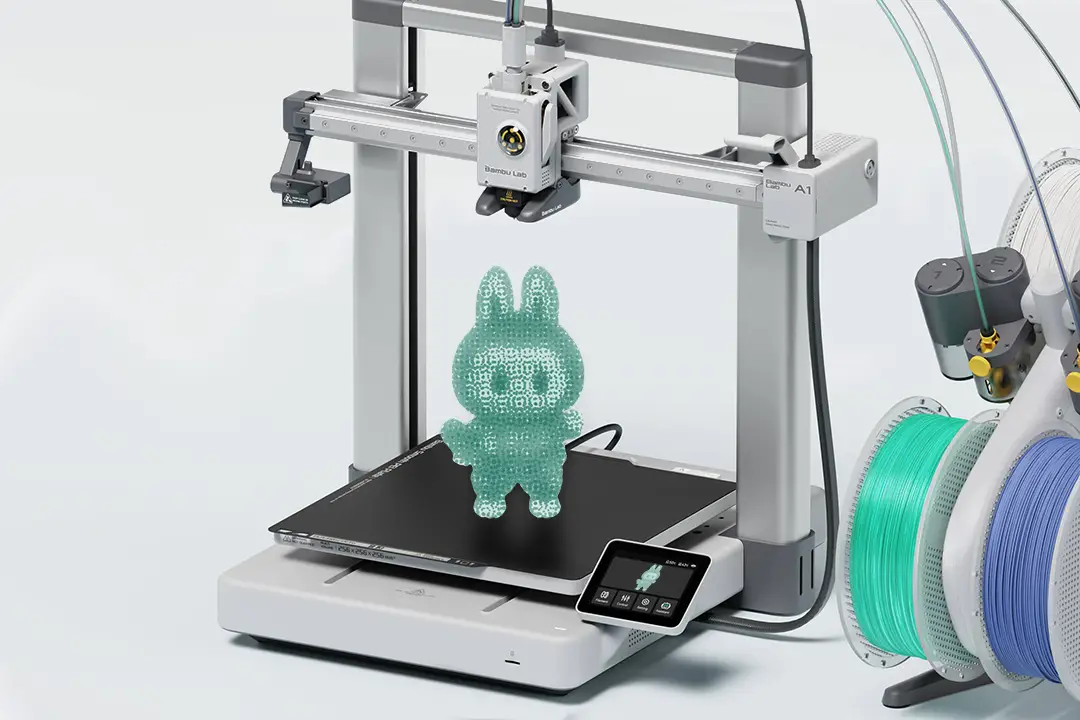
Bambu Lab, a leading player in consumer desktop 3D printing, is fighting a major copyright infringement lawsuit brought by Pop Mart, the international collectibles group behind the Labubu character. Meanwhile, its main rival, Creality, is making a second attempt at an initial public offering in Hong Kong while grappling with declining profits and shifting market demand.
The double-edged sword of community
For years, selling hardware was the primary focus of 3D printing startups. Today, building a robust online community has become the key to sustaining growth. To retain users and prevent machines from sitting unused, printer manufacturers rely heavily on cloud-based platforms where users can easily download and share digital 3D models to print at home.
According to 36Kr, Bambu Lab’s platform, MakerWorld, boasts the highest number of monthly active users globally, with a community numbering the tens of millions. However, this vibrant ecosystem also brought trouble to the company. Pop Mart recently sued Bambu Lab and its affiliates over copyright infringement regarding user-uploaded, 3D-printable models of Labubu. The case, which examines whether the platform bears is liable for user-generated content, had its first court hearing on April 2.
Intellectual property risks are further amplified by a new wave of generative AI 3D startups. AI platforms that create 3D models, such as Tencent’s Hunyuan 3D and Meshy AI, are lowering the barrier for ordinary users to generate custom 3D models. While these tools democratize creation, they also make the reproduction of copyrighted materials significantly easier, adding complex variables to the platform compliance landscape.
Financial strains and shifting strategies
While Bambu Lab navigates these legal challenges, Creality is dealing with financial turbulence. The 12-year-old company built its early success on aggressively low pricing, offering highly affordable machines that appealed to the global market. It attempted an IPO in Hong Kong in August 2025, but its application lapsed amid a range of investor concerns including its growth prospects and its weak profitability.
Now, it’s trying again, aiming to build a war chest to fight its battle with Bambu Lab for market dominance. According to its prospectus, Creality generated 3.12 billion yuan ($431 million) in revenue in 2025, but recorded a net loss of 182 million yuan, a sharp decline from its previous profitability.
Creality is suffering from a structural shift in the market. Its core 3D printer sales volume dropped from 870,700 units in 2023 to 720,600 units in 2024. The company says it is strategically promoting higher-end product lines, which raised average prices but reduced overall sales volume. Furthermore, Creality relies heavily on international buyers, with nearly 60% of its revenue coming from North America and Europe. This exposes the company to external pressures, including high U.S. export tariffs and stricter environmental compliance standards in Europe.
To defend its market share in an industry transitioning from price wars to user experience, Creality claims to be integrating AI into its hardware. In 2025, the company launched the SPARKX i7, a smart printer designed to automatically adjust printing parameters to lower the operational barrier for new users.
Drone giant DJI enters the arena
The intense rivalry between Bambu Lab and Creality, both based in Shenzhen, is further complicated by the looming shadow of a hardware titan: drone maker DJI.
Bambu Lab was founded by former DJI executives who successfully migrated advanced technologies — such as precision motor control, computer vision, and sensor fusion — into the 3D printing space. This technical leap allowed the startup to quickly dominate the high-end market. According to the Shenzhen Special Zone Daily, Bambu Lab’s annual revenue surpassed 10 billion yuan in 2025, more than three times the figure Creality reported.
However, in late 2025, DJI officially entered the fray, reportedly investing hundreds of millions of yuan into the parent company of Elegoo, another major Shenzhen-based 3D printing company known globally for its resin-based printers.
This move sparked an angry public response from Bambu Lab founder Tao Ye, who took to social media to accuse his former employer of organizing a targeted strike against his company for its earlier talent poaching. With major capital players actively arming these competitors, the war within the consumer 3D printing industry looks set to get even more ferocious.
Sources: