By Brent Li
If you work in tech in China, lots of conversations these days eventually arrives at the same uncomfortable destination: the moment someone asks, only half-jokingly, whether their job will exist in two years time.
That anxiety found its perfect symbol recently. A project called colleague.skill — an AI “skill” purporting to replicate the entire professional value of a coworker — was posted on GitHub and picked up 6,600 stars in five days. For developers, that is a respectable number of stars, but not unusual. But once news of the project bypassed the insular tech bubble and hit the broader Chinese internet, it exploded into a massive, inescapable trending topic that dominated social feeds for days.
Many people were excited. Some joked that if a colleague resigned, they could simply use this “skill” to replace them. But fewer seemed to consider the obvious follow-up question: if AI can replace your colleague, why can’t it replace you?
Such unease is not entirely unfounded. Globally, the human toll of AI efficiency is already very clear. In late February, Twitter co-founder Jack Dorsey’s company Block announced a 40% cut in its workforce. Even as profits rise, AI tools have flattened the value of middle management and software engineers. Similarly, Oracle is cutting thousands of jobs amid a massive spending pivot toward AI infrastructure. Meanwhile in China, driven by an obsession with these new capabilities, some major IT firms are allegedly forcing their employees to ‘distill’ their personal workflows into AI skills.
Demystifying the AI ‘skill’
To understand why colleague.skill resonated so widely, it helps to first understand what a “skill” actually is.
The concept was championed as an open standard by Anthropic in late 2025 as a way of organising how people use AI. In simple terms, a “skill” is a structured set of prompts and references — written in everyday language — that tells an AI agent how to complete a specific task. If a large language model is like a well-educated but inexperienced graduate, then a “skill” is the detailed manual you give them so they can carry out a task reliably.
Anthropic says it designed these capabilities to help organizations seamlessly manage and distribute standardized workflows. Because creating a skill does not require advanced programming knowledge, the idea has spread quickly. People can take what they already know — their workflows, habits, and problem-solving steps — and turn it into something an AI can repeat. This has made AI tools much more practical, but it has also raised uncomfortable questions.
In China’s tech sector, where competition is intense and adoption of AI is rapid, there have been reports of companies asking employees to “distil” their work into “skills.” In other words, workers are being asked to translate their experience into a format that machines can use.
It is not surprising that this has led to pushback. Disgruntled tech workers have created “anti-distillation skills,” defensive tools that deliberately fill workflows with unnecessary complexity or corporate jargon, effectively poisoning the AI’s efficiency without management noticing.
Cyber rebirth and digital illusions
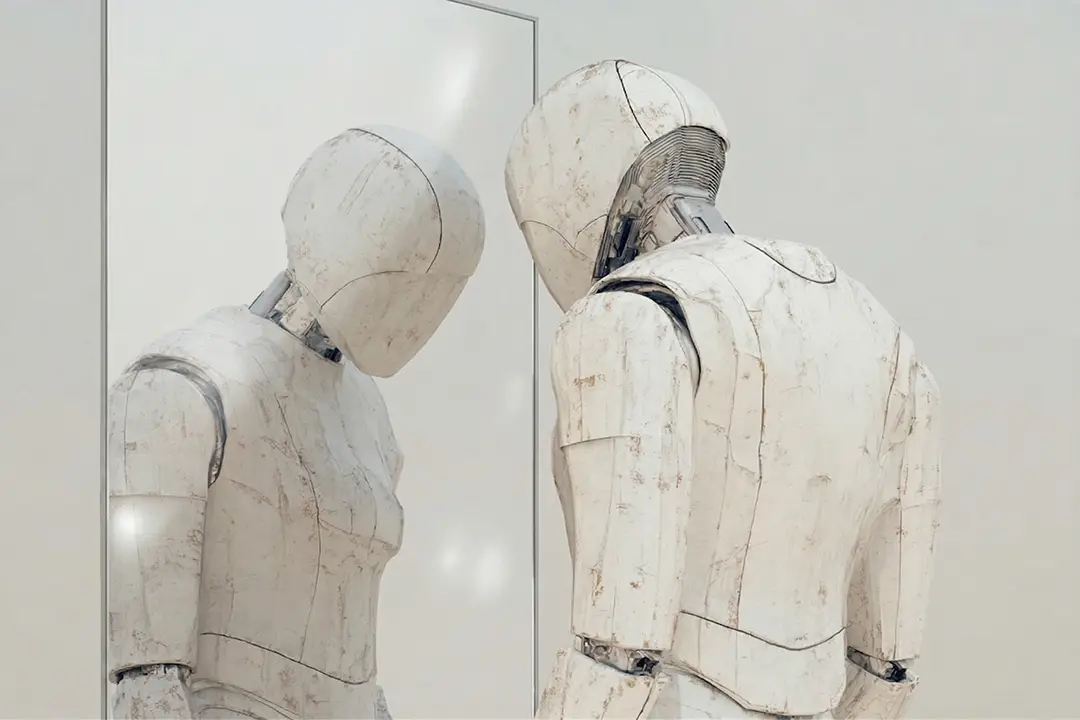
The viral colleague.skill was born against this exact backdrop of anxiety and defiance. It is less a marvel of software engineering and more a piece of sharp, self-deprecating humor from a workforce that feels increasingly helpless and disposable. The project’s name implies it can replicate a human mind, but in reality, it merely mimics an individual’s conversational tone or automates highly rigid, repetitive tasks. For laypeople, however, it sounded like a thunderbolt — has AI really made replacing human labor this easy?
This is particularly potent in China, which has what is likely the world’s largest population of AI users and the largest crowd of bystanders watching the tech revolution unfold. The popularity of AI agents with “skill-calling” abilities — such as OpenClaw — has spawned an endless supply of gimmicks such as “ex-girlfriend.skill,” a workflow that simply imitates emotional tones for those seeking a digital echo of a lost relationship.
The architects of this digital feast do not care about accuracy; they are merchants of points, anxiety, and false promises, leading countless uninformed readers into a frenzy.
We saw the emotional stakes of this illusion peak late last month after the death of Zhang Xuefeng, China’s most famous university admissions consultant. Attempting to capitalize on the news, one opportunist quickly uploaded a zhang.skill to mimic his signature college advice. While some hailed it as a “cyber rebirth,” a way to preserve his wisdom, others, including his most loyal fans, saw it as a grotesque parody that disrespected a man who helped countless families navigate a complex educational system. As Red Star News noted, legal experts pointed out that using a deceased person’s likeness for a digital “skill” has created a legal minefield in terms of its potential infringement of their personality and economic rights.
Finding the signal in the social noise
Ultimately, the messy boom of AI “skills” perfectly encapsulates the confusion born from the intersection of the AI revolution with modern society in China. Overworked tech professionals are pushing the boundaries of what AI models can do; savvy users are using them to radically boost their daily efficiency; and casual observers are lost in the social media noise.
This helps explain the emotional cycle that often accompanies AI news. At first, there is excitement about what the technology can do. Then comes panic anxiety about job security and how to find an AI-proof position. Finally, there is a kind of fatigue — a feeling that there is too much information, too many claims, and that the answer is to just not care.
Perhaps the most sensible response is to focus on the tools that actually affect our workflow and to learn how to use them. We should ignore the apocalyptic predictions — our future as humans cannot be so easily and accurately predicted by a structured prompt.
Sources: