

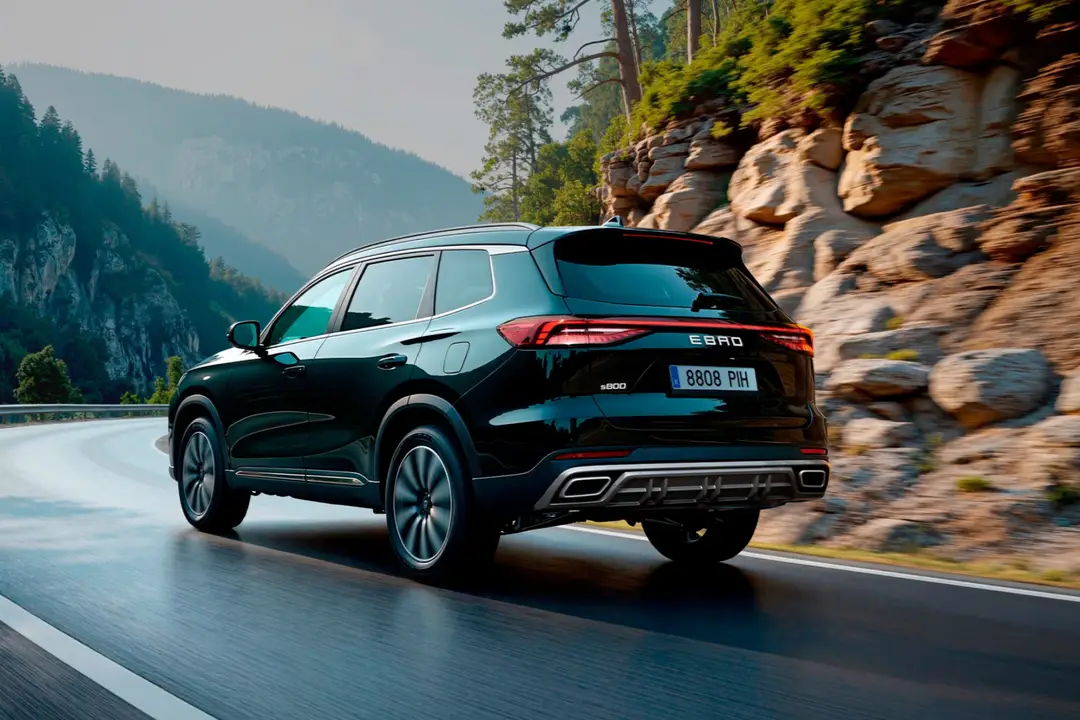
EBROM is returning to passenger carmaking with a lineup of SUVs using Chery’s technology and platforms produced at a revived former Nissan factory .
Barcelona’s former Nissan factory is making cars again, but this time they carry the badge of Spanish brand EBRO. China’s Chery Automobile (9973.HK) is providing the vehicle platforms, engineering and manufacturing expertise, while leaving 60% ownership in the hands of its Spanish partner.
The project offers a different model for Chinese automakers expanding into Europe: rather than simply exporting their own brands, they can supply the technology and manufacturing capabilities to revive established local names.
When Nissan shut down production at its Zona Franca plant in Barcelona, the loss extended beyond jobs to a long-standing part of the region’s automotive heritage.
Chery has taken a different approach to restarting the site, partnering with EBRO EV Motors (EBROM), the parent of EBRO, rather than putting its own name on the factory. In 2026, a newly built M1 production line began operating, turning the former Nissan facility into a joint industrial venture between a Chinese automaker and a Spanish partner.
A 60:40 split puts Spain in control of the brand
Under the agreement, EBROM owns 60% of the venture and Chery holds the remaining 40%.
The division of responsibilities reflects that ownership structure. The Spanish partner oversees the brand, business operations and relations with the government and workforce. Chery contributes vehicle platforms, engineering technology and manufacturing experience.
EBROM has historical roots in Spain’s commercial vehicle and industrial sectors. Its return to the passenger-car market through SUVs gives the marque a new lease of life, backed by Chinese engineering and production capabilities.
For Chery, the arrangement represents another route into the European market. Instead of relying exclusively on its own brand, it can use its technology and manufacturing expertise to help revive a local name with existing recognition among consumers. The partnership combines local knowledge of the workforce and market with Chery’s experience in platform development and supplier management. Both sides share responsibility for production planning and quality control.
The project also addresses a pressing local concern. After Nissan’s departure, workers, component manufacturers and local authorities were keen to see the former factory put back to productive use. Employment, tax revenues and reliable orders for local suppliers matter more to the surrounding economy than the name above the factory gates.
New investment
The new venture retains some of the site’s industrial foundations, but restarting production has required fresh investment in equipment, processes and personnel.
The new M1 assembly line stretches 696 metres and contains 97 workstations, each approximately seven metres long. More than 200 robots are involved in manufacturing, and the line has a designed capacity of 250 vehicles a day. Each vehicle takes approximately 75 minutes to pass through it. Welding and painting operations are still being introduced and tested in stages.
Reactivating an overseas factory generally means restoring final assembly first, then progressively bringing bodywork and other manufacturing processes back online. European environmental, safety, labour and equipment certification requirements add to the complexity.
Existing paint facilities must be adapted to new models, while robotic welding processes require validation. Production-line installation is only the first step; achieving consistent performance across all manufacturing stages requires further engineering work. Digital manufacturing systems must also be integrated with legacy equipment so that quality problems can be tracked throughout the plant.
Ultimately, output depends less on the number of robots installed than on standardized operating procedures, reliable component deliveries and effective defect management.
The project has sought to recruit former Nissan employees willing to return. The EBRO factory employs approximately 1,530 people, while the wider group has around 2,045 employees, including more than 420 engineers. Workers can transfer some of their previous manufacturing skills, but adapting to new vehicle platforms and quality requirements involves additional training.
As the European automotive industry shifts from combustion engines towards hybrids, electric vehicles and software-defined cars, factories must also develop expertise in high-voltage safety, vehicle electrical testing, software installation and battery assembly.
SUVs target European consumers
The initial product range includes the EBRO s400, s700 and s800 SUVs. Although these models have Chinese engineering foundations, they must meet European regulatory requirements and adapt to local expectations on after-sales service, software and consumer preferences.
The venture has set a production target of 25,000 to 30,000 vehicles for 2026.
Its longer-term prospects will depend partly on where the vehicles are sold, whether production can support exports to other European markets, and whether local sourcing can meet cost and rules-of-origin requirements.
The revival could also benefit businesses around the former Nissan site. The factory once supported an ecosystem of component warehouses, tooling companies, transport operators and equipment maintenance providers.
As more models enter production, demand for tooling, logistics and engineering services will increase, potentially bringing new orders to local suppliers.
For Barcelona, the project is about more than restarting an assembly line. It is an attempt to restore an automotive industrial ecosystem, with a Spanish brand and local majority ownership supported by Chinese technology.
Source:
ZhiNeng Auto