
As high costs and supply bottlenecks look set to delay solid-state batteries for electric cars until 2030, commercialization is shifting to applications such as humanoid robots.
By Brent Li
For years, the global auto industry has treated the solid-state battery as the ultimate prize — a technology promising electric vehicles that can travel over 1,000 kilometers on a single charge without the risk of catching fire. Yet as mass production timelines for their use in passenger cars slip toward the end of the decade, an unexpected contender is stepping up to pioneer the commercialization of the technology: humanoid robots.
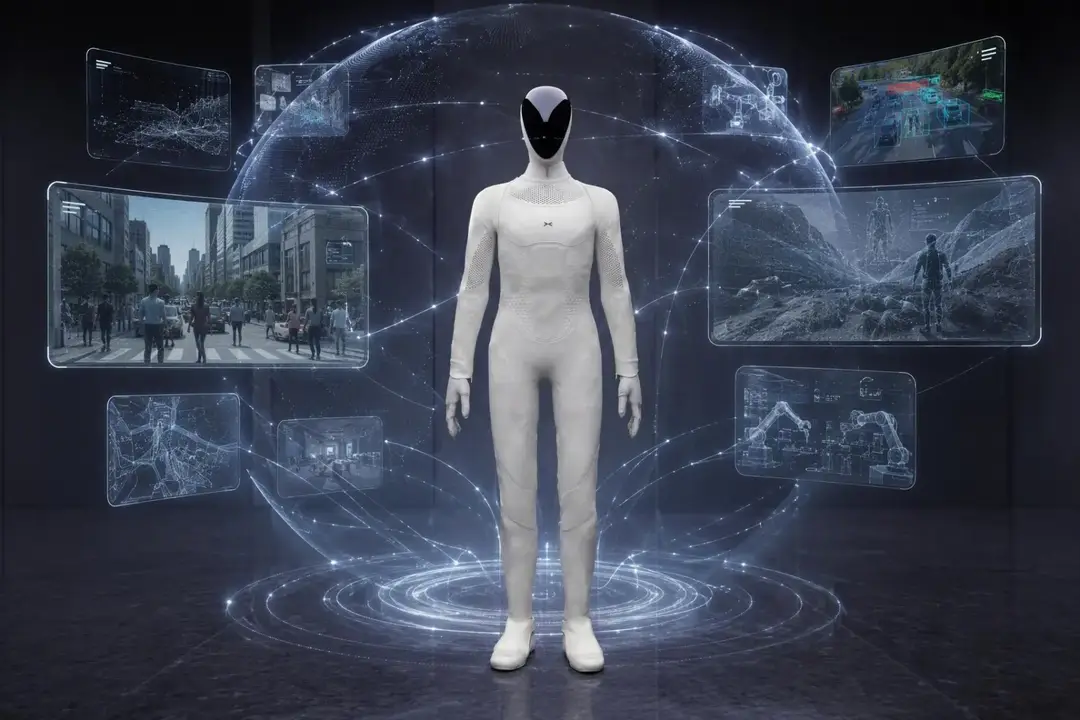
On Oct. 28, Chinese electric vehicle and robotics maker XPeng (9868.HK) announced that solid-state batteries for its IRON humanoid robot have rolled off the assembly line in small-batch volume. Company Vice President Gu Jie said that the robot is preparing for commercial mass production by the end of 2026, with plans to deploy the machines as shopping guides and receptionists in XPeng’s global showrooms starting in 2027. The robotics unit recently raised over $900 million in private equity funding, pushing its valuation past $6.3 billion — roughly 59% of the market capitalization of XPeng’s entire U.S.-listed car business as of early September.
However, a closer look at XPeng’s supply chain reveals the messy reality behind the industry’s battery buzzwords. While XPeng didn’t disclose whether its robot is equipped with an all-solid-state battery or a semi-solid-state battery, exclusive reporting from battery industry outlet Jipian Lab in late September indicates the company had to compromise. According to the report, after attempting and failing to source viable all-solid-state cells from major Chinese battery makers — including BYD (1211.HK) (002594.SZ), Gotion High-Tech (002074.SZ), CALB (3931.HK), and EVE Energy (300014.SZ)— XPeng settled for a hybrid solid-liquid pouch battery (commonly known as a semi-solid-state battery) from a second-tier supplier. This also explains why XPeng is now building and testing its own solid-state-batteries.
Beijing’s reality check and the 830-ton bottleneck
The confusion surrounding XPeng’s battery is part of a broader industry reckoning. Traditional lithium-ion batteries use a liquid chemical solution (electrolyte) to shuttle electrical charge between electrodes. While they are mature and cheap, liquid electrolytes are flammable and nearing their physical limits for energy storage. All-solid-state batteries replace that liquid with a solid material, theoretically packing far more energy into a smaller space while eliminating fire hazards [2, 8].
To curb marketing hype, Chinese regulators published a national standard in August defining how solid-state batteries for electric vehicles are classified. It will take effect in January 2028, establishing a common technical framework for an industry where terminology has often been imprecise.
Under the standard, a cell qualifies as all-solid-state only if it contains less than 5% liquid by weight and loses no more than 0.5% of its mass in a vacuum-baking test at 120 degrees Celsius for six hours. Cells containing 5% to 20% liquid are classified as “hybrid solid-liquid batteries,” a category commonly referred to as semi-solid-state.
Huang Wentao, head of the all-solid-state battery business at China Automotive Innovation Corp., said that current mass-market vehicles marketed as using solid-state batteries still rely on hybrid solid-liquid technology and do not meet the criteria for all-solid-state batteries.
According to Huang, this includes NIO’s (NIO.US) 150-kWh battery pack, SAIC Motor’s (600104.SH) IM L6 and MG4 models, and CATL’s (300750.SZ) (3750.HK) condensed-matter battery technology. None qualifies as all-solid-state under the new criteria.
In late September, seven Chinese ministries issued the 15th Five-Year Plan for the new battery industry, setting 2030 as the official target for the “initial scaled application” of all-solid-state batteries. Because Beijing pairs strict industrial guidelines with generous state backing — including a 6 billion yuan ($900 million) state R&D fund supporting six domestic leaders — its timeline effectively sets the pace for the global supply chain.
The target of 2030 stems from severe engineering and supply-chain hurdles:
Early-stage maturity: At the Summer Davos forum in June, CATL Chairman Robin Zeng rated all-solid-state technology at just 4 on a 1-to-9 readiness scale, meaning it has only cleared basic laboratory validation. Toyota, Volkswagen, and BMW executives have similarly warned that commercial viability for mainstream cars remains years away.
The “solid-to-solid” hurdle: Unlike liquids that easily coat battery electrodes, solid materials meet like rigid rocks. Microscopic gaps between layers account for over 70% of internal electrical resistance, causing performance to degrade rapidly when scaled up from tiny lab samples to large automotive packs.
Toxic materials and low yields: The leading chemical path relies on sulfide electrolytes, which release highly toxic hydrogen sulfide gas if exposed to moisture. Manufacturing requires ultra-dry rooms at minus 60 degrees Celsius, rendering 90% of existing battery factory equipment obsolete. Production yields on pilot lines hover between 60% and 70%, far below the 94%-plus required for profitable car manufacturing.
The raw material deadlock: Lithium sulfide, the core ingredient accounting for up to three-quarters of an all-solid-state cell’s material cost, once traded above 3 million yuan ($450,000) per metric ton. Global effective production capacity in 2026 stands at just 830 tons — enough to build roughly 3 gigawatt-hours (GWh) of batteries worldwide, locking material suppliers and battery makers in a chicken-and-egg standoff over who expands capacity first.
Consequently, all-solid-state cells cost about $0.24 to $0.33 per watt-hour, compared with $0.06 to $0.07 for standard lithium iron phosphate cells. Putting an all-solid-state battery into a 100-kilowatt-hour electric car could add between $15,700 and $25,900 to the overall cost of the battery pack.
Why robots and flying taxis are jumping the queue
What is prohibitively expensive for a family sedan, however, is a rounding error for a humanoid robot.
While an electric car demands a massive 60 to 100 kWh battery pack capable of lasting a decade, a humanoid robot has a cramped torso that typically holds less than 2 kWh of battery capacity — requiring just one or two cells instead of hundreds. Current liquid lithium batteries only keep humanoid robots running for two to four hours, falling well short of the eight-to-20-hour shifts that would be required in factories or commercial venues. Furthermore, because service robots operate inside homes and crowded malls, buyers have zero tolerance for battery fires.
That makes embodied AI and electric vertical takeoff and landing (eVTOL) aircraft the ideal proving grounds. Even if a next-generation battery costs three to five times more than a standard cell, the absolute dollar increase on a 2 kWh robot pack could be absorbed by the machine’s high price tag. That said, budget robots like those from Unitree Robotics (688836.SH) may have been priced too low to absorb solid-state costs.
Chinese automakers and robotics startups are racing to capitalize on this niche. GAC Group (601238.SH) says its GoMate humanoid robot achieves six hours of runtime using an all-solid-state battery, while Chery’s (9973.HK) Mojia robotics unit and startup EngineAI have announced similar solid-state integrations. On the supply side, companies like Tailan New Energy, Farasis Energy (688567.SH), and CALB are pitching specialized semi-solid and all-solid cells to robotics firms, while EHang (EH.US) has already tested solid-state batteries in its autonomous passenger drones.
Still, robotics will not solve the battery industry’s scale problem. Even if global humanoid robot sales reach nearly 340,000 units by 2030 as research firm GGII predicts, total battery demand would reach just 0.68 GWh — equivalent to the battery capacity of roughly 11,000 electric cars, Jipian Lab noted. Though TrendForce is much more confident, projecting global solid-state battery demand driven by robotics to hit 74.2 GWh by 2035.
Instead, small devices serve as a commercial stepping stone. At a media roundtable in Michigan, Robert Lee, North America president of LG Energy Solution predicted that solid-state batteries will achieve mass commercialization in smartphones and drones a full decade before electric cars.
Industry divisions and the lure of ‘miracle’ batteries
As the wait for affordable all-solid-state batteries drags on, the industry is deeply split over how the endgame will unfold.
On one side, BYD aims to drive all-solid-state cell costs down to parity with liquid batteries — around $0.08 to $0.10 per watt-hour — by 2030. On the other, SVOLT Energy Chairman Yang Hongxin and Chinese Academy of Sciences academician Ouyang Minggao argue that all-solid-state batteries will struggle to beat liquid battery costs even by 2035. They contend that hybrid solid-liquid batteries — which cost $0.12 to $0.16 per watt-hour and can be built on existing factory lines — will dominate the market’s growth over the next decade.
In the meantime, the gap between investor eagerness for a breakthrough and the slow grind of materials science continues to breed questionable hype. At the CES trade show in January 2026, Finnish startup Donut Lab made global headlines by claiming to have a mass-production-ready all-solid-state battery boasting a five-minute charge and a 100,000-cycle lifespan — 25 to 100 times longer than mainstream industrial samples.
The claim quickly unraveled. SVOLT’s Yang publicly called the company a “fraud” at a January industry event. By June, an investigation by YouTube channel Ziroth — backed by a former executive at Donut Lab’s partner Nordic Nano Group and testing by Germany’s Fraunhofer Research Institute — revealed the “miracle” cell behaved like a standard lithium-ion battery, according to The Verge. For investors and consumers alike, the episode served as a stark reminder: in the race to replace the lithium-ion battery, any leap that sounds too good to be true almost certainly is.
Sources