

By Da Cheung
Almost all lithium batteries powering our daily lives today are liquid-based. From smartphones and laptops to electric vehicles, liquid lithium batteries have provided humanity with higher energy density, enabling countless electronic devices to become lightweight. However, as the demands for energy capacity and safety push liquid batteries to their physical limits, solid-state batteries — which replace flammable liquid components with stable solid materials — are emerging as the likely successor to power our mobile future.
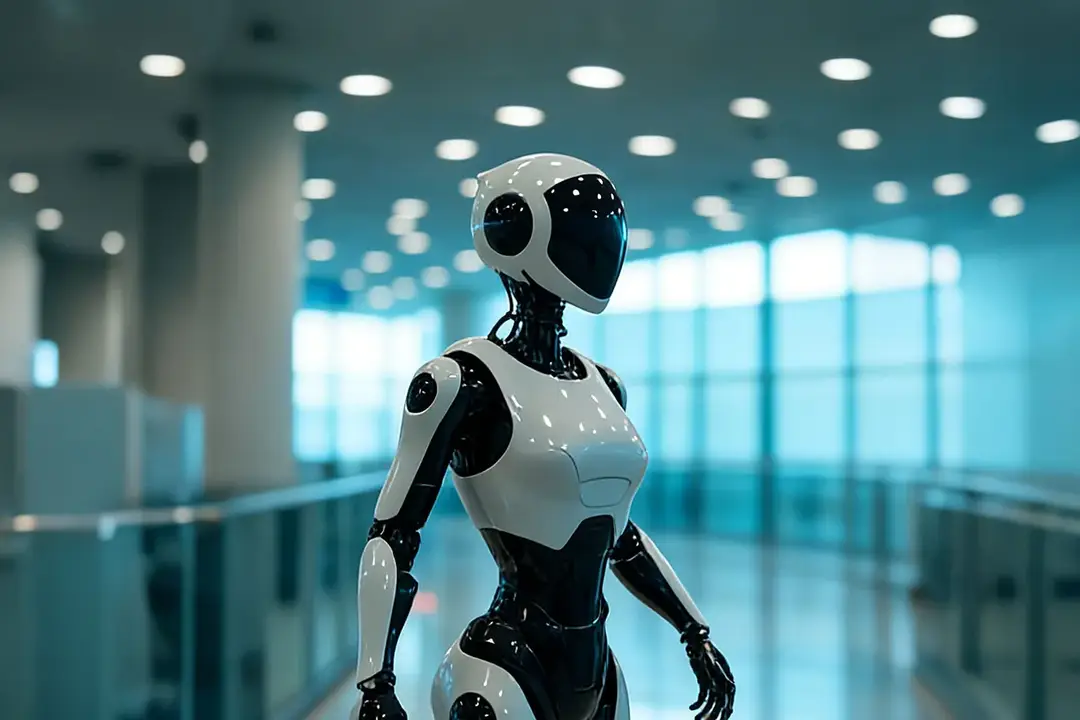
Before these next-generation batteries go mainstream in human transport, they are finding a perfect, less price-sensitive testing ground: humanoid robots. Recently, Zhejiang province-based automotive technology provider Joyson Electronics (600699.SH) (0699.HK) and Sino-American battery maker Enpower Greentech formed a joint venture called Ningbo Junen New Energy. The new entity will develop solid-state batteries and battery management systems — the electronic brains that monitor and control energy flow — specifically for embodied artificial intelligence. It aims to address the robotics industry’s critical need for longer endurance, better safety, and lighter weight.
Compared with the highly competitive and cost-sensitive electric vehicle sector, pushing solid-state battery technology into the robotics industry faces significantly less resistance.
A marathon of progress
To understand the rapid evolution of robot power, one only needs to look at the Beijing E-Town Humanoid Robot Half Marathon. During last year’s race in April, the champion robot had to stop three times to swap depleted batteries. Its development team noted at the time that while adding battery capacity would reduce swaps, the added weight would negatively affect the robot’s gait.
Just a year later, at last month’s half marathon, the pace of innovation was on full display. One robot finished the race with only a single battery swap. Industry reports suggest that some participating robots have already begun utilizing semi-solid batteries — a transitional technology containing a small amount of liquid electrolyte — although there’s been no confirmation of the specific manufacturers. Given this trajectory, it is a safe prediction that by next year’s race, some robotics teams will complete the entire half marathon without a single battery change.
Robotics companies are desperate for these upgrades. Most current humanoid robots use traditional liquid lithium batteries with a capacity of under 2 kilowatt-hours, providing only two to four hours of operation. In real-world scenarios, however, robots may be required to work continuously for eight to 24 hours. While traditional liquid batteries struggle to exceed an energy density of 300 watt-hours per kilogram, solid-state alternatives can theoretically reach 400 to 600 watt-hours per kilogram, packing significantly more power into the same physical footprint.
The premium of safety and space
In the automotive industry, solid-state batteries have been touted as a revolutionary breakthrough for years, yet mass production timelines continue to slip. An electric vehicle battery must meet what industry insiders call a “decathlon” of requirements: extremely low cost, a lifespan of thousands of charge cycles, and a supply chain mature enough to support millions of vehicles.
Robots, by contrast, demand peak performance in specific areas — maximum energy and absolute safety within a compact chassis — making them an ideal incubator for early-stage technology. Solid-state batteries largely eliminate fire risks from leaks or punctures, a critical feature for robots designed to operate in homes and close to humans.
Furthermore, the economics are vastly different. An EV requires a massive 60 to 100 kilowatt-hour battery pack, whereas a robot uses a tiny fraction of that. Even if solid-state batteries cost three to five times more than liquid ones, the absolute cost increase for a robot is minimal. For companies trying to build machines that might eventually cost $20,000 to $30,000, paying a premium for a battery that lasts twice as long and does not catch fire is a no-brainer.
Recognizing this, companies are rushing to supply the sector. Automakers with robotics divisions, such as Chery Automobile(9973.HK) and XPeng (9868.HK), have announced plans to equip their robots with solid-state technology. Battery makers like EVE Energy (300014.SZ) and Sunwoda Electronic (300207.SZ) say they are also developing tailored solid-state solutions, with some expecting major production breakthroughs by the end of 2026.
The EV endgame remains elusive
While robotics is undeniably one of the most important industries of the future, the largest and most lucrative commercial stage for solid-state batteries will ultimately remain the electric vehicle market.
Some semi-solid batteries are already trickling into the automotive market, but achieving scale for true, all-solid products is punishingly expensive. According to a report by Battery Intelligence, the manufacturing cost of fully solid-state batteries is around $166 per kilowatt-hour — roughly three times the cost of conventional batteries.
The financial toll of this technological race is staggering. QingTao Energy, a leading solid-state battery developer currently seeking an IPO in Hong Kong, racked up roughly 3.15 billion yuan ($460 million) in net losses over the past three years even as its revenue jumped nearly fourfold. The company ranked first globally in the semi-solid and all-solid-state battery market, with a market share of around 33.6% and a roughly 44.8% share in China, according to a report from Frost & Sullivan based on 2025 shipment volumes.
The company says the heavy losses are driven by massive research and development expenses and the high costs of scaling up production lines.
True, all-solid-state batteries face engineering nightmares, such as maintaining stability across different temperatures and overcoming manufacturing inconsistencies. While humanoid robots are offering a willing and fertile testing ground today, the ultimate challenge for the battery industry remains unchanged: making solid-state power cheap and reliable enough for the cars parked in our driveways.
Sources: