VW is bringing in the Chinese battery maker as a manufacturing partner, sharing investment and technology risks as Europe accelerates its shift to electric vehicles.
By Zhu Yulong
Volkswagen (VOW.DE) is deepening its partnership with Chinese battery maker Gotion High-Tech (002074.SZ), moving away from the goal of manufacturing everything independently towards building local capacity with Chinese expertise.
The two companies have agreed to a series of investments, according to a Sept. 28 announcement. Gotion will invest about 1.1 billion euros ($1.23 billion) for a 49% stake in VW’s battery plant in Valencia, Spain, while the German automaker’s battery subsidiary, PowerCo, will retain 51%.
In return, PowerCo will invest 470 million euros for 49% stakes in two Gotion projects: a battery cell plant in Šurany, Slovakia, and a cathode materials plant in Kenitra, Morocco.
The deals reflect a broader shift in Europe’s battery strategy. As electric vehicle adoption accelerates, automakers are finding that building a competitive domestic industry may require Chinese technology, manufacturing expertise and capital.
Europe’s battery ambitions after Northvolt
At the Paris Motor Show, VW projected that European annual sales of passenger cars and light commercial vehicles would reach about 17 million units by 2035, little more than this year’s level. Over the same period, battery demand is expected to more than triple from 300 GWh to 980 GWh.
Europe initially sought to build an independent battery industry. But the collapse of Northvolt, once a flagship of the continent’s ambitions, exposed the difficulties of that approach.
Northvolt filed for bankruptcy in Sweden in March 2025, with debt reportedly reaching $8 billion. BMW subsequently transferred a 2-billion-euro battery order to South Korea’s Samsung SDI. Despite backing from VW, Goldman Sachs and BlackRock, Northvolt had raised more than $10 billion without establishing a sustainable business.
Battery chemistry is another challenge. European automakers have traditionally favoured nickel-rich ternary lithium batteries, but lithium iron phosphate (LFP) offers a lower-cost alternative increasingly important for affordable electric vehicles.
China has developed a mature LFP ecosystem spanning materials, equipment and mass-production processes, while Europe has relatively little established capacity. LFP currently accounts for about 10% of Europe’s battery market, but its share could rise to 40%-60% by 2030.
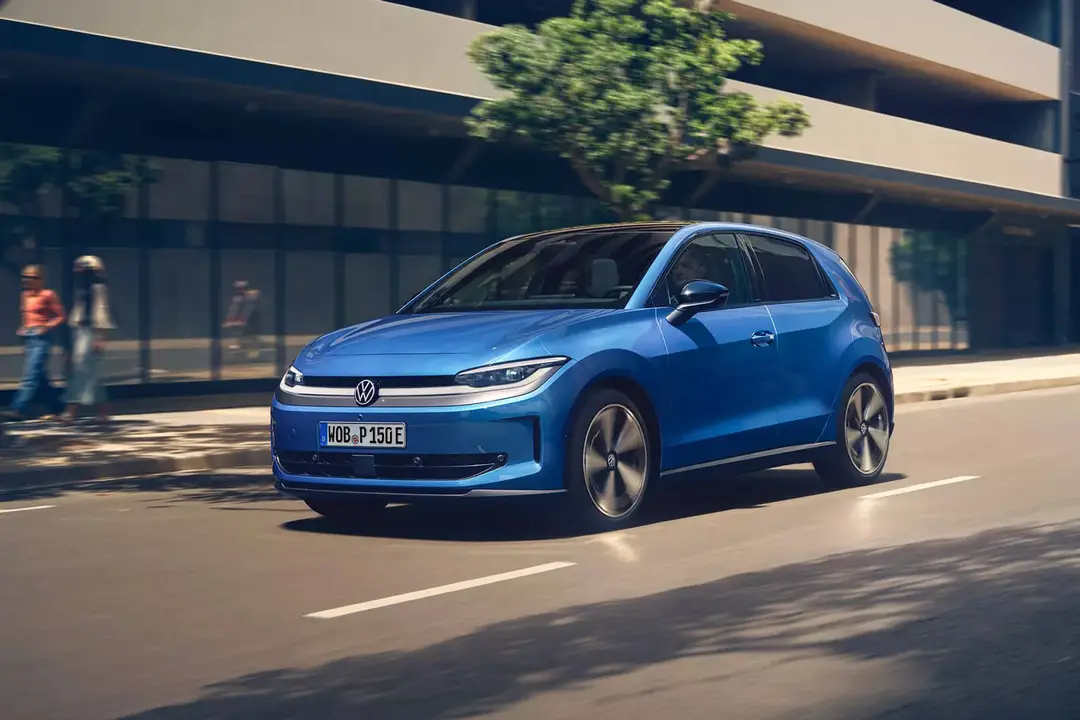
VW is already using LFP in its product range. The entry-level ID. Polo uses a 37 kWh LFP battery, starts at 24,995 euros in Germany and offers a WLTP-rated range of 330 kilometers. Higher-specification versions use a 52 kWh ternary lithium battery, delivering 454 kilometers.
European factories, Chinese expertise
VW’s approach differs across its major markets. In China, it primarily buys batteries rather than investing directly in manufacturing, given the country’s ample production capacity. In Europe and North America, it combines procurement with local production, although Europe remains its main priority.
The emerging strategy is to keep factories in Europe while drawing on Chinese manufacturing processes, production expertise and supply chains.
The Valencia plant is planned to have annual capacity of 29.1 GWh, with total investment of about 2.26 billion euros. Gotion’s investment in PowerCo Spain will give it a 49% stake, leaving VW with majority ownership.
The structure is reversed in Slovakia and Morocco. PowerCo will invest 470 million euros for 49% stakes in the two projects, while Gotion retains 51%.
VW will maintain control over the Spanish plant’s vehicle integration, brand requirements and standardised battery-cell specifications. Gotion will contribute its expertise in LFP production, manufacturing yields and supply-chain management.
The German automaker currently owns 24% of Gotion, making it the Chinese company’s largest single shareholder. It has also sold a 5.3% stake to an undisclosed buyer for about $373 million, shifting the relationship towards joint factory operations rather than relying solely on cross-shareholdings.
Chinese battery makers become technology partners
Chinese battery makers once expanded overseas mainly by exporting cells under contracts specifying prices, delivery schedules, and quality standards. Gotion’s new arrangements represent a more involved model: investing capital, transferring technology and participating in factory operations.
Battery manufacturing requires substantial upfront investment. VW’s Salzgitter plant, for example, is planned to start with 20 GWh of annual capacity, with the potential to expand to 40 GWh. PowerCo is expected to cover only about half of Volkswagen Group’s demand for standardised battery cells, leaving the rest to external suppliers.
VW is also pursuing a major restructuring amid reports of potential job cuts running into the hundreds of thousands. Giving Gotion a 49% stake in Valencia allows the automaker to share both the financial burden and manufacturing risks.
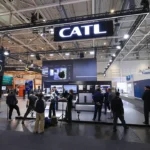
A similar model is emerging elsewhere. Contemporary Amperex Technology Co. (CATL) and Stellantis are building an LFP battery plant in Zaragoza, Spain, with investment of up to 4.1 billion euros and planned capacity of 50 GWh. Construction began in November 2025, and the project is expected to create more than 4,000 jobs.
The formula is increasingly familiar: Chinese battery technology, European automakers and factories located in Europe. As the continent seeks to establish its own battery industry, Chinese companies are becoming indispensable partners.
Source:
ZhiNeng Auto