

The Chinese drugmaker is stepping up investment in its hepatitis B pipeline as GSK’s bepirovirsen wins regulatory approval in Japan.
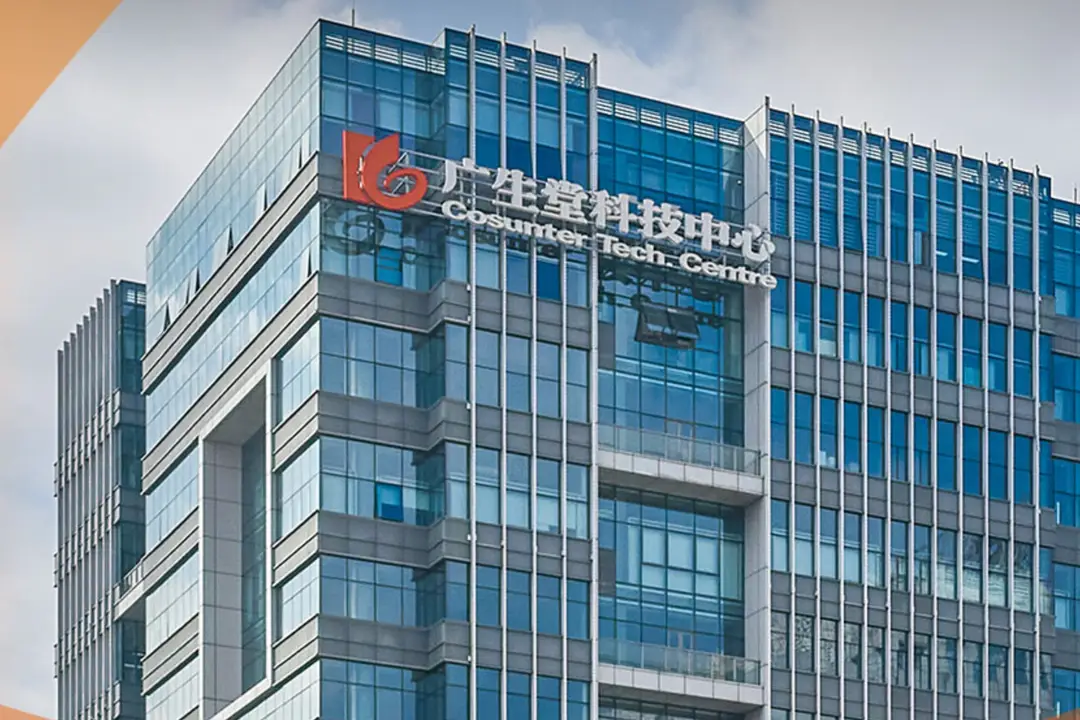
The race to develop a functional cure for hepatitis B is entering a critical phase, with domestic drugmaker Fujian Cosunter Pharmaceutical (300436.SZ) committing 587 million yuan ($82 million) to late-stage clinical development.
On Sept. 17, the company said the money would be injected into its controlling subsidiary Fujian Guangsheng Zhonglin Biotechnology to fund innovative drug development.
Of the total, 198 million yuan will go towards Phase III trials and regulatory filings for GST-HG141, while 390 million yuan will fund Phase II and III trials and regulatory filings for a combination of GST-HG131 and GST-HG141.
The move comes as the company advances several oral treatment combinations aimed at achieving a functional cure for chronic hepatitis B.
GSK gets the first approval
The timing is significant. On Aug. 24, GlaxoSmithKline (GSK) (GSK.L) said its antisense oligonucleotide drug bepirovirsen won Japanese approval for functional cure of chronic hepatitis B in adults — the world’s first such approval. GSK had already filed in China in March, gaining priority review in April, and in May partnered with Sino Biopharm’s (1177.HK) Chia Tai Tianqing to prepare the launch.
The hepatitis B functional-cure field is therefore moving beyond a race to develop candidates and towards commercialization.
The central challenge in hepatitis B treatment is not simply suppressing viral replication, but maintaining long-term viral control after treatment stops.
Nucleos(t)ide analogues can effectively suppress HBV (hepatitis B virus) DNA replication, but have limited effects on covalently closed circular DNA, or cccDNA, inside liver-cell nuclei and viral DNA integrated into the host genome. Patients therefore often need long-term or continuous treatment.
Long-acting interferon has both antiviral and immune-modulating effects, but its use is limited by factors including eligible patient populations, treatment duration and safety.
A functional cure aims to maintain viral control after treatment ends, with HBV DNA and hepatitis B surface antigen, or HBsAg, remaining undetectable over the long term.
In GSK’s Phase III data for bepirovirsen, the functional cure rate six months after treatment ended was 19% among patients with baseline HBsAg of 3,000 IU/mL or less, compared with 0% in the control group. Among those with baseline HBsAg of 1,000 IU/mL or less, the rate was 26%.
The significance of these results is that functional cure, previously largely a research goal, now has its first approved product.
But more than 40 hepatitis B cure programmes are reportedly under development globally, using different viral targets and immune mechanisms.
Cosunter bets on combination therapy
Cosunter Pharmaceutical’s lead candidate GST-HG141 is a small-molecule oral drug known as a core protein modulator. It works by interfering with HBV capsid assembly and viral replication.
Previous clinical data released by the company showed good viral suppression in some patients with low viral loads, but its ability to reduce HBsAg as a monotherapy remained limited.
Rather than relying on GST-HG141 alone, the company is pursuing combinations designed to address different aspects of the disease, including viral replication and persistent viral antigens.
GST-HG131 is an HBsAg inhibitor. Combined with GST-HG141 and a nucleos(t)ide analogue, it forms the GST-Peak-Triple regimen.
A Cosunter Pharmaceutical securities department representative told Chinese media on Sept.18 that GST-HG141 and GSK’s bepirovirsen belong to different treatment categories. The company expects interim Phase III data for GST-HG141 in the first half of 2027 and does not expect GSK’s product to have a major impact on its business if it enters the Chinese market.
Cosunter is not alone
Multiple approaches enter late-stage development.
A drug named AHB-137 is being developed by Hangzhou Haobo Pharmaceutical (301096.SZ), also known as Ausper Biopharma, which uses an antisense oligonucleotide approach. Phase II data showed that 68% of treatment-naive chronic hepatitis B patients had undetectable HBsAg and HBV DNA at the end of treatment. The clinical cure rate 24 weeks after treatment was 32% across the overall population, rising to 70% among patients with baseline HBsAg of 100–1,000 IU/mL. The study was relatively small, however, and larger trials will be needed to validate the results.
Hengrui Pharmaceuticals (600276.SH) is pursuing the siRNA route, with HRS-5635 now in Phase III trials as a monotherapy and in combination treatments.
Brii Biosciences (2137.HK) is developing elebsiran, an siRNA candidate in several Phase II trials, including combinations with PEG-IFNα and a TLR8 agonist. However a manufacturing technology-transfer and arbitration dispute with partner Vir Biotechnology (VIR.US) has clouded the program’s future. Brii has said it cannot invest in Phase III clinical studies until the claims are satisfactorily resolved.
For Cosunter Pharmaceutical, the latest investment provides funding to take GST-HG141 through Phase III and towards regulatory filing, while advancing the GST-HG131/GST-HG141 combination into larger clinical trials.
The company became a major focus of China’s stock market in 2025 on the strength of its hepatitis B pipeline, with its share price at one point rising from around 36 yuan to nearly 188 yuan. More than a year later, the global market has its first approved functional-cure treatment, while several Chinese programs have moved into mid- and late-stage development.
One development that could bear watching is the departure of chief scientist, Hu Ke. On Sept. 11, about a week before the capital injection was announced, the company said Hu had resigned for personal reasons, but said his departure would not affect day-to-day operations.
Hu’s departure comes as GST-HG141 approaches a key period ahead of its expected Phase III readout in the first half of 2027. Whether the change affects the program’s development timetable or regulatory communications remains to be seen.
Source:
VCBeat, Red Star Capital Bureau via YaoTongShe Newswire