
Armed with technical expertise, a new generation of leaders is gaining control of China’s biggest AI companies — and trying to protect the freedom that drives innovation.
By Wei Bing
Over the past two decades, power in China’s internet industry was largely distributed according to commercial success. Managers gained influence by building successful products, capturing market share and generating revenue.
Today, a new generation of tech professionals—mostly in their thirties—is ascending to the power centers of China’s most prominent technology firms via a different path.
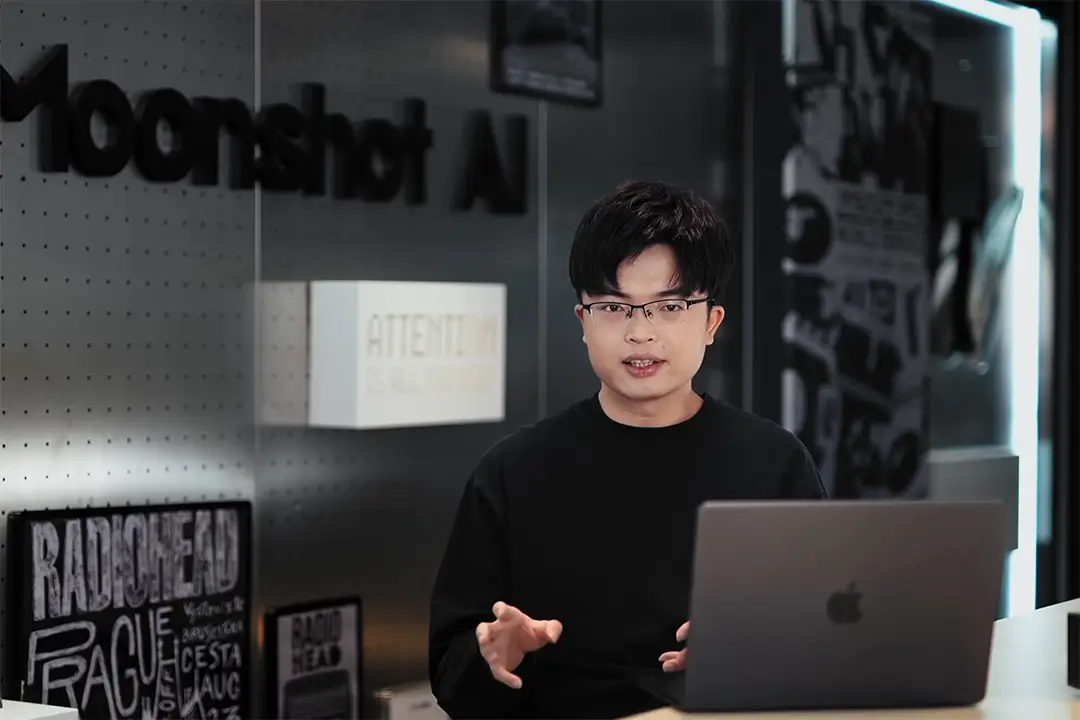
At 33, Yang Zhilin founded Moonshot AI, the developer of the large language model (LLM) Kimi, attracting investment from Alibaba (9988.HK) (BABA.US) and Tencent (0700.HK) even as both compete with his company. Xiao Hong, also 33, sold his AI agent startup Manus to Meta, then bought it back eight months later, having briefly served as a vice president at a global technology giant. He now he now aspires to be a rival to such giants. Luo Fuli, 31, arrived at Xiaomi with a team of several dozen researchers to train a trillion-parameter model. And at 28, Yao Shunyu joined Tencent’s president’s office to take charge of its Hunyuan AI business, quickly becoming one of the company’s most influential technical figures.
These executives are making decisions about research priorities, directing hundreds of researchers and allocating enormous computing resources before their products have necessarily achieved commercial success.
Their approach is distinctive: flatter organisations, direct communication and considerable freedom for researchers to pursue their own ideas. One technical lead at a large-model company summed up the philosophy: good researchers do not need to be managed. Hire them and give them GPUs — provided they are better than you.
How these young leaders exercise their authority is increasingly shaping China’s AI industry.
Kimi: backing an unproven idea
In March 2026, several Kimi researchers asked Yang Zhilin to change the architecture of its next flagship model, K3, to incorporate a technique called Attention Residuals.
With training due to begin imminently, the change risked delaying the model’s release. Yang had to decide whether the potential benefits justified the gamble.
The idea came from Su Jianlin, a Kimi researcher working remotely from Guangzhou. After reading DeepSeek’s research on mHC, which improves information flows between model layers, Su saw an opportunity to apply attention — the mechanism models use to prioritise relevant information — between layers rather than simply between words.
Two researchers, Zhang Yu and Nathan Chen Guangyu, joined him to test the idea on larger models. Zhang had studied efficient model architectures during his doctoral research; Chen, who has since left the company, was just 17 and still in high school.
The original design proved too expensive to train at trillion-parameter scale. Kimi’s infrastructure team proposed a cheaper alternative, and Zhang and Chen developed Block Attention Residuals, grouping model layers into eight blocks and applying attention between them.
The revised design reduced additional computational overhead to less than 5%, while improving training efficiency by around 20%, according to the team’s research.
With K3 about to begin training, Yang agreed to postpone the schedule to allow further testing. Kimi published the research on March 16, with Su, Zhang and Chen as joint first authors. Four months later, the 2.8-trillion-parameter K3 was released incorporating the technique.
The breakthrough depended on collaboration between researchers and engineering teams, but Yang’s decision was crucial. He recognised the potential of an uncertain idea and committed the company to it despite the disruption.
The ability to recognise good ideas, trust other people’s technical judgement and persuade an organisation to back them is becoming a defining quality of China’s new AI leaders.
Zhipu: the case for coding
At the beginning of 2025, Zhipu AI (Z.AI) (2513.HK) was looking for a new direction. DeepSeek-R1 had intensified competitive pressure on the company, one of China’s earliest developers of open-source models with hundreds of billions of parameters.
Founder Tang Jie convened a meeting of senior technical staff to discuss where to invest the company’s people and computing resources.
Zeng Aohan, responsible for pretraining and infrastructure, argued that Zhipu should focus on coding. Zheng Qinkai, who had worked on its CodeGeeX programming model, supported the direction.
But others favoured continuing to develop reasoning capabilities, following the success of OpenAI’s o1-preview and DeepSeek-R1.
One Zhipu insider described the competing approaches as the difference between scientists and engineers: one sought to push the boundaries of reasoning and develop new training methods; the other wanted models capable of practical tasks such as helping programmers write code.
Tang did not impose a decision. Instead, he allowed teams to explore both directions, with Zeng and Zheng leading coding research while another group continued working on reasoning.
The turning point came in April 2025, when Zhipu released 32-billion-parameter models, including one with stronger software engineering and function-calling capabilities. Positive internal evaluations and user feedback helped build support for coding.
GLM-4.5 followed in July, with programming emerging as one of its strongest capabilities. In September, Zhipu introduced a subscription-based Coding Plan, allowing developers to use its models through tools including Claude Code and Cline. By December, CEO Zhang Peng said the service had exceeded 100 million yuan ($15 million) in annual recurring revenue.
The decision became one of Zhipu’s most important strategic bets. Tang later described the April release as an experiment and GLM-4.5 as the decisive battle.
The shift emerged from competing technical judgements and experimentation by young researchers who were given the opportunity to influence the company’s direction.
Xiaomi: Luo Fuli’s trillion-parameter gamble
Xiaomi released its first MiMo model, with 7 billion parameters, in April 2025. After Luo Fuli joined, she and her team decided to pursue two much larger models simultaneously: one with several hundred billion parameters and another with 1 trillion.
The team was small and inexperienced. It had fewer than 20 members in January 2025 and only around 50 or 60 by May or June. Most researchers had never trained a large model.
Luo, however, had worked at Alibaba’s DAMO Academy and High-Flyer before joining DeepSeek, where she contributed to the development of DeepSeek-V2 and V3. She wanted to go beyond the scale of models she had previously trained.
A trillion parameters represented the outer limit of what the team’s available computing resources could support. One industry peer said the conventional approach would have been to train the smaller model first and assess the results before scaling up. Luo wanted to pursue both projects together.
She had considerable autonomy. Xiaomi founder Lei Jun reviewed MiMo’s progress roughly every two weeks but generally stayed out of technical decisions.
Training brought problems including rising loss values, abnormal activation levels and imbalances between different expert modules. When loss values spiked, Luo decided to stop training and investigate.
The causes could lie in the data, architecture, code or hardware. Researchers from different teams worked together to identify and test possible explanations. One researcher said this required trust: if people started arguing over which department was responsible, they would focus on avoiding blame rather than solving the problem.
Researchers moved between functions according to the needs of the project, with infrastructure engineers helping resolve training and inference problems.
Both models were eventually completed without waiting for the smaller one to prove itself before launching the trillion-parameter project. Xiaomi had taken on two major training risks simultaneously, while giving researchers with little previous large-model experience the opportunity to work on a system of unprecedented scale.
The achievement moved Xiaomi into the group of companies capable of training trillion-parameter foundation models.
Choosing a leader worth following
For these young technical leaders, acquiring authority is only the beginning. They must also attract talent, organise teams and protect the conditions that allow researchers to innovate.
At a time when top AI researchers are scarce, joining a company often means choosing a leader worth following. Yang’s research credentials helped establish Kimi’s appeal, while Yao Shunyu’s arrival significantly strengthened Hunyuan’s recruitment prospects.
These leaders also try to reduce the distance between themselves and employees. At Tencent, Yao holds monthly all-hands meetings and informal lunches. At Kimi, researchers can complain openly about inadequate tools and computing resources in internal chat groups.
But researchers’ central concern is how much freedom they have to pursue their own ideas.Yang has used machine-learning terminology to describe his management philosophy: more reinforcement learning, or RL, and less supervised fine-tuning, or SFT. In organisational terms, this means setting objectives and providing feedback rather than dictating every step.
At Xiaomi’s MiMo team, researchers are encouraged to identify their own research topics. There are no strict working hours or fixed release deadlines, and even ideas that managers consider unlikely to succeed may receive computing resources for testing.
One technical lead at a large-model company described the ideal simply: recruit people who know more than you and genuinely want to build something. Give them GPUs and let them work.
But this freedom depends on protection from pressures elsewhere in the organisation.
Alibaba’s Qwen team provided a striking example in March 2026, when its leader Lin Junyang learned that the company was considering splitting the group into separate pretraining and post-training teams.
Lin had long argued that pretraining, post-training and infrastructure needed to work closely together. The proposed restructuring undermined that approach, and he announced his resignation.
The episode showed that technical success does not guarantee lasting authority in a large corporation. Leaders must also navigate internal politics and competing organisational interests.
Yao Shunyu has taken a different approach at Tencent. Shortly after joining, he proposed moving the model application centre and search algorithm centre into the business group responsible for the Yuanbao AI assistant.
Before Hunyuan’s own foundation models were ready, he sent post-training specialists to help improve Yuanbao’s integration of DeepSeek. He argued that protecting the product’s user experience and customer base would ultimately benefit Hunyuan’s research.
The move helped secure internal support: when Hunyuan subsequently released new models, several of Tencent’s major products and business units actively backed the launch.
The management paradox
This is the paradox facing China’s new AI power brokers. They have gained authority through technical expertise but must use that authority to protect the freedom their research requires. They want to free themselves and their teams from conventional management yet must become effective managers themselves.
But rejecting bureaucracy is not the same as escaping management responsibilities. Someone still has to secure computing resources, decide who gets them, coordinate teams and take responsibility for results.
The ideal these young leaders describe — organisations where talented people have the resources and freedom to explore without wasting time on unnecessary procedures — is itself a management challenge.
As Peter Drucker argued more than half a century ago, management is about making people’s strengths productive and enabling individuals to achieve together what none could accomplish alone.
For China’s young AI power brokers, the next step may be to stop being embarrassed about calling that management.
Source:
LatePost
