
By Feng Ye
Chinese electric vehicle (EV) maker Seres (601127.SH) (9927.HK) is preparing to launch a new automotive brand developed in partnership with TikTok owner ByteDance. The venture marks a significant diversification away from its heavy reliance on tech giant Huawei and raises questions about the future shape of China’s increasingly competitive smart vehicle market.
Saidou Technology is expected to unveil its first model later this year, according to Chinese media reports and people familiar with the project. The vehicle is expected to be a crossover positioned between a sedan and an SUV and will be offered in both a pure electric version and an extended-range variant, which uses a petrol engine to recharge the battery on longer journeys.
The move pairs Seres’ manufacturing capabilities with artificial intelligence technologies developed by Volcano Engine, ByteDance’s cloud and AI subsidiary. The partnership is expected to focus on in-car AI systems and cockpit technologies rather than autonomous driving software.
People familiar with the project said the new models are unlikely to use Huawei’s Qiankun advanced driver-assistance technology, a notable departure for a company whose fortunes have become closely tied to the tech group’s automotive ecosystem.
Cutting the dependence cord
The collaboration reflects Seres’ efforts to reduce its dependence on Huawei, which played a central role in transforming the company from a struggling vehicle manufacturer into one of China’s most successful new energy vehicle groups. Seres expects to have more leverage in the relationship with ByteDance, which is keen to establish a foothold in the automotive AI market, according to people close to the matter.
Seres was the first major carmaker to embrace Huawei’s “selected vehicle” partnership model and received extensive support during the launch of the Aito brand, known in Chinese as Wenjie. As Huawei has expanded partnerships with other manufacturers, however, its resources and attention have become spread across multiple brands.
Under the new arrangement, Seres is expected to be responsible for vehicle engineering, battery systems and chassis development, while ByteDance will provide AI models, intelligent cockpit technologies, and software capabilities. Chinese battery giant CATL (3750.HK) (300750.SZ) is also reported to be involved.
The emergence of the venture comes at a time when China’s extended-range electric vehicle market is becoming increasingly crowded and when growth at Aito alone may no longer be sufficient to sustain Seres’ expansion ambitions.
How Huawei transformed Seres
Founded in 1986, Seres spent decades as a relatively obscure manufacturer best known for producing Dongfeng Xiaokang microvans. Although it began investing in new energy vehicles early, it struggled to achieve commercial success.
The company recorded losses for four consecutive years beginning in 2019 before making what many analysts viewed as a high-risk decision to align itself closely with Huawei. The gamble paid off. Revenue rose from 16.7 billion yuan ($2.5 billion) in 2021 to 165.1 billion in 2025, and in 2024 the company generated its first annual profit, reporting net income of 5.95 billion yuan.
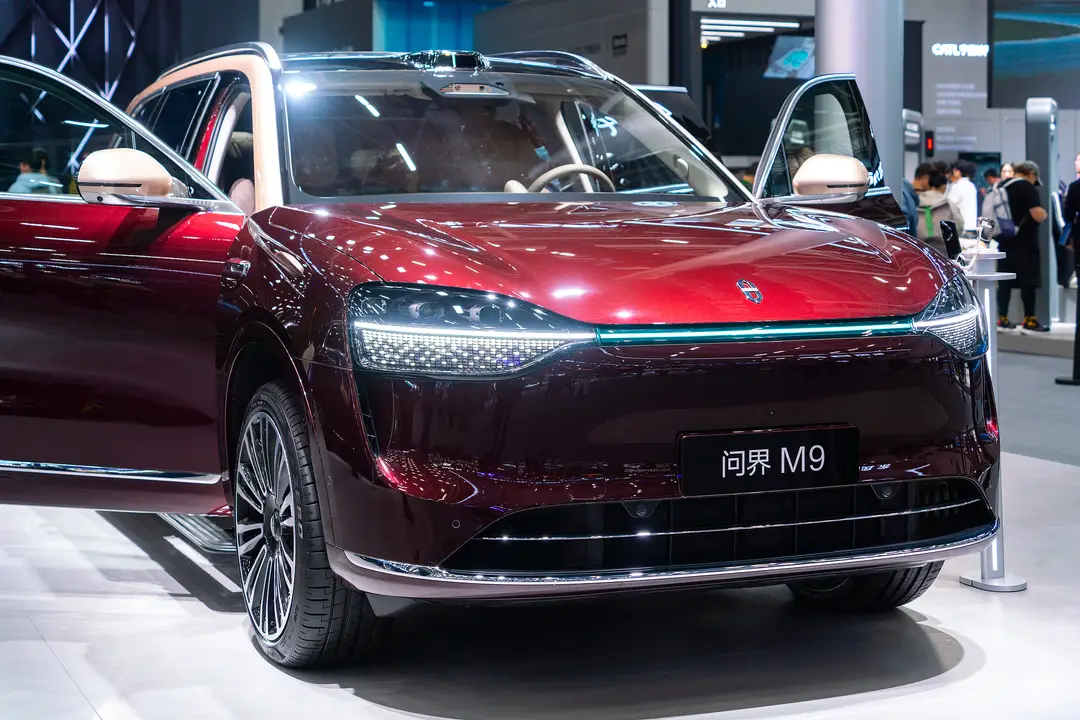
In 2024, Seres delivered 426,000 new energy vehicles, including more than 380,000 Aito-branded models. Aito sales reached 472,000 vehicles in 2025, with the premium M9 model outselling all other luxury SUVs priced above 500,000 yuan for 21 months running.
A hedge against rising uncertainty
The Seres-ByteDance partnership also highlights the growing interest of Chinese technology companies in automotive software and AI-powered vehicle experiences. Volcano Engine’s Doubao AI model is expected to play a central role in the new venture’s user interface.
Unlike traditional cloud service providers, Volcano Engine is expected to contribute directly to AI-powered interaction systems, content ecosystems and user engagement platforms. Its technology is designed to support continuous voice conversations, interpret spoken commands and integrate functions ranging from climate control and navigation to entertainment services.
The initiative comes as Huawei’s automotive portfolio continues to expand. Harmony Intelligent Mobility, its automotive business ecosystem, now has partnerships with automakers including Chery, BAIC, and JAC, under brands such as Luxeed, Stelato, and Zunjie, reducing Aito’s exclusivity.
Signs of pressure on Seres’ financial performance have already emerged. Although the company reported year-on-year revenue growth of 34% in the first quarter of 2026, net profit excluding non-recurring items fell 73.9% and operating cash flow turned negative. Selling expenses exceeded 24 billion yuan in 2025 as the company fought to maintain its position.
Investors have responded cautiously. Seres’ Shanghai-traded shares have fallen by around 54% from their peak in September 2025, wiping more than 150 billion yuan from the company’s market value.
Against that backdrop, Saidou appears to represent a strategic hedge. While Aito remains the cornerstone of Seres’ business and continues to benefit from Huawei’s technology and brand power, the ByteDance partnership offers an opportunity to develop a second growth platform under greater independent control.
Whether Saidou can replicate the success of Aito remains to be seen. But its launch underscores how even China’s most successful electric vehicle manufacturers are seeking new alliances as competition intensifies and growth becomes harder to sustain.
Source:
investorscn.com