

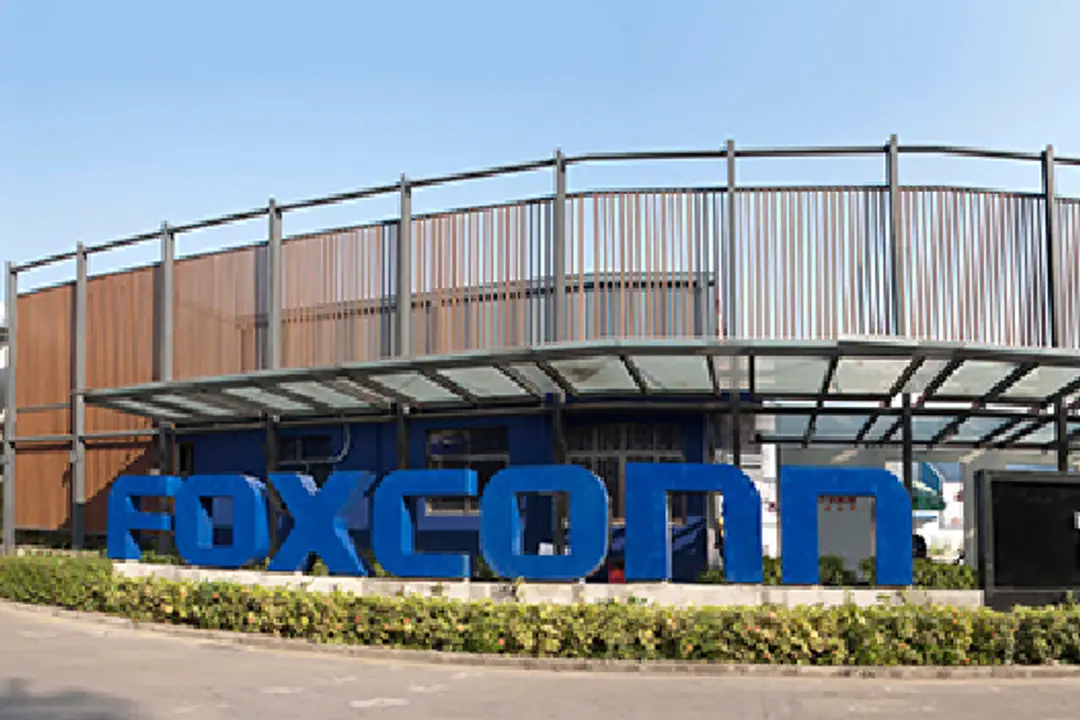
The contract ends a long-standing U.S. duopoly as demand for AI inference fuels rapid expansion across China’s AI server supply chain.
Taiwan’s Hon Hai Precision Industry, the iPhone assembler better known as Foxconn, has won its first artificial intelligence server manufacturing contract from SpaceX (SPCX.US) in a deal worth an estimated $52 billion, marking a significant shift in the global AI infrastructure market and ending the U.S. company’s reliance on American suppliers.
SpaceX plans to purchase approximately 13,000 Nvidia GB300 AI server racks from Foxconn, each costing about $4 million. Deliveries are expected to begin in the fourth quarter of 2026 and continue through the first quarter of 2027.
The contract is strategically significant because SpaceX’s AI server manufacturing has previously been dominated by U.S. companies Dell Technologies (DELL.US) and Super Micro Computer (SMCI.US). Foxconn’s entry breaks what had effectively been a two-company market for the business.
Supported by the order, Foxconn could account for about 40% of the global AI server manufacturing market by the end of 2026.
AI servers enter trillion-dollar growth phase
The deal reflects broader momentum in the AI server industry as demand surges from the commercialization of large language models (LLMs), multimodal AI systems and AI agents.
Global AI server revenue is forecast to jump 104% this year to $495.7 billion and expand to $1.245 trillion by 2030, a compound annual growth rate of 26%.
China is expected to become one of the fastest-growing markets. IDC estimates the country’s AI server market will reach 350 billion yuan ($51.8 billion) in 2026 and exceed 480 billion yuan in 2027.
A major shift is also underway in the composition of demand. While AI infrastructure spending was initially driven primarily by training LLMs, demand is increasingly shifting toward inference — the computing required to run AI applications after models have been trained.
IDC predicts inference servers will account for more than 55% of shipments by 2027, while inference workloads will represent more than 70% of total AI computing demand.
Domestic suppliers gain share
China’s domestic AI hardware ecosystem is benefiting from the shift. Research firm TrendForce forecasts that Chinese chipmakers, led by Huawei and Cambricon (688256.SH), will increase their share of China’s AI server market from 46% in 2025 to 56% in 2026. Internet companies’ internally designed AI chips are expected to increase their share from 20% to 23%, while overseas suppliers, including Nvidia (NVDA.US) and AMD (AMD.US), would see their combined market share fall from 34% to 21%.
China’s central government has also intensified support for the sector through the State-owned Assets Supervision and Administration Commission’s AI+ initiative, encouraging state-owned enterprises to invest across the artificial intelligence value chain, including computing infrastructure, applications and industrial ecosystems.
AI servers are likely to become a strategic investment area for state-owned companies over the coming years, covering chip design, server manufacturing, liquid cooling systems and data center operations.
Supply chain spans chips to cloud computing
The AI server industry consists of three broad segments: upstream components, server manufacturing and downstream computing services.
The upstream segment, comprising core components, represents the part of the industry chain with the highest technical barriers and the greatest concentration of value. It primarily includes AI computing chips, memory chips including DRAM and HBM, optical modules, printed circuit boards (PCBs), and power supply and thermal management systems.
Hygon (688041.SH), Cambricon, MetaX (688802.SH), Jingjia Micro (300474.SZ), and Montage Technology (688008.SH) (6809.HK) are among the leading Chinese companies in the AI chip sector include; CXMT (688825.SH) in DRAM; and Zhongji InnoLight Technology, Accelink Technologies (002281.SZ) and HGTECH (000988.SZ) in optical communications.
In printed circuit boards, companies such as Avary Holding (002938.SZ), Wus Printed Circuit (002463.SZ), and Shengyi Technology (600183.SH) are expanding production to meet AI server demand, while firms including Shenzhen Envicool Technology (002837.SZ) are developing liquid cooling systems for increasingly power-hungry AI servers.
Modern AI server cabinets can consume more than 100 kilowatts of power, making liquid cooling an increasingly important technology.
In the server manufacturing sector, Inspur Electronic Information (000977.SZ) remains China’s largest AI server supplier, with about 32% domestic market share during the first half of 2025. The company forecasts first-half 2026 net profit will increase between 226% and 288% from a year earlier. Foxconn Industrial Internet (6001138.SH) also reported AI server revenue from cloud service providers grew more than 230% year over year during the first half of 2026.
Regional clusters emerge
China’s AI server supply chain is becoming increasingly concentrated in specialized regional clusters.
The Greater Bay Area, led by Shenzhen and Dongguan, has become the country’s largest manufacturing base for AI servers and components. Shenzhen has introduced a three-year development plan aimed at expanding production capacity and increasing global market share in core technologies including chips, memory and PCBs.
The Beijing-Tianjin-Hebei region has emerged as China’s leading center for AI chip design and research, with more than 600 AI companies located in the Beijing Economic-Technological Development Area.
Shanghai and the broader Yangtze River Delta are focusing on high-end AI computing hardware. Shanghai’s intelligent computing capacity exceeded 160,000 petaflops in 2025, while the city’s AI industry generated more than 637 billion yuan in revenue across 394 large enterprises.
Western regions including Guizhou, Inner Mongolia, Gansu, Xinjiang and Ningxia are becoming important locations for AI data centers because of lower electricity prices and favorable climates for large-scale computing infrastructure.
While the AI server industry presents significant growth opportunities, companies face rapid technological change, heavy capital requirements and intensifying regional competition across the sector.