

By Qing Qing
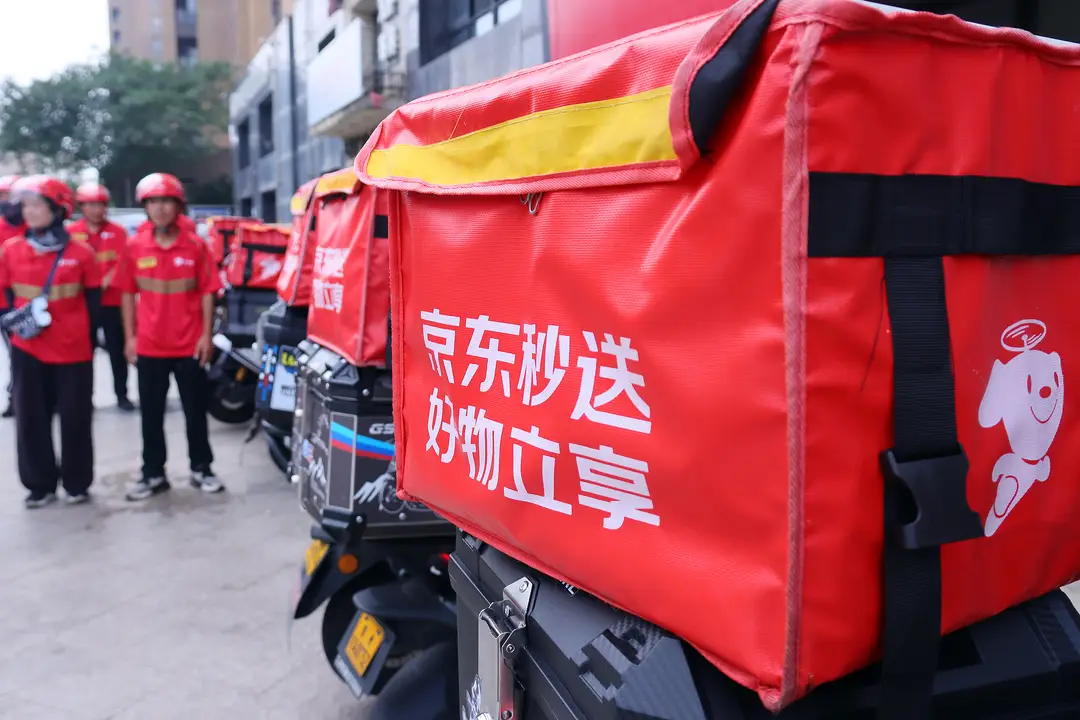
JD.com (9618.HK) (JD.US) founder and chairman Richard Liu has pledged that the Chinese e-commerce giant will retrain rather than lay off its vast delivery workforce as automation transforms the country’s logistics industry.
Speaking at the 2026 APEC China Business Leaders Forum on June 21, Liu said robotic delivery would eventually become the norm but insisted the company would not abandon its employees.
The remarks offer one of the clearest indications yet of how one of China’s largest private employers plans to manage the transition to increasingly automated logistics.
Preparing workers for an automated future
Automation has already become a defining trend across China’s logistics industry, with delivery robots, autonomous vehicles and AI-powered dispatch systems becoming more widespread.
For JD.com, the financial incentives are substantial. With around 700,000 delivery workers, annual labor costs run into tens of billions of yuan. Replacing a significant share of manual delivery with automation would improve efficiency, reduce operating costs and boost profitability.
Instead, Liu said JD.com had launched what it calls the Nirvana Plan, aimed at reskilling frontline workers before automation displaces existing jobs.
The company has partnered with 120 educational institutions across China to provide training in areas including robot maintenance, equipment servicing, dispatch operations, remote monitoring, route planning and data annotation.
Workers who once specialized in navigating neighborhoods and serving customers will instead be trained to operate and maintain intelligent logistics systems.
While robots will increasingly undertake physical deliveries, human workers will still be needed to maintain equipment, resolve system failures, optimize routing and oversee automated operations.
The strategy seeks to prepare employees for new roles before large-scale automation is fully deployed rather than attempting to retrain workers after their existing jobs disappear.
Long-term restructuring
Liu first outlined the approach during an internal speech in late May, when he said JD.com was seeking ways to protect hundreds of thousands of jobs, particularly among frontline blue-collar workers, as new technologies reshape the business.
He reiterated the company’s ambition to become what he described as “the world’s largest operator of the physical economy”, adding that he expects JD.com to remain China’s largest private-sector employer in 20 years.
The vision reflects JD.com’s long-standing emphasis on owning and operating its own logistics infrastructure rather than relying heavily on third-party delivery networks.
The company had previously established more than 80 robotics training centers nationwide to teach maintenance and servicing skills. Liu said the expansion to 120 partner institutions broadens the curriculum to include intelligent dispatching, remote monitoring, route optimization and other functions needed to support automated logistics.
The initiative suggests JD.com is investing in a long-term restructuring of its workforce rather than launching a short-term training program.
According to the company’s first-quarter results, JD.com’s frontline workforce now spans 183 job categories, ranging from delivery couriers, full-time riders, store staff and domestic services personnel to drone operators and robotics maintenance engineers.
As of March 31, the wider JD.com ecosystem employed more than 900,000 people, while total human resources expenditure reached 166.4 billion yuan ($24.5 billion).
Rising costs hurt competitiveness
The scale of JD.com’s workforce also highlights the growing financial pressures facing the company.
First-quarter fulfillment expenses rose 18.5% year-on-year to 23.4 billion yuan, up from 19.7 billion yuan a year earlier. Fulfillment costs increased from 6.6% to 7.4% of revenue as the company continued investing in logistics capabilities and staffing to improve customer service.
Rather than treating labor simply as a cost to be reduced, JD.com is seeking to transform its workforce into what it sees as a strategic asset for the next generation of logistics.
Delivery couriers have long been central to JD.com’s reputation for reliable and rapid fulfillment. As automation expands, however, workers who remain solely in manual delivery roles risk becoming less competitive.
The company hopes employees who have been retrained will instead become operators, technicians, and service specialists supporting intelligent logistics networks.
Liu acknowledged that the transition would not be straightforward. Factors including age, learning ability, training quality, the availability of new positions and future pay structures will all affect how successfully employees can move into new roles.
The success of the program will ultimately depend not on its announcement but on whether large numbers of workers are able to acquire new skills, move into different jobs and maintain their incomes as automation gathers pace.
For JD.com, the challenge is no longer whether robots will transform logistics, but whether the company can bring the workforce with it.
Source:
E-commerce World