By Su Da
In China’s vast healthcare system, medical check-ups serve as the first “valve,” a critical examination that activates a series of follow-up services—including health consultations, online diagnosis, medication purchases, payments and insurance.
Meinian Onehealth Healthcare (002044.SZ) and Ant Group’s Ant Health unit recently announced a comprehensive strategic partnership aimed at deeply integrating AI health infrastructure with a national AI health entry point. By combining Meinian’s massive repository of professional health data, nationwide offline service network, and standardized medical testing capabilities with Ant Health’s digital reach, the two sides are set to pioneer an integrated online-offline healthcare service model.
As a leading health management provider in China, Meinian operated nearly 600 examination centers as of the end of 2024, serving close to 30 million visits annually and more than 260 million cumulatively since its 2015 listing. In recent years, it has pursued an “All in AI” strategy, building capabilities around health data, medical knowledge and service scenarios.
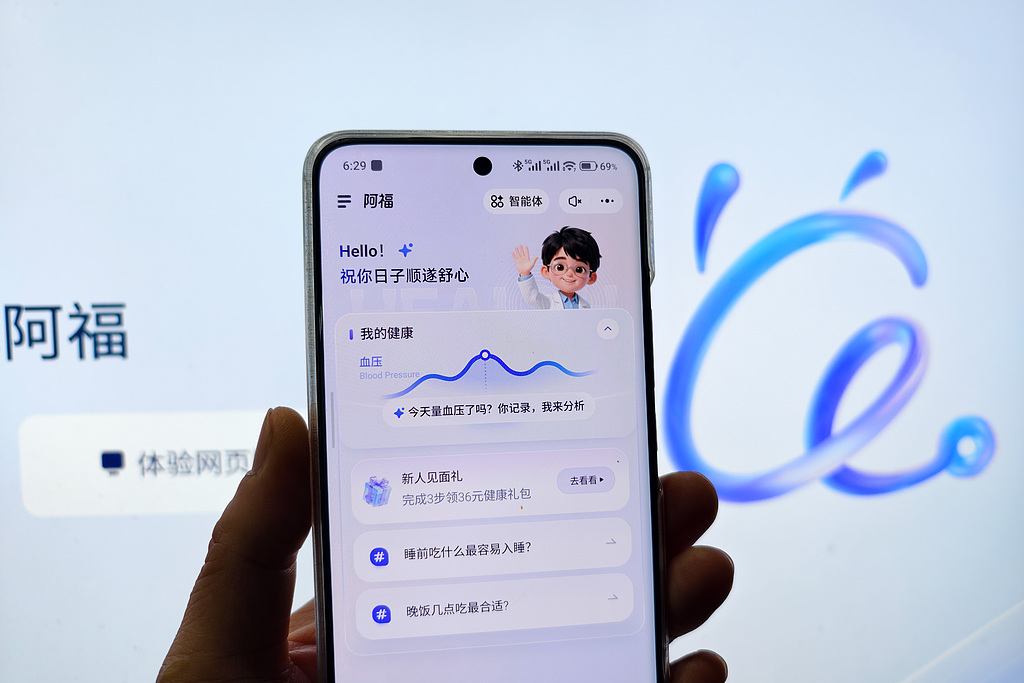
Ant Health, meanwhile, has spent over a decade building its digital healthcare ecosystem. Starting from digital medical insurance payments, it now connects more than 5,000 public hospitals and over 300,000 registered doctors. Its AI health app “Ant A-Fu,” claims to be the world’s largest health AI platform, serving over 100 million users and handling more than 10 million daily health consultations.
The partnership arrives as the health management industry shifts from a traditional model centered on one-off testing toward continuous services focused on preventive medicine and long-term health management. This transition is driving the industry from a billion-dollar heck-up market toward a multi-trillion-dollar comprehensive health services market.
Building a continuous health-management loop
At the core of the collaboration is the integration of digital health platforms with multidimensional health data, medical diagnostics and offline services, forming a more complete and continuous management loop.
Ant Health’s ecosystem — covering consultation, diagnosis, medication, payment and insurance — expands access to everyday health scenarios. Meinian contributes its accumulated health data and nationwide service network, enabling more accurate professional judgment and service execution.
A key highlight is the integration of “Health Xiaomei,” Meinian’s AI assistant, into the Ant Afu platform, allowing users to receive free, clear interpretations of medical reports and health risk alerts. The two sides will also collaborate across the full service chain—from consultation and diagnosis to medication, check-ups, screening, intervention and long-term management.
In the first phase, users who authorize “Health Xiaomei” within the Ant A-Fu app can access and interpret up to three years of their past medical check-up reports.
The system offers three core functions: simplifying complex medical indicators into plain language with a color-coded risk system; providing evidence-based, personalized health recommendations and treatment guidance; and tracking long-term trends through multi-year data analysis to identify emerging risks and enable proactive intervention.
Full-Cycle Health Management
The collaboration will eventually cover a user’s entire health journey. Before check-ups, users receive personalized recommendations based on past data. During check-ups, AI tools assist with navigation and reminders, while Meinian’s medical teams ensure service quality. Post-check-up, users can consult doctors online, purchase medication, or access further screening and long-term care through Meinian’s network.
Looking ahead, the partnership outlines three levels of potential. First, strengthening core infrastructure for AI-era healthcare by combining digital platforms with offline service networks. Second, building an integrated AI healthcare platform driven by data and continuous iteration. Third, using AI to shift the focus of healthcare to the long-term value of “health as an asset.”
Industry observers note that with aging populations, rising chronic disease and growing health awareness, preventive and long-term health management is becoming a major growth opportunity. The integration of AI, digital ecosystems and offline services is expected to expand the boundaries of traditional healthcare. This partnership, they suggest, offers a new blueprint for the future of the global healthcare industry.
Source:
Caijing Tuya