

By Chen Ran
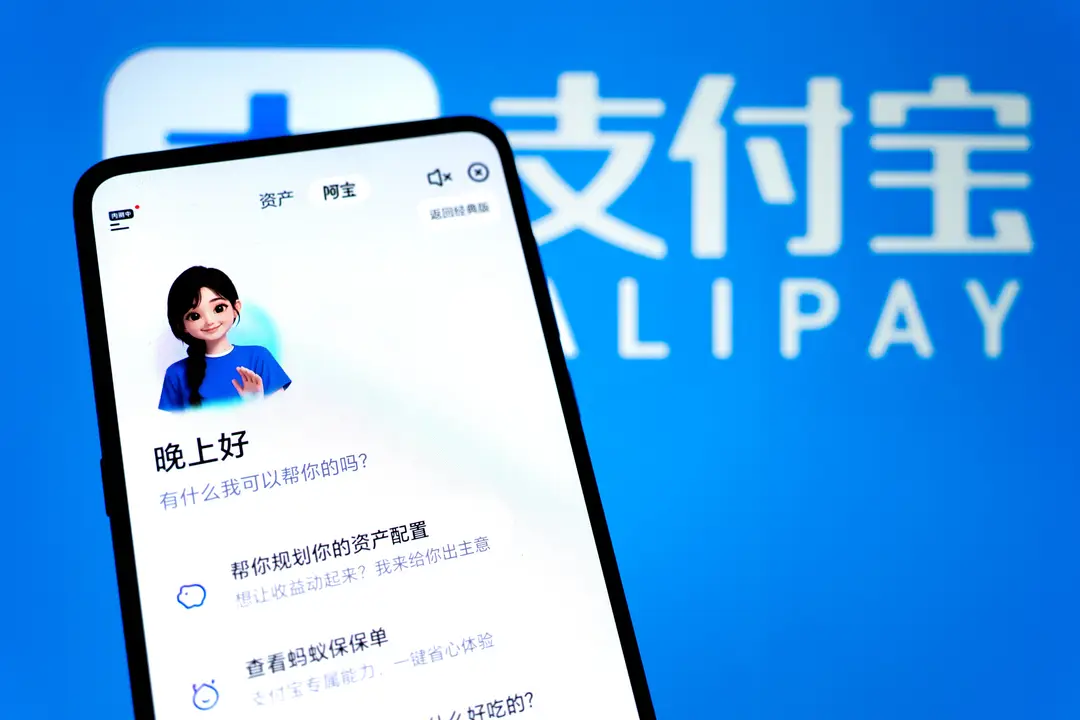
Fintech giant Ant Group is preparing to launch an AI-powered version of Alipay in what would be the mobile and digital payment platform’s most radical redesign since its creation nearly 20 years ago.
The Rather than simply adding an AI assistant to the existing app, the new version will allow users to switch with a single click into a separate, conversation-driven interface built around artificial intelligence.
According to people familiar with the project, internally code-named Bao Project, the product is expected to go live in the coming days and will be updated roughly twice a month. The rollout will be gradual: the traditional Alipay interface will remain the default, while users will have the option of making the AI version their preferred homepage.
The move highlights a growing divide in how China’s internet giants are adapting to the AI era. Since 2025, companies have largely followed one of two approaches: launching standalone AI-native applications or redesigning existing products around AI.
Much of the industry’s attention has focused on Tencent‘s plans for AI integration within WeChat. Following signals from Tencent’s third-quarter 2025 earnings report, reports about a WeChat AI assistant surfaced repeatedly, prompting the company to issue public denials.
Now Alipay appears poised to make the first major move.
Both Alipay and WeChat operate ecosystems with more than a billion users and millions of mini programs, lightweight “sub-applications” that run entirely inside the platforms. Any major redesign carries significant risks, potentially disrupting entrenched user habits and affecting a wide range of commercial interests.
A top-secret project
The Bao Project is led by Li Jun, president of Alipay’s business group, and is regarded internally as one of Ant’s most confidential initiatives.
Alipay’s AI transformation has been under consideration for more than two years. Internal discussions began in 2023 as executives debated whether AI capabilities should be built into the existing app or developed as a separate product.
The company initially pursued the standalone-app route, launching experiments including the AI assistant Zhixiaobao at the 2024 Bund Summit. However, AI agents embedded within the main Alipay app attracted millions of daily active users, convincing the company to refocus on its core platform.
By early 2025, Ant Group was already committing significant resources to other AI initiatives, including healthcare application Afu. Executives concluded that bringing AI services directly to Alipay’s existing billion-user base would be more effective than persuading consumers to adopt yet another standalone app.
The project was formally approved in December 2025. The result is a hybrid approach: neither a separate AI app nor a simple assistant within the existing interface, but an alternative AI-driven version of Alipay that users can enter through a one-click switch.
Turning mini programs into AI services
The Bao Project aims to fundamentally change how users interact with Alipay. Instead of opening individual mini programs to complete specific tasks, users would simply describe what they want through text or voice.
According to people familiar with development, the team produced more than 100 design iterations before settling on a conversation-centred interface.
The challenge is considerable. Alipay’s ecosystem contains millions of mini programs covering everything from shopping and transportation to healthcare and government services. To complete tasks on behalf of users, AI must understand not only user requests but also how those services work.
One person close to the project said the focus has shifted from simple chatbot interactions to completing complex tasks and service workflows.
To achieve this, Alipay has adopted a dual-track approach. Merchants can convert their services into AI-callable tools, while the AI can also interact with mini programs that have not been adapted through screen-reading technology, subject to user permission.
The race for the Agent era
The project is part of Ant Group’s broader effort to position itself for what executives describe as the coming “Agent era”.
The company has focused its AI strategy on three areas: lifestyle services, finance and healthcare. Afu, its healthcare AI application, has already surpassed 30 million monthly active users.
In May, Alipay announced a suite of AI payment infrastructure products and said AI-driven payments had exceeded 300 million transactions. Ant Group CEO Cyril Han argued that future economic activity could involve vast numbers of AI agents interacting with both humans and one another.
People familiar with management thinking said Alipay’s long-term ambition is for the AI version of the app to become a central gateway for agent-based services. Tencent’s AI plans for WeChat appear to be pursuing a similar goal.
The two companies, however, are approaching the opportunity from different directions. WeChat’s strength lies in social networking and communications, while Alipay’s advantage is its deep integration with services and transactions.
That distinction is likely to shape how each company’s AI ecosystem evolves. But for now, Alipay has moved first, unveiling its vision for the next stage of China’s internet as the industry continues to await WeChat’s response.
Source:
Late Post