

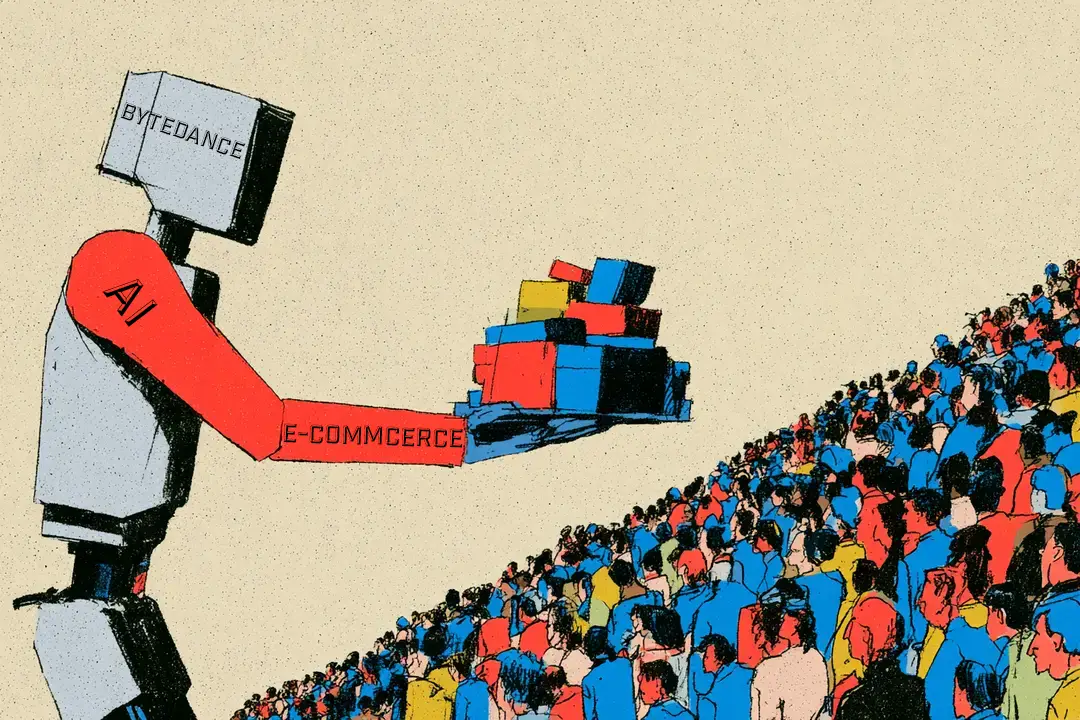
The social media giant is pushing its AI assistant deeper into transactional revenue as it grapples with the spiraling infrastructure costs of generative AI.
By Da Cheung
ByteDance has introduced a commission-based monetization model for its flagship artificial intelligence assistant, Doubao, highlighting a growing divergence between how different tech giants are trying to make money from generative AI.
Starting this week, the Doubao chatbot — which LatePost says has over 200 million daily active users, mainly from China — is charging a roughly 12% fee for hotel bookings generated through its recommendations. That is made up of an 11.4% software service fee plus a 0.6% payment handling fee, according to Chinese media reports. When a user asks Doubao for hotel suggestions, the chatbot provides options with direct links that jump to Douyin, ByteDance’s Chinese sister app to TikTok, to complete the purchase.
The move represents a critical test for the commercial viability of consumer AI. While major AI developers globally are burning through billions of dollars, they are taking vastly different approaches to recouping those investments. Unlike Western rivals that rely heavily on paid subscriptions, ByteDance is pursuing a hybrid strategy—layering e-commerce commissions on top of an existing tiered subscription model.
The cost of scale and a divergent path
The shift toward e-commerce commissions appears to be partly driven by the staggering infrastructure costs required to keep AI assistants running. Unlike traditional software, which benefits from economies of scale, AI products face huge “inference” costs — the computing power required every time a trained AI model generates an answer or completes a task.
According to a report by LatePost, Doubao’s massive user growth has created a financial dilemma, as every new query requires expensive computing power. The financial strain is an industry-wide issue. Z.AI (Zhipu AI) (2513.HK), one of the few listed major AI developers, reported a 2025 net loss of about 4.7 billion yuan ($657 million), 59% more than 2024, and a 132% jump in revenue to 724.3 million yuan, illustrating the severe cash burn required to stay competitive.
ByteDance is pouring capital into development. According to a report by the Financial Times, the company is currently training a massive AI model with up to 10 trillion parameters — the numerical settings a model uses to recognize patterns and make decisions. The model could be larger by parameter count than Anthropic‘s Mythos, which is itself estimated at around 8 trillion parameters, and substantially larger by parameter count than leading models domestic competitors like Moonshot AI and DeepSeek.
To fund this arms race, some Western companies like OpenAI rely heavily on paid subscriptions, with consumer plans ranging from $8 to $200 a month. However, Chinese consumers have historically shown strong resistance to paying for software subscriptions.
Instead, ByteDance is leveraging its massive existing e-commerce ecosystem to create a seamless AI-to-purchase loop. Western AI platforms are currently leaning toward traditional advertising and have struggled with in-chat commerce. For example, Walmart recently found that purchases completed directly inside ChatGPT converted at a 66% lower rate than transactions on its own website. OpenAI has since shifted its focus away from direct and toward product discovery. Meanwhile, Amazon has begun buying sponsored ad placements in ChatGPT, including ads promoting Prime Day that direct shoppers back to its own website.
The black box of AI recommendations
Doubao’s pivot to transaction fees has sparked ethical and regulatory concerns over the transparency of generative search, particularly regarding how AI models choose which products to display.
Following reports of the new 12% commission, Doubao’s public relations head Liu Xing stated on social media that the platform does not charge upfront advertising fees and that merchants cannot pay to influence their recommendation rankings. The company says it only collects a service fee after a successful transaction is completed.
However, industry experts warn that this claim is difficult for outsiders to verify due to the “black box” nature of AI models — meaning the internal decision-making process of the algorithm is hidden from both users and regulators.
Li Muxin, an economics professor at the Shanghai Institute for Mathematics and Interdisciplinary Sciences, told STAR Market Daily that the boundary between organic recommendations and commercial interests is becoming dangerously blurred. In traditional search engines like Google, paid advertisements are usually clearly defined. In AI-generated answers, it is much harder for users to know why one hotel was recommended over another, raising questions about algorithmic fairness and whether large, data-rich hotel chains will unfairly dominate the results. China’s search industry has faced similar criticism — the country’s most used search engine, Baidu, has long been singled out for blurring paid results from organic results.
This shift is part of a broader transition from traditional search engine optimization to generative engine optimization (GEO) — the practice of tailoring corporate content specifically to be quoted by AI assistants. According to industry data cited by STAR Market Daily, the Chinese AI search marketing sector, which includes GEO, was worth about 32 billion yuan in the first quarter of 2026. The GEO segment alone saw growth of 320%. As AI increasingly replaces traditional search engines for shopping queries, the lack of transparency in how these platforms rank and recommend products is likely to become a major regulatory battleground.
This shift is part of a broader transition from traditional search engine optimization to Generative Engine Optimization (GEO) — the practice of tailoring corporate content specifically to be quoted by AI assistants. According to industry data cited by STAR Market Daily, the Chinese AI search marketing sector, which includes GEO, was worth about 32 billion yuan in the first quarter of 2026. The GEO segment alone saw growth of 320%. As AI increasingly replaces traditional search engines for shopping queries, the lack of transparency in how these platforms rank and recommend products is likely to become a major regulatory battleground.
Sources: