
By Yang Jie
The collapse of Zihaiguo, China’s once high-flying self-heating food brand, marks the end of one of the country’s most emblematic consumer boom stories — and offers a cautionary tale about the limits of growth fuelled by venture capital and online traffic.
Its parent company, Hangzhou Golden Antelope, recently entered bankruptcy liquidation and creditors have begun filing claims, bringing the curtain down on a business that, at its peak, was valued at 7.5 billion yuan ($1.03 billion).
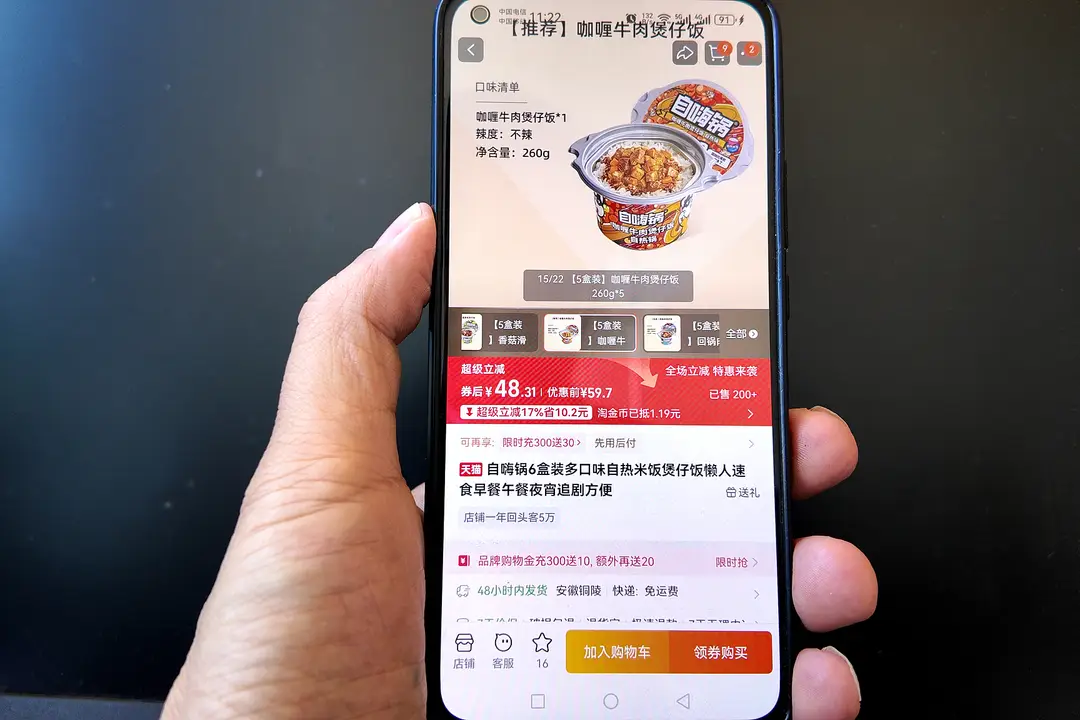
Founded in 2018, Zihaiguo became one of the standout brands of China’s “new consumption” era, riding successive waves of enthusiasm for solo dining, the “lazy economy”, livestream e-commerce and pandemic stockpiling. For many young Chinese consumers, the brand defined the self-heating hotpot category: a meal that could be prepared by adding cold water to a chemical heating pack and waiting 15 minutes.
Its products were ubiquitous across livestreams, reality television sponsorships, lift advertisements and social media campaigns. Yet while Zihaiguo’s demise may appear to confirm that self-heating meals were merely a passing fad, industry insiders argue the reality is more nuanced.
“The problem is not that the self-heating food industry disappeared,” said one executive in the sector. “Zihaiguo failed because it could not shift from rapid expansion to sustainable operations.”
A boom driven by livestreaming and Covid
The company’s rise followed a familiar formula for China’s internet-era consumer brands. Self-heating hotpot was a highly visual and novel category that lent itself naturally to online marketing. At the same time, Chinese investors were pouring money into concepts tied to convenience, home consumption and younger lifestyles.
Founder Cai Hongliang was already well known in China’s consumer sector. In 2016 he sold snack company Baicaowei for 960 million yuan before returning to entrepreneurship two years later with Zihaiguo. Leveraging his experience in e-commerce and digital marketing, he rapidly transformed the company into a lifestyle brand aimed at young consumers.
Initially, Zihaiguo adopted an asset-light model, relying on outsourced manufacturing while directing resources into advertising. Celebrity endorsements, online influencers, variety show sponsorships and blanket social media promotion drove explosive growth.
The Covid-19 pandemic provided a further boost. As lockdowns and travel restrictions reshaped consumption habits, self-heating meals evolved from novelty items into emergency pantry staples. Livestream shopping amplified demand further.
According to publicly available figures, Zihaiguo generated revenue of 958 million yuan in 2020. Between 2018 and 2021, the company completed five funding rounds raising more than 550 million yuan in total, while investors steadily pushed up its valuation.
For venture capital firms, the company embodied an irresistible narrative: an emerging food category, an experienced founder and a repeatable e-commerce growth model.
Growth conceals underlying weakness
But the same dynamics that accelerated Zihaiguo’s ascent ultimately undermined it.
Industry executives say the company became dangerously dependent on traffic-driven growth. “If you spent money on advertising, sales rose. If you stopped spending, sales fell,” one insider said. “Consumers were buying for novelty, not forming long-term habits.”
Financial data reflected the imbalance. In 2020, Zihaiguo spent 293 million yuan on sales and marketing — nearly one-third of revenue — while posting a net loss of 151 million yuan. In 2021, revenue rose only modestly but marketing expenses surged to 431million yuan and its losses widened to 314 million yuan.
At the same time, the company embarked on an aggressive factory-building programme. During the peak years of 2020 and 2021, management expanded production bases across China on the assumption that demand would continue growing exponentially. As livestream commerce matured and growth slowed, those factories became a financial burden. Cash flow pressures emerged quickly.
Zihaiguo also overextended its product range. Having achieved success with self-heating hotpot, it branched into snail rice noodles, instant rice meals, mixed noodles and ready-made dishes. It amassed more than 100 stock keeping units (SKUs) — scannable identification codes attached to retail products to keep track of inventory.
Yet consumers continued to associate the brand primarily with hotpot. New products lacked differentiation and relied on the same advertising-heavy strategy, diluting resources without establishing strong repeat demand.
Not the final curtain
Management instability compounded the problems. Senior executives reportedly departed between 2021 and 2022, while pressure mounted across the organisation. A planned investment by Lotus Health, which would have provided about 600 million yuan in funding, ultimately collapsed, accelerating the company’s demise.
Even so, the failure of Zihaiguo does not necessarily signal the end of the self-heating food industry itself.
Industry players argue the category still serves important niche markets. Wang Zhengqi, founder of rival brand Mo Xiaoxian, said self-heating meals remain well suited to scenarios where access to hot food is limited, such as long-distance driving, camping, hiking and fishing trips.
The sector, he argues, is moving away from mass-market hype towards more specialised use cases. “The high-growth phase is over,” Wang said. “Now the demand is clearer.”
That shift is reshaping competition. Brands are increasingly focused on product quality, supply-chain efficiency and tailoring products to specific consumption scenarios rather than pursuing indiscriminate expansion.
Zihaiguo’s collapse therefore represents more than the failure of a single company. It marks a transition in China’s consumer economy: away from an era dominated by traffic, capital and viral growth, towards one where operational discipline, product quality and sustainable demand matter far more.
Source:
Tianxiawangshang