

By Du Chen
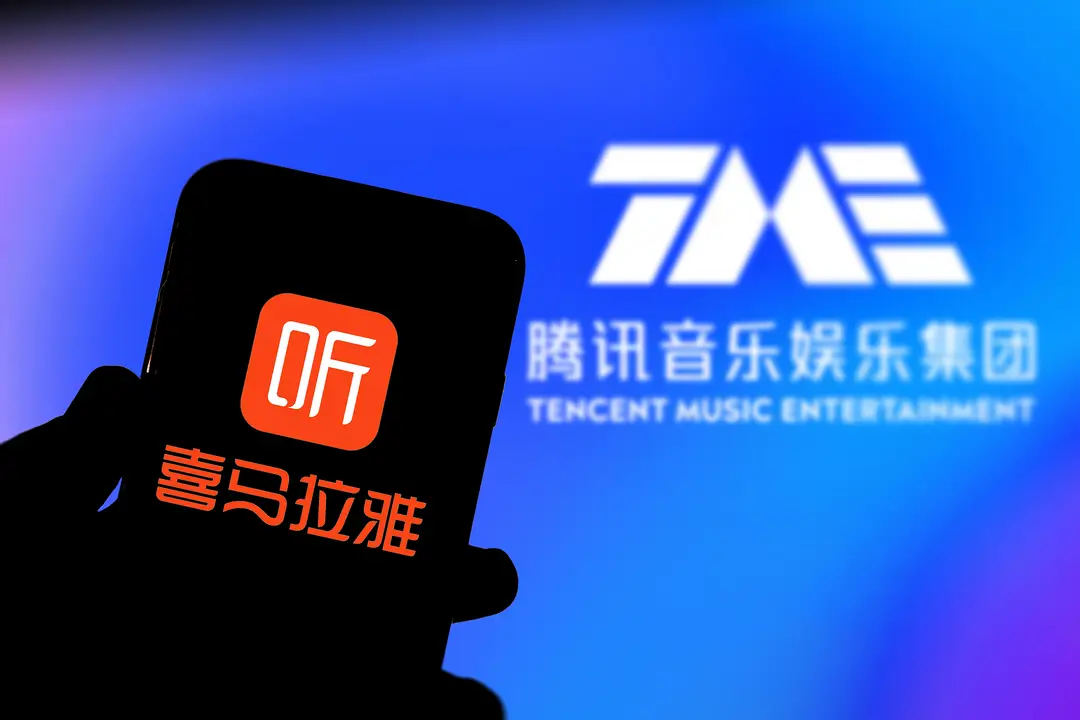
After more than a decade dominating China’s online audio market, Ximalaya has abandoned its long-running dream of an initial public offering, opting instead for a takeover by Tencent Music Entertainment in a deal that highlights the increasingly harsh economics of China’s consumer internet sector.
China’s antitrust regulator recently granted conditional approval for Tencent Music’s acquisition of Ximalaya, ending an almost year-long review process after the deal was first announced in June 2025. Tencent Music will pay $1.26 billion in cash plus shares, valuing Ximalaya at roughly $2.88 billion.
For many in China’s technology industry, the transaction marks the symbolic end of one of the country’s most celebrated content start-ups. Ximalaya, once valued at $4.35 billion and backed by leading venture capital firms, spent years attempting — and failing — to list in New York and Hong Kong.
Its decline reflects a broader shift in China’s internet industry: slowing user growth, weaker advertising markets and fading investor appetite for companies that cannot generate consistent profits.
From internet darling to cash-burning platform
Founded in Shanghai in 2013, Ximalaya emerged during the early years of China’s mobile internet boom by targeting a neglected niche: audio content consumed during commutes, exercise and household chores.
Before the rise of short-video apps, millions of Chinese users turned to the platform for audiobooks, podcasts, comedy shows and educational courses. Audio programmes such as Logic Show and historical storytelling series became particularly popular among urban middle-class listeners.
The company expanded rapidly. Within a year of launch, Ximalaya had attracted 10 million users. By the end of 2014, registered users had exceeded 100 million, cementing its position as China’s largest mobile audio platform. At its peak, the company claimed 303 million monthly active users.
Investors embraced the story enthusiastically. Over 12 funding rounds, Ximalaya raised close to 10 billion yuan ($1.47 billion) from backers including Tencent Holdings, Xiaomi, Baidu, Goldman Sachs and Sony Music. Many investors saw it as a potential Chinese equivalent of Spotify and Audible combined.
The limits of China’s audio business
Yet beneath the rapid growth, Ximalaya faced a problem common across China’s internet industry: attracting users did not necessarily translate into profits.
Chinese consumers, long accustomed to free online content, proved reluctant to pay consistently for podcasts and audiobooks. Meanwhile, competitors including ByteDance, Bilibili and Xiaohongshu increasingly expanded into podcasts and long-form audio.
Unlike short-video platforms, audio services also lacked strong advertising and e-commerce revenue streams. To maintain growth, Ximalaya spent heavily on copyright acquisitions, celebrity hosts and user acquisition campaigns.
Between 2018 and 2022, the company accumulated losses of more than 3.1 billion yuan. By the end of 2023, liabilities had risen to 14.4 billion yuan, far exceeding its 4.2 billion yuan in assets.
The deteriorating financial position coincided with repeated IPO failures. Ximalaya attempted to list four times, first in the U.S. and later in Hong Kong, but each effort collapsed amid weakening investor sentiment towards Chinese technology companies and concerns over profitability.
Tencent’s defensive acquisition
For Tencent Music, the acquisition is less about immediate profits than strengthening its broader audio ecosystem.
China’s online music sector is under pressure as short-video apps consume more of users’ entertainment time. By acquiring Ximalaya, Tencent Music gains access to podcasts, audiobooks, educational programming and in-car audio content, allowing it to expand beyond music streaming into the broader “ear economy.”
The deal also significantly deepens Tencent’s dominance in Chinese audio entertainment. Alongside QQ Music, Kugou, Kuwo and audiobook platform Lanren Tingshu, the addition of Ximalaya strengthens Tencent’s grip over a large share of China’s online audio market.
That dominance helps explain why regulators imposed strict conditions on the merger, including bans on exclusive licensing arrangements and restrictions on its power to limit creators’ ability to distribute content across multiple platforms.
The conditions reflect Beijing’s broader effort to curb monopolistic behaviour among China’s technology giants. They also underline how much the internet industry has changed since Ximalaya’s rise more than a decade ago.
At one point, many investors believed audio platforms would become some of China’s most defensible internet businesses because of their ability to build long-term user habits. Instead, Ximalaya’s fate illustrates how difficult it has become for standalone content platforms to survive independently in an era increasingly dominated by large ecosystems and algorithm-driven distribution.
Source:
Investorscn.com