
By Yang Jie
A year ago, investors hailed Xiaomi’s entry into electric vehicles (EVs) as one of the most successful launches in China’s crowded automotive market. Its SU7 sedan quickly became a hit, monthly deliveries surged and founder Lei Jun emerged as one of the country’s highest-profile technology executives turned carmakers.
But Xiaomi’s latest earnings report suggests that the company’s dependence on a handful of successful models may now be becoming a weakness. The group reported on Monday that revenue from its smart EV and AI businesses rose 6.9% year on year to 19.9 billion yuan ($2.94 billion) in the first quarter, while vehicle deliveries increased 6.6% to 80,856 units.
Yet the division swung back into operating losses of 3.1 billion yuan after posting profits for the previous two quarters. Gross margins for the smart EV business also fell to 20.1% from 22.7% in the previous quarter.
The figures highlight the challenge facing Xiaomi as it attempts to transform itself from a consumer electronics company known for producing hit products into a carmaker capable of sustaining profits across multiple vehicle cycles.
Hit products dominate sales
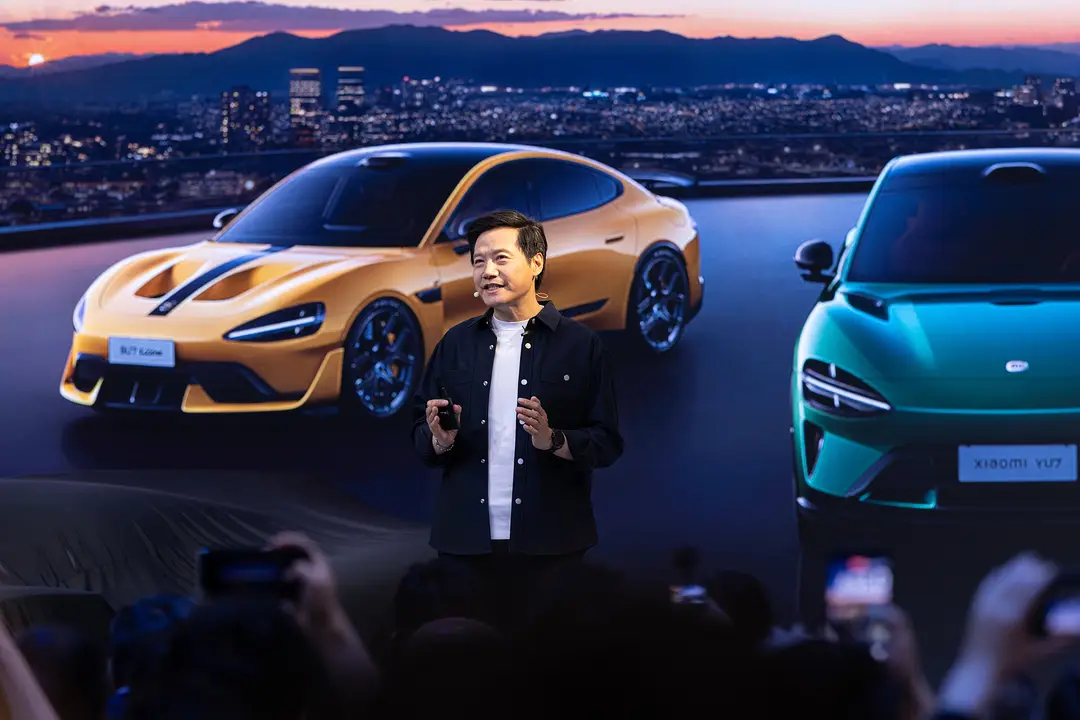
Xiaomi’s automotive business remains unusually concentrated for a major EV manufacturer. While rivals such as Li Auto, Nio and Leapmotor rely on broad line-ups spanning several models and price segments, Xiaomi’s sales are still heavily dependent on the SU7 and YU7 series.
That concentration helped Xiaomi achieve rapid scale with relatively few vehicles — a rare feat in the global auto industry — but it also leaves the company highly exposed to fluctuations in demand for individual models.
According to company disclosures and industry estimates cited by Chinese media, deliveries of the YU7 have slowed sharply since peaking late last year. The newer SU7 version has helped offset some of the decline, but analysts say the company’s financial performance remains closely tied to the success of a small number of vehicles.
The risks of that strategy are already visible in Xiaomi’s margins. The company attributed the decline in profitability partly to a lower proportion of higher-margin SU7 Ultra deliveries, as well as rising component costs and the impact of purchase tax subsidies.
Because Xiaomi lacks a broader portfolio of models, changes in the sales mix of a single vehicle can have an outsized impact on overall profitability. That volatility marks a contrast with more established EV makers, whose larger product ranges allow weaker-performing models to be offset by stronger sales elsewhere.
Broadening the line-up
Xiaomi executives have previously defended the company’s “blockbuster product” strategy, arguing that fewer models with higher sales volumes can improve efficiency and reduce operational complexity.
The approach mirrors tactics that helped Xiaomi become one of China’s largest smartphone makers, where the company often relied on a small number of aggressively priced devices to gain market share. But the automotive industry operates on much longer product cycles and requires far greater capital investment. A failed smartphone model can be replaced within months; a poorly performing car can weigh on a manufacturer for years.
The company is now attempting to broaden its line-up in an effort to reduce that risk. Chinese media reports say Xiaomi plans to launch at least four additional vehicles, including lower-priced and performance variants of the YU7, an extended-range SUV under a new sub-brand and a longer-wheelbase version of the SU7 aimed at the executive market.
However, several of those models are unlikely to reach large-scale deliveries until late this year or beyond, leaving Xiaomi reliant on its current portfolio for much of 2026. That could complicate the company’s ambitious delivery targets.
Lei said earlier this year that Xiaomi aimed to deliver 550,000 vehicles in 2026. With first-quarter deliveries accounting for less than 15% of that goal, the company would need to average more than 50,000 vehicles a month for the remainder of the year.
An uncertain future
At the same time, Xiaomi announced a new share buyback programme worth up to HK$20 billion ($2.55 billion), despite group net profit falling sharply and the EV division back in the red.
The repurchase plan was framed by the company as a sign of confidence in its long-term prospects. But some investors view it as an attempt to reassure markets increasingly focused on whether Xiaomi can evolve from a maker of viral hit products into a sustainable mass-market carmaker.
For now, Xiaomi’s automotive business remains one of the most closely watched stories in China’s EV sector — not only because of its rapid growth, but because it is testing whether success built on a small number of blockbuster models can endure in an industry where scale, breadth and manufacturing consistency often matter more than hype
Source:
Huxiu Automotive