

By Da Cheung
Drone footage captured recently by the Chinese automotive media outlet Auto Commune reveals that the exterior of Lexus‘s new factory in Shanghai is nearing completion. Slated to finish construction in the second half of 2026, the facility represents a critical step in the brand’s shift toward electric vehicles. However, the physical progress stands in stark contrast to the company’s internal roadmap. With conservative production targets and the sudden cancellation of a highly anticipated flagship model, the project highlights the struggles of a traditional auto giant trying to navigate the volatile electric era.
The Jinshan district facility is a massive undertaking. It has a planned land footprint of 615,700 square meters (152 acres), close to Tesla‘s 865,000-square-meter Shanghai Gigafactory. According to the media outlet’s observation of the layout, it includes a comprehensive “5+1” production process — covering die-casting, stamping, welding, painting, and assembly, alongside a dedicated battery pack facility.
A conservative footprint in Tesla’s backyard
Yet the Japanese automaker’s ambitions remain cautious. While The Chinese Entrepreneur reports the initial factory project investment sits at roughly $690 million with an annual capacity of just 100,000 vehicles, Auto Commune notes the total accumulated investment poured into the Jinshan district has reached $2 billion. Even with this heavy financial footprint, the conservative production target pales in comparison to its neighbor; Tesla’s Shanghai plant delivered over 213,000 vehicles in the first quarter of 2026 alone, accounting for nearly 60% of the brand’s global output.
Why establish this factory overseas rather than in Japan? Professor Sun Lijian from the Fudan Development Institute said that the decision was driven by geoeconomic necessity. Faced with a shrinking domestic market, weak consumer spending, and the continuous depreciation of the yen, Toyota — Lexus’s parent company — had to shift from an export-driven model to investment in production overseas. Furthermore, as China now controls 70% of global lithium battery production capacity, tapping into the mature Yangtze River Delta supply chain became essential for Lexus to commercialize its next-generation technology.
.webp)
Aerial view of Lexus’s Jinshan factory in Shanghai, as of June 2026. From Auto Commune (汽车公社)
The phantom solid-state battery
One of the most highly anticipated elements of the Jinshan project was the potential local production of solid-state batteries. Unlike traditional lithium-ion batteries that use liquid electrolytes, solid-state batteries utilize solid materials, promising significantly higher energy capacity, longer driving ranges, and improved safety.
However, drone footage and public planning documents confirm that the initial phase of the factory will only handle battery pack assembly, not core cell manufacturing. According to the company, it aims to commercialize solid-state technology by 2027 or 2028, but the timeline has been repeatedly delayed since its initial 2020 target. Building a dedicated clean room and assembly line for these advanced batteries will have to wait for a medium-term expansion phase, keeping the brand’s ultimate technological trump card off the table for now.
A shifting EV roadmap
The broader strategy for the factory is also in flux. Toyota has abruptly terminated the development of the Lexus LF-ZC, its flagship next-generation pure electric sedan, Auto Business Review reported on May 29.
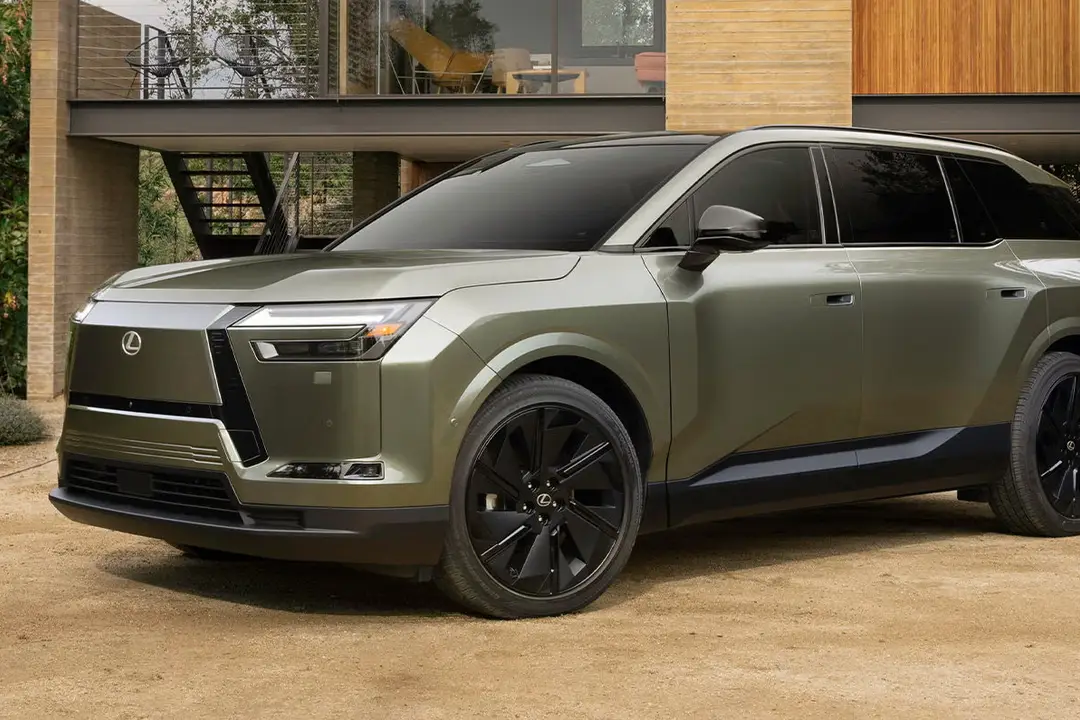
Originally scheduled for a 2026 launch and later pushed to 2027, the LF-ZC was designed to rival the BMW i3 and Mercedes-Benz C-Class EVs. It was supposed to pioneer a revolutionary “gigacasting” manufacturing method — a process that casts massive sections of the vehicle body as a single piece to dramatically reduce parts and lower production costs. The method is widely used by Tesla and other newly established automobile companies. The vehicle was also slated to utilize an advanced autonomous assembly line. With the sedan canceled, industry rumors suggest the Shanghai factory might now prioritize the TZ, a large three-row electric SUV, which aligns better with Chinese consumer preferences — Tesla’s Model Y and Xiaomi’s Yu 7 SUVs are among the best-selling cars in China right now.
The cancellation reflects a broader retreat by legacy automakers amid cooling global EV demand and shifting geopolitical winds. With the U.S. pulling back on EV tax credits and the European Union reversing its decision to ban ICE cars by 2035, Japanese brands are recalibrating. Honda has already scrapped multiple EV initiatives, including its joint venture with Sony, pivoting back toward hybrid models.
At the same time, competitive pressure from local brands is mounting. Chinese automakers like BYD have significantly improved their vehicle quality while maintaining aggressive pricing, making it increasingly difficult for foreign premium brands to compete.
While the Shanghai factory’s expansive solar-paneled roof and massive structural footprint signal a long-term commitment, the company’s slow progress in the era of full electrification remains a liability. Leveraging Shanghai’s robust supply chain solves only part of the equation. Successfully transitioning a century-old corporate giant to dominate a new industrial era is historically rare, and the industry is watching closely to see what Lexus can ultimately deliver in China.
Sources: