
By Brent Li
On April 30, the eve of China’s sweeping new drone regulations, storefronts in the nation’s capital were undergoing a quiet but dramatic transformation. Starting May 1, the entire administrative region of Beijing will be officially designated as restricted airspace for unmanned aerial vehicles, effectively grounding all “unauthorized” outdoor drone flights — and stripping the local consumer market of its most popular flying gadgets.
Passed by the municipal legislative body in late March, the regulation mandates that all outdoor flights receive special, advanced approval, though it states that specific flight venues could be designated based on practical needs. However, in typical Chinese regulatory fashion, this broad framework leaves immense room for interpretation. The ultimate decision on who gets to fly, and where, remains firmly in the hands of security-focused government departments, creating significant operational uncertainty.
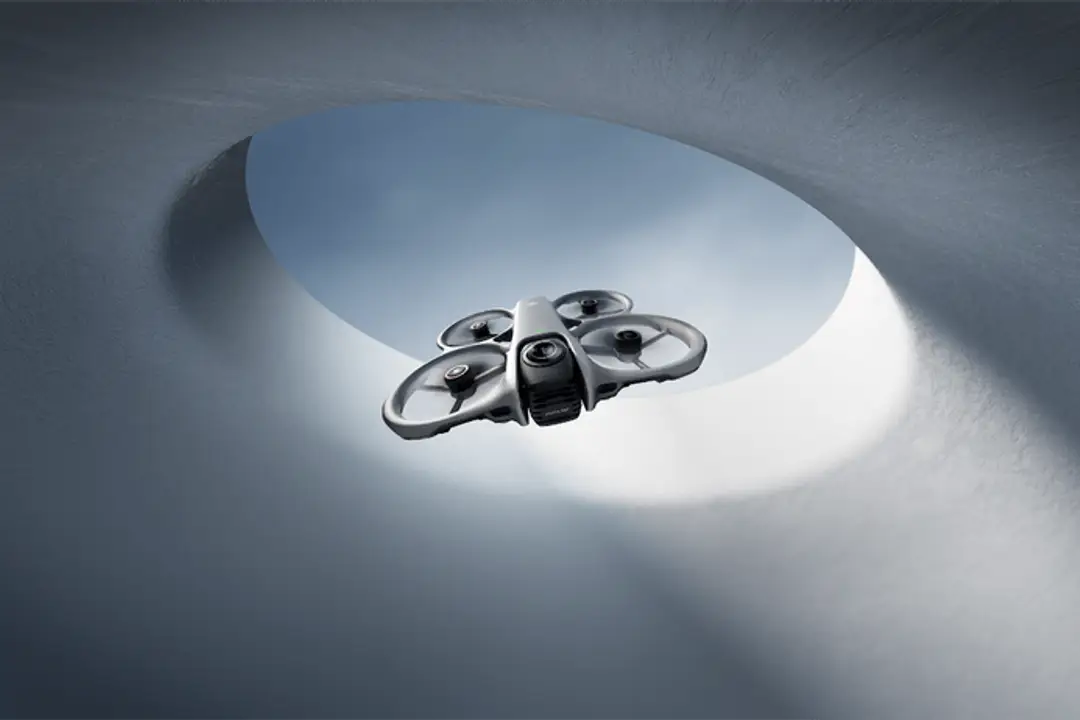
What is clear, however, is that the local retail ecosystem is now in the deep freeze. The regulation prohibits the sale, rental, and even transportation of drones and their core components into Beijing. Any owner who hasn’t registered and activated their device by April 30 will be barred from bringing it into the city. By Wednesday morning, staff at brick-and-mortar stores selling drones made by DJI — the undisputed leader in the global consumer drone market — had already started dismantling their display units and boxing them up.
Navigating narrow skies
Beijing’s blanket ban is part of a comprehensive national framework for drone management that takes effect across China on May 1. Transitioning from loose constraints to rigid rules, the central government is ensuring every flight will be on its radar.
While restrictions vary regionally, the overarching theme is a significant tightening on the use of the skies. In Shanghai, for instance, about 46% of the city’s airspace is designated as “suitable for flight” without prior declaration for micro and light drones, but the whole downtown area remains firmly off-limits. According to a guide published by Kanrong Info, recreational pilots in the city center are limited to just three officially designated areas — such as Century Park and the Shanghai Botanical Garden — which can accommodate only 30 to 50 pilots per hour and require advance booking through a local municipal app.
This crunch reflects the unique structure of airspace control in China. The vast majority of airspace is tightly controlled by the military, leaving only very narrow corridors for civil aviation. This bottleneck is why commercial passenger airliners often have to fly inefficient, zigzag routes between Chinese cities. Unmanned aerial vehicles, which previously flourished in a regulatory gray area due to the industry’s rapid, unchecked growth, are now bumping directly against these rigid, military-dominated ceilings.
Global concerns and market chills
To be sure, heightened scrutiny of the drone industry is not unique to China. In recent years, modern warfare has starkly demonstrated that drones are no longer just tools for recreational or commercial filming; they can easily be retrofitted into highly lethal weapons.
Regulators worldwide are reacting to these safety and security risks. The United States Federal Aviation Administration (FAA), for example, significantly stepped up its enforcement actions in 2025 with hefty fines of as much as $75,000 per infraction and revoking licenses for unauthorized drone flights that endangered the public or violated airspace restrictions. It announced a new enforcement initiative on April 16 this year to deter violations.
In China, the new regulatory burden has sent a deep chill through the consumer market. Confronted with a shrinking list of legally flyable areas, high compliance costs, and the looming threat of detention, many casual hobbyists are simply abandoning the skies. One second-hand drone seller told Caijing magazine that sales plummeted following the announcement of the new rules, with an increasing number of users looking to sell their grounded drones.
Tug-of-war over the ‘low altitude economy’
This severe regulatory crackdown comes even as the Chinese government’s official policy for the last three years has been to encourage what’s known as the low altitude economy — a spectrum of commercial and industrial activities including passenger transport, cargo delivery, and integrated aviation services taking place in airspace below 1,000 meters. State planners have explicitly called for more application scenarios to turn this sector into a new pillar of national economic growth.
Dozens of Chinese startups are fiercely competing to dominate this space, pouring millions into manned low-altitude flying vehicles. Companies like ZeroG and Aerofugia have recently secured significant fundraising to develop next-generation aircraft, joining more internationally recognized players like Nasdaq-listed EHang (EH) in the pursuit of electric vertical takeoff and landing (eVTOL) technology. Their ultimate vision involves fleets of air taxis and heavy-lift logistics drones autonomously navigating the skies above urban areas. But it’s hard to imagine how these big drones will have unfettered access to the skies when even micro drones are unable to find their way.
This creates a highly complicated, almost paradoxical dynamic. On one side of the tug-of-war are the government bodies tasked with national security and military airspace management. They are pulling the reins incredibly tight, treating every unauthorized takeoff as a potential public safety threat. On the other side are the economic planners and local government officials eager to stimulate high-tech growth and boost the highly touted low altitude economy. Their interests and risk tolerances are far from aligned.
How China intends to successfully nurture a booming, low altitude economy while simultaneously implementing some of the world’s strictest aviation controls remains to be seen. The outcome will depend on how these competing governmental factions reconcile their differences, and whether the military is willing to cede more of the sky to the private sector. For now, tech enthusiasts in Beijing looking to take flight will simply have to keep their drones firmly on the ground.
Sources: