
By Brent Li
The global race to dominate the skies with electric-powered aircraft is heating up, fueled by a fresh wave of capital. On March 13, aviation startup ZeroG announced it had secured about $20 million in a pre-B financing round, bringing its total funds raised over the past six months to more than $100 million.
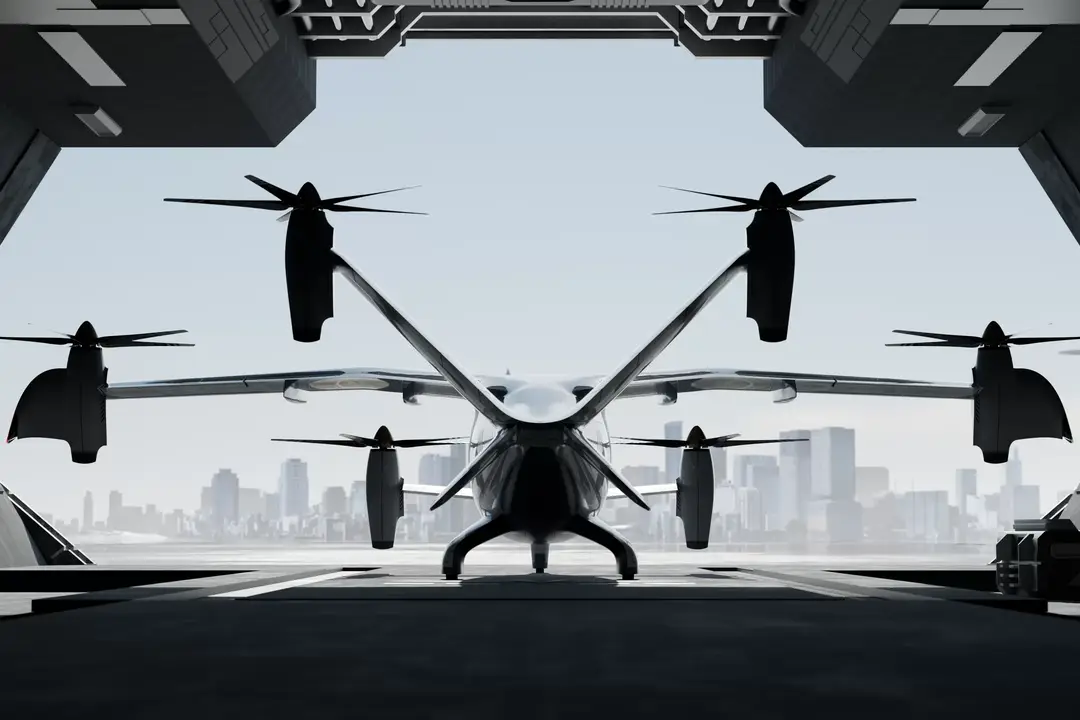
ZeroG stands out as one of the few manufacturers focusing on both eVTOLs and eCTOLs. For readers unfamiliar with the jargon, eVTOL stands for electric vertical takeoff and landing aircraft — effectively battery-powered air taxis that can hover and land without a runway — while eCTOL refers to electric conventional takeoff and landing aircraft, which operate more like traditional light planes. According to the company, this dual strategy allows it to generate early revenue with runway-dependent models while continuing to develop technically complex tilt-rotor air taxis for future urban commuting.
ZeroG is not alone in attracting serious investment. Aerofugia — a subsidiary of Geely Auto, one of the world’s top automobile makers — announced in February that it had secured nearly $140 million in new money to fund the certification process for its AE200 six-seat aircraft. Aerofugia claims this marks the largest single financing round in the low-altitude economy sector so far in 2026.
A delayed commercial milestone
While newer competitors are hunting for cash or navigating early flight tests, sector leader EHang has been preparing for a historic global milestone: the first-ever commercial eVTOL flight with paying passengers.
According to CAAC News, EHang was the first company globally to hold all four critical aviation certificates for its EH216-S model as early as 2024. These include a Type Certificate validating that the aircraft’s design meets rigorous safety standards, a Production Certificate allowing mass manufacturing, an Airworthiness Certificate permitting individual aircraft to fly, and an Air Operator Certificate, which permits commercial ticket sales.
Armed with these approvals, the company announced earlier this month that public ticket sales for sightseeing flights in the Chinese cities of Guangzhou and Hefei would begin in March. The planned operation offered a three-to-five-minute ride for an early bird price of about $40, according to Ruyi Aviation. EHang, which posted its first quarterly profit under GAAP standards late last year, is looking for a successful commercial launch to further boost market confidence.
However, as March 31 arrived, the highly anticipated commercial launch had yet to materialize. The company’s booking platforms remained blank, and EHang had not released further updates. This delay likely highlights the immense complexity of fine-tuning operational details and marks a cautious attitude from aviation regulators regarding the safety of autonomous passenger flights in civilian airspace. We will bring you more coverage when EHang officially completes its first commercial eVTOL flight.
Advances in U.S. airspace
Across the Pacific, U.S.-based Joby Aviation is aggressively pushing for its own regulatory green lights. On March 13, the company completed a piloted demonstration flight across the San Francisco Bay, which the company says highlights that quiet, emissions-free flights are nearing commercial readiness.
Meanwhile, the company is entering the most rigorous phase of its certification journey. According to The Motley Fool, Joby has rolled out its first production prototype to participate in the Federal Aviation Administration’s (FAA) Type Inspection Authorization tests. This represents the crucial fourth phase of the agency’s five-step approval process, where government inspectors closely examine individual aircraft systems and overall flight performance. A successful testing phase would pave the way for a carrier certificate, legally clearing the skies for Joby’s U.S. air taxi business.
Policy pushes in Beijing and Washington
This flurry of corporate fundraising and flight testing is largely driven by ambitious new regulatory blueprints in both Beijing and Washington.
In China, the latest Five-Year Plan explicitly outlines the promotion of the “low-altitude economy.” The economic development plan emphasizes refined airspace management, dedicated new infrastructure like landing pads and communication networks, and the expansion of low-altitude consumption — shifting aviation from a pure commercial utility to a regular consumer experience.
Washington is rolling out similar policy support. “Under the direction of President Trump”, the FAA recently introduced the eVTOL Integration Pilot Program. The program aims to accelerate the safe deployment of advanced air mobility vehicles by forming public-private partnerships with state and local governments. Joby Aviation says it has already been selected as a partner under this White House-backed initiative, giving the company the opportunity to begin early operations across 10 states as the global race for the sky continues.
Sources:
- 从“能不能飞”到“飞得更好”,零重力稳坐低空经济第一梯队
- 还剩最后两天,亿航会不会放鸽子?
- Joby Aviation Just Launched Its Most Crucial Aircraft Yet. Here’s What That Means for the Stock.
- Joby Completes Piloted Electric Air Taxi Flight Across San Francisco Bay and Around the Golden Gate
- eVTOL适航认证:TC AC PC傻傻分不清?
- 2026开年低空经济最大单笔融资落地 沃飞长空再添近10亿资本重注
- The eIPP: What You Need to Know