

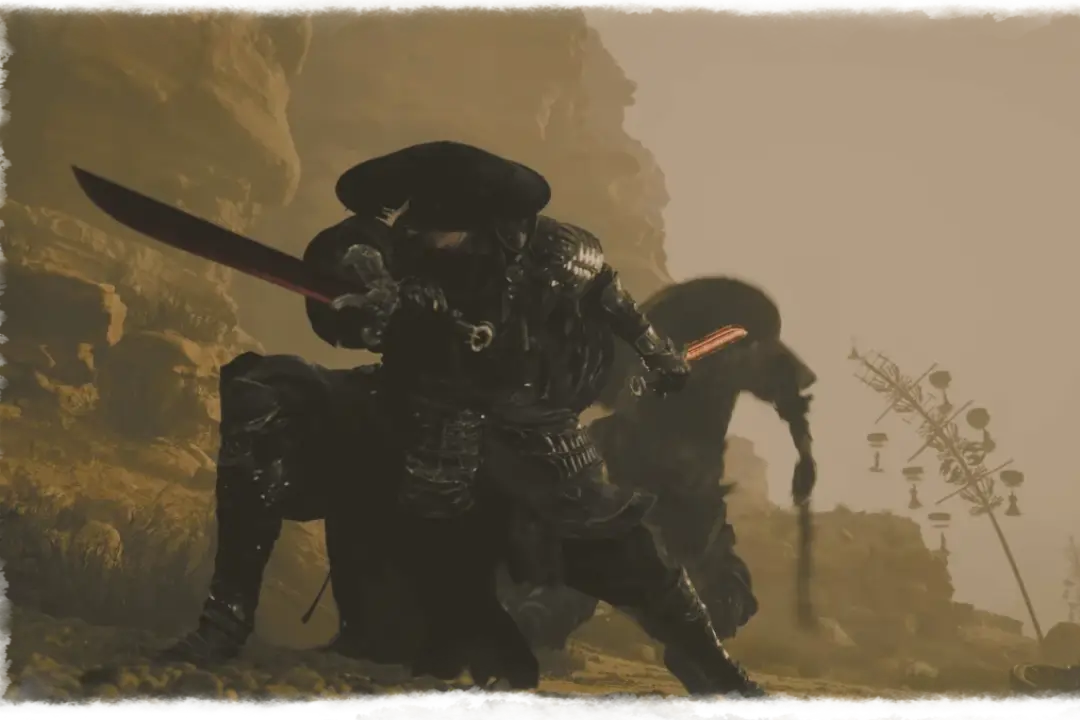
Tencent-backed Lingyoufang’s kung fu punk epic sold over 4 million copies in 72 hours, generating estimated revenue of more than 1 billion yuan.
By Huang Zixiao
Chinese game developer Beijing Lingyoufang Network Technology has recouped the estimated development cost of its brand martial arts action title Phantom Blade Zero within 72 hours of its global launch, after selling more than four million copies. The success marks another major commercial breakthrough for China’s emerging AAA gaming industry, following Black Myth: Wukong.
The game marketed under the brand S-Game was launched globally on Oct. 29. On Nov. 2, the studio announced that combined sales across platforms had exceeded four million copies. At the mainland China standard-edition price of 268 yuan ($40.1), that would imply gross sales revenue of more than 1 billion yuan, although actual revenue will vary by market and platform.
Founder Liang Qichao has previously put development costs at between 300 million and 400 million yuan, meaning the game potentially recovered its development investment within three days.
The studio has received four rounds of funding since its establishment in 2011, with investors including ZhenFund, NetEase Capital, Hero Entertainment affiliate Yan’an Haoyu and Tencent (0700.HK).
Strong sales and international reception
Phantom Blade Zero topped Steam’s global best-seller chart on launch day, ranking first in markets including the U.S. and UK. Its peak concurrent player count exceeded 830,000 on Nov. 1, setting a record for a single-player game in 2026.
Initial user reviews were mixed, with the approval rating briefly falling below 80%. As players spent more time with the game, however, the rating recovered to above 90%. By Nov. 12, it had accumulated more than 100,000 reviews, with 94% positive feedback.
The PC version scored 88 on Metacritic, while IGN’s U.S. edition awarded it nine out of 10.
The game combines traditional Chinese martial arts with steampunk aesthetics, a style Liang describes as “kung fu punk“. Hong Kong action star Donnie Yen has served as creative director since 2023, also providing motion and facial capture for the character Abyss.
From NetEase to Tencent
Lingyoufang was founded in August 2011 by Liang, a Tsinghua University architecture graduate who later earned a master’s degree from Yale University.
Its early investors included ZhenFund, which provided several million yuan in angel funding in December 2011, and NetEase Capital, which invested several million U.S. dollars in 2013. NetEase’s Leihuo division subsequently held a 22.55% stake.
In March 2018, the studio brought in Yan’an Haoyu, an investor associated with Hero Entertainment.
The ownership structure changed significantly from 2021, when NetEase and ZhenFund exited. Liang said in a public letter that their investments had reached the end of their terms and the founding team had bought back the shares. He acknowledged that the studio’s continued investment in the game involved substantial financial risk.
Tencent entered in September 2021 through Guangxi Tencent Venture Capital, acquiring a 25% stake. Following the exit of Hero Entertainment’s Hero Quantum investment fund in February 2023, Tencent’s holding rose to 26.3%.
Liang said Tencent had approached the studio after learning of its plans to develop a major PC and console game. The investment came with assurances that Tencent would not interfere in management, tie funding to product partnerships or influence creative decisions.
The latest ownership structure gives Liang a direct 36.1% stake, while an employee shareholding platform holds 35.2%. Tencent remains the sole external shareholder, with 26.3%.
A similar structure can be found at Game Science, developer of Black Myth: Wukong, where founder Feng Ji and employee investment platforms collectively hold the majority, with Tencent owning 24%.
Can it repeat the Black Myth phenomenon?
The comparison with Black Myth: Wukong is inevitable. That game sold more than 10 million copies in its first three days after launching in August 2024, with peak concurrent players exceeding 2.4 million. Its cumulative sales have since surpassed 30 million copies, including more than 23 million on Steam.
Phantom Blade Zero has yet to match those figures, but the two games have different starting points. Black Myth draws on the hugely popular literary property Journey to the West, while Phantom Blade Zero is an original intellectual property built around martial arts, Hong Kong action cinema and dark fantasy.
Feng publicly congratulated Liang’s team on launch day, praising its two decades of accumulated experience. He later highlighted the game’s improving review scores, saying that games ultimately are made by people who love them for people who share that passion.
Building global intellectual property
The early commercial success gives Lingyoufang greater scope to develop the franchise beyond gaming.
Liang has discussed potential sequels and downloadable content, as well as ambitions to develop the original property into a broader entertainment universe spanning animation and film. He said, however, that the studio would first focus on establishing the game’s market success.
International expansion is already under way. In August, the Hong Kong government’s InvestHK promotion agency announced that Lingyoufang had established a new office in the city to handle publishing, distribution, marketing, international trade and cross-media intellectual property development.
The studio’s art centre is also based in Hong Kong, with several Hong Kong film fight choreographers contributing to the game’s action sequences.
Marketing director Li Li said Hong Kong offered the talent, business environment and cultural connections needed to support international distribution and future licensing and screen adaptations.
The studio is also expanding distribution channels. Migu Games, which is operated by China Mobile-backed Migu Interactive Entertainment, launched Phantom Blade Zero as its exclusive cloud gaming title on Oct. 29, allowing players to access the game through smartphones, televisions and in-car systems without high-end hardware.
Source:
21st Century Business Herald