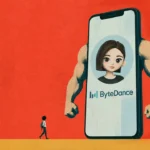

The StepX Neo is priced cheaper to attract users and narrow the gap with ByteDance’s Doubao, but its AI agent still has a long way to go.
By Song Sihang
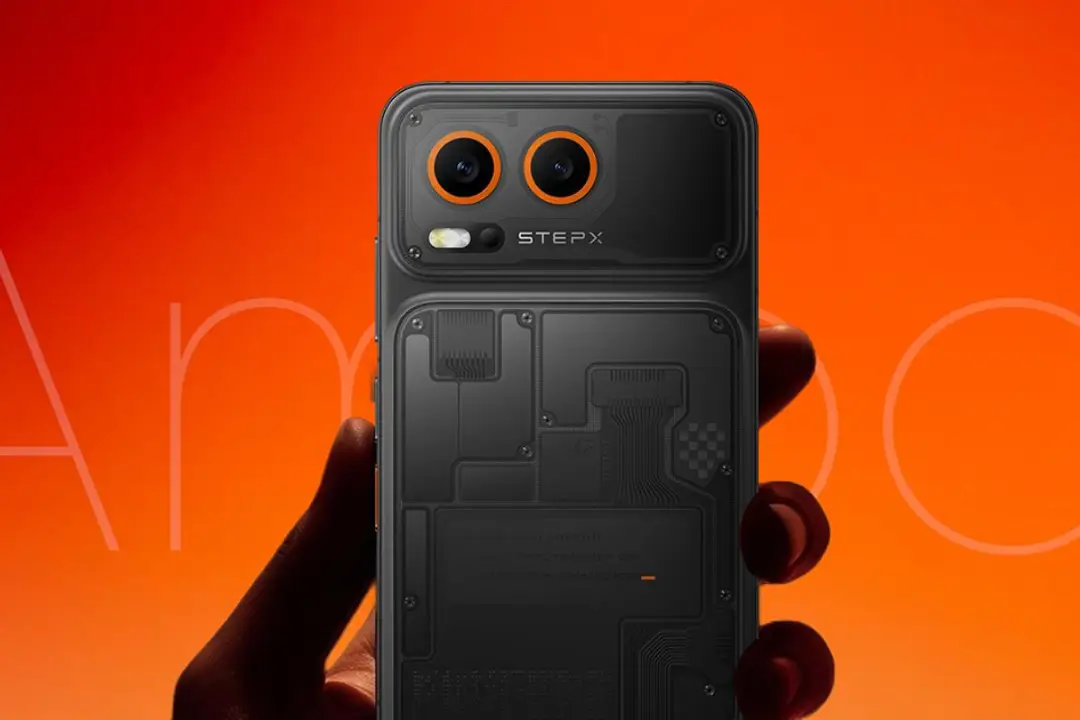
Chinese AI startup StepFun has launched its first agent-powered smartphone at 3,999 yuan ($598), undercutting ByteDance’s rival Doubao phone by 2,000 yuan as the two companies compete to bring AI agents to consumers.
The StepX Neo was unveiled on the evening of Oct. 13, following ByteDance’s launch of its first Doubao agent phone in September, and went on pre-sale that night on JD.com, Tmall and Douyin, with official sales beginning at 10:13 a.m. on Oct.16.
StepFun also announced its STEPX Token Plan, offering users 10 billion tokens a month for free.
With the market for agent-powered smartphones still unproven, a lower price could be the most straightforward way to persuade consumers to try the technology. But StepFun is also pursuing a different product strategy from ByteDance.
The StepX Neo places greater emphasis on voice interaction, with six microphones designed to let users issue commands more naturally. Lightweight construction and industrial design were also prominent themes at the launch. StepFun Chairman Yin Qi repeatedly invoked Steve Jobs’s design philosophy, underscoring the company’s ambition to rethink how people interact with their phones.
The bigger change, however, is supposed to be how the devices are used.
Traditional smartphones require users to switch between apps to search for information, compare options, enter details and place orders. Agent phones aim to hand these steps to AI: users state what they want, and the phone plans and executes the task.
Open ecosystem, unfinished product
StepFun is also emphasizing an open ecosystem. Unlike ByteDance’s approach with Doubao, the company wants the StepX Neo to work across a broad range of third-party apps rather than remain confined to its own products.
Yin said StepFun had built its Amoo personal AI agent in 100 days and secured partnerships with nearly 100 ecosystem players, including Alipay, Tencent, Trip.com, Didi, Jianying, Amap and Meituan. Amoo is integrated into the StepX Neo.
The ambition is to turn the phone into more than a voice assistant: an agent that can coordinate different apps and complete tasks from information searches through to transactions, without users needing to know which app handles each service.
But a hands-on test by Huxiu highlights the gap between that vision and the current product.
At the launch, we asked the StepX Neo to order a cake and deliver it to a specified hotel. The agent failed to complete the request and instead returned to the previous task.
Staff said the product was still at version 1.0, with more scenarios to be developed and improvements needed in app compatibility and system stability.
One failed test is not enough to judge the phone as a whole. We also observed successful demonstrations across several everyday scenarios. Nevertheless, the experience exposed a broader weakness: even simple tasks can take too long to execute.
This is a problem facing the entire agent-phone sector. An AI chatbot that gives a poor answer can be prompted again. An agent that fails to place an order or arrange travel may force users to retrace its steps, check what went wrong and finish the job themselves.
That undermines the central promise of the technology: saving time.
Different bets on the AI market
Consumers can readily assess conventional smartphone features such as screen quality, battery life, cameras and processor performance. Agent phones, by contrast, are selling an interaction model that is not yet fully mature.
Their value depends not simply on answering questions, but on reliably completing tasks. If users must repeatedly check whether an agent has understood a command, opened the right app or finished an operation, the efficiency gains quickly disappear.
That leaves a fundamental question: why should consumers spend 3,999 yuan on a phone whose defining capabilities still need work? The lower price makes experimentation more affordable, but remains a significant outlay when existing smartphones already meet most everyday needs. There is also no clear timeline for when agent phones will become sufficiently reliable.
The competition reflects different strategic priorities at the two companies.
ByteDance has partnered with ZTE to put Doubao’s agent capabilities into a smartphone rather than establish its own handset brand. StepFun, by contrast, has recruited hardware talent from companies including Honor and built its own device team. It is selling the StepX Neo under the StepFun Terminal brand.
Yin has said the phone is only the first step, with AI potentially extending to computers, cars and other devices.
StepFun’s additional burdens
The approaches carry different costs and risks. ByteDance can use the handset as a vehicle for extending Doubao’s existing AI capabilities to new devices, potentially working with other manufacturers without relying on sales of a single model. StepFun is entering the hardware market directly, taking on the additional burdens of hardware development, supply chains, distribution and after-sales service, as well as integrating its models with the operating system.
The companies also start from very different positions in the consumer market. ByteDance has built a substantial user base through Doubao and continues to invest in its foundation models. StepFun has its own large-model capabilities, but trails Doubao in both overall model competitiveness and consumer reach.
Agent phones offer StepFun a way to address that disadvantage by creating a new route to users.
For ByteDance, the opportunity is to extend existing advantages in models and user numbers into hardware. For StepFun, it is a chance to compete directly for smartphone users rather than rely on the growth of a standalone AI app.
The StepX Neo’s 2,000-yuan price advantage is therefore more than a pricing decision. It could help StepFun lower the barrier to adoption, attract buyers and gather real-world usage data and feedback. Whether that strategy works will depend on how quickly the company can turn its agent’s promise into reliable performance.
Source:
Huxiu via AGI Jiekou