
By Da Cheung
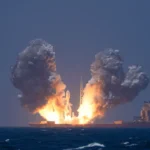
CAS Space launched its Kinetica-1 rocket for the 12th time on April 14, placing eight high-resolution optical remote sensing satellites into orbit. The mission pushes its total satellite deployments to 92 satellites, with more than 12 tons of payload successfully delivered to orbit.
For a company aiming to become the dominant force in China’s commercial space sector, this string of successful launches is part of an ambitious blueprint to industrialize the business. Yet, beneath the steady rhythm of successful liftoffs, China’s private space industry is grappling with harsh financial realities, intense domestic competition, and a long road ahead to challenge international giants.
A race for scale and lower costs
The latest launch mission is part of CAS Space’s broader strategy to normalize frequent launches in a wide range of business areas including dedicated “chartered” flights for major satellite networks, cost-sharing “rideshares” for smaller operators, and highly discounted “piggyback” opportunities for experimental tech. By standardizing its rockets, the company says it has shortened its manufacturing assembly cycle to just one month.
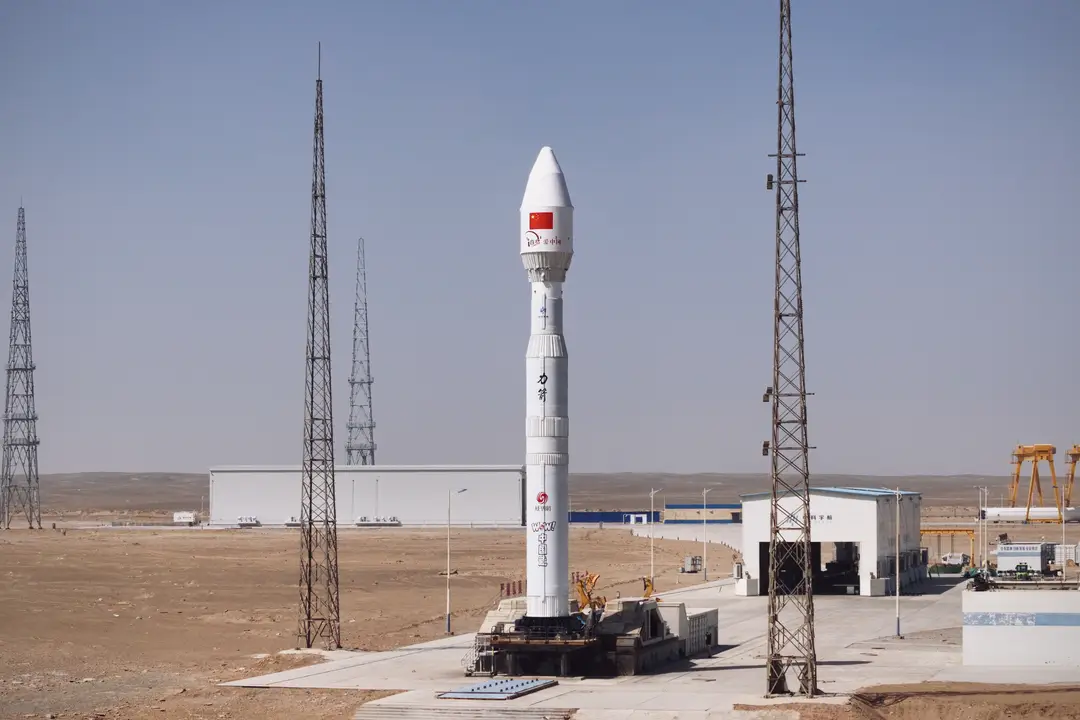
This push for scale follows the March 30 maiden flight of the company’s heavier rocket, Kinetica-2. Designed for large-scale deployments in low-Earth orbit — an altitude relatively close to the planet where most commercial communication constellations operate — Kinetica-2 represents a major leap in payload capacity and aims to serve both constellation building and space station cargo transport.
CAS Space is making bold claims regarding its future pricing to compete globally. Yang Haoliang, the general commander of Kinetica-2, told the 21st Century Business Herald that the cost of a single non-reusable Kinetica-2 launch is already roughly equal to a launch of a reusable SpaceX Falcon 9. Once Kinetica-2 achieves reusability, Yang says, the cost is expected to drop to half that of its U.S. counterpart.
However, there is a heavy financial toll to developing these technologies. CAS Space recently filed for an initial public offering on the Shanghai Stock Exchange’s STAR Market seeking to raise 4.18 billion yuan ($580 million). Its filing shows it has accumulated a net loss of nearly 3.9 billion yuan over the past four years, a reflection of the massive research and development costs inherent in rocketry.
The broader landscape of China’s commercial space market is also increasingly crowded. CAS Space was set up in 2018 by the Institute of Mechanics, part of the Chinese Academy of Sciences, a state-funded think tank, and is backed primarily by various investment arms of the academy. While SpaceX holds a commanding lead in the United States, the Guangzhou-based company shares the domestic market with rivals like LandSpace, Space Pioneer, and Galactic Energy.
The global race for space computing
Beyond launching traditional satellites, China’s space enterprises are testing entirely new, albeit highly experimental, business concepts. Tucked inside one of eight satellites launched on April 14 was a computing product developed by Singularity Atlas, a startup that develops satellite-based data processing systems and was incubated by Chinese robot vacuum manufacturer Dreame Technology.
According to Jiemian News, Singularity Atlas previously tested its “Yaotai” computing base station on a separate rocket in March. It ultimately aims to deploy 2 million data-center satellites. By placing servers directly into orbit, the company hopes to process massive artificial intelligence workloads in space — leveraging cosmic cooling and uninterrupted solar energy — rather than sending raw data back to Earth’s increasingly power-constrained data centers.
This ambition mirrors a growing, yet deeply speculative, global trend. In early 2025, U.S. firm Lonestar Data Holdings tested a miniature data center which hitched a ride to the Moon on the Athena Lunar Lander launched by a SpaceX rocket.
Meanwhile, SpaceX has reportedly made a confidential filing for an IPO to raise as much as $75 billion to fund its ambitions. These include a proposed expansion involving the launch of up to 1 million satellites to support an orbital data-center network for artificial intelligence workloads. Although that ambition is widely seen as highly speculative, it’s a target that may have inspired Singularity Atlas’s own 2 million plan.
Despite the enthusiasm, placing AI infrastructure in space faces immense financial challenges. Analysts at US independent equity research firm MoffettNathanson forecast that SpaceX’s plan could cost trillions of dollars. Furthermore, experts told Reuters that for orbital data centers to become commercially viable globally, payload launch costs must plummet from the low thousands of dollars per kilogram today to the low hundreds. Against this reality, Singularity Atlas’s grand push for a celestial server farm remains a highly distant prospect.
Sources: