
By Wang Yajie
China’s commercial space sector is rushing toward the capital markets, with more than 10 companies pursuing initial public offerings as industry executives and investors warn that 2026 could be a make-or-break year for the sector’s future.
The pace of IPO offerings has gathered pace over the past month. On May 14, Guoxing Aerospace submitted its prospectus to the Hong Kong Stock Exchange for a third time, aiming to become the bourse’s first listed “space AI” company. The company, also known as ADA Space, focuses on space-based AI computing power.
Its filing adds to a growing pipeline of commercial space IPO candidates, including private rocket makers Galactic Energy and LandSpace, as well as state-backed Expace Technology.
“This year is a life-or-death IPO window for commercial space companies,” a person close to Expace said. “Miss it and you risk being left behind.”
The urgency stems from a convergence of industrial, regulatory and financial pressures. According to Wang Xing, chief telecommunications and defense analyst at Huatai Securities, 2026 marks the beginning of large-scale commercial production for China’s space industry, as reusable rockets, low-Earth-orbit satellite constellations and commercial applications move from testing to deployment.
The contrast between technical success and capital market priorities was evident in January. On Jan. 17, both a state-backed Long March 3B launch and Galactic Energy’s Ceres-2 rocket failed. Just five days later, LandSpace’s application to list on Shanghai’s STAR Market advanced to the inquiry stage after only 22 days.
For investors, a failed launch is less important than securing access to public capital.
Constellation race drives funding demand
A major catalyst is the rapid build-out of China’s satellite networks.
After initial launches in 2024 and 2025, the GW constellation, backed by China SatNet and targeting around 13,000 satellites, and the Spacesail (Thousand Sails) constellation, which plans roughly 14,000 satellites, are entering a phase of intensive deployment.
Industry participants say 2026 and 2027 are critical years for securing orbital and spectrum resources under International Telecommunication Union rules. Large-scale constellation construction will require huge numbers of rockets and satellites, creating the growth story that underpins many IPO plans.
“The constellation story has reached the point where it must be told,” said an executive at a state-owned aerospace company. “If those deployment expectations fail to materialize, many valuations would need to be reassessed.”
Policy support has also helped. At the end of 2025, the Shanghai Stock Exchange issued guidance supporting commercial rocket companies seeking STAR Market listings even if they had not yet achieved substantial revenue. Industry executives believe this support may be temporary and that listing requirements could tighten once the sector consolidates.
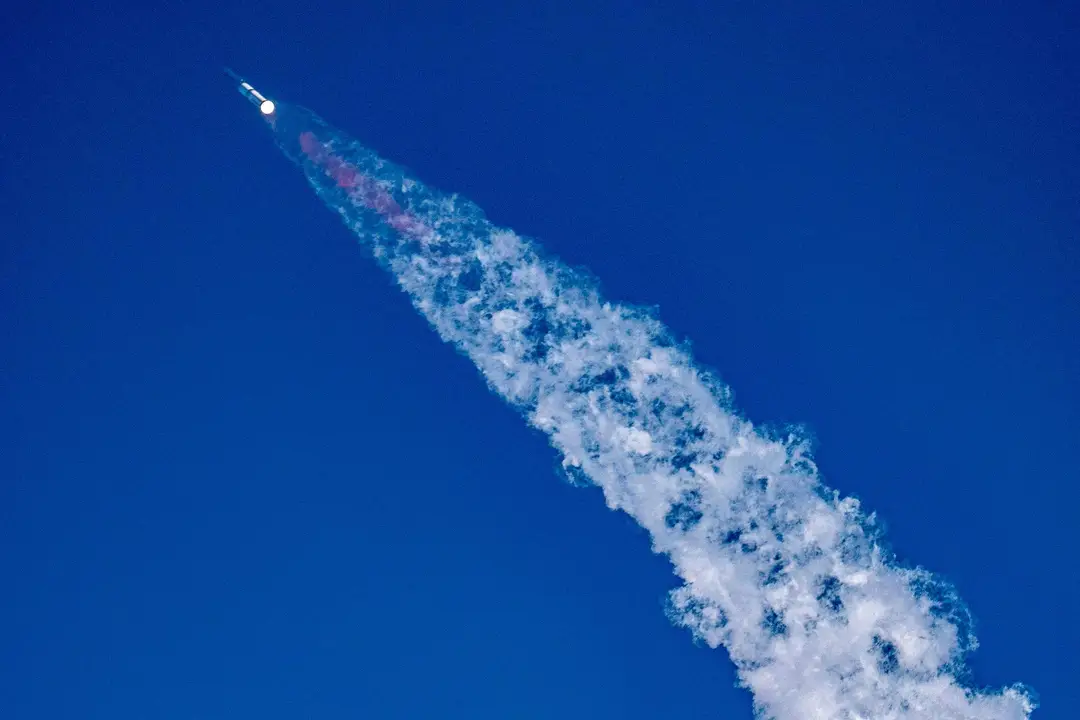
External competition is adding pressure. SpaceX is going public on June 12 with a valuation that could approach $2 trillion. Chinese industry observers fear that widespread deployment of its Starship rocket could sharply reduce launch costs and intensify global competition.
Giving investors an exit route
Behind the IPO rush lies growing anxiety among venture capital investors.
Many early backers have reached the point where they need liquidity, and public listings are viewed as the most viable exit route.
Galactic Energy completed a 2.4 billion yuan ($354 million) Series D financing round in 2025, valuing the company at 15.8 billion yuan. Guoxing Aerospace raised 3.55 billion yuan in a pre-IPO round in April, lifting its valuation to 11.55 billion yuan after three listing attempts.
“Without a listing, future fundraising becomes much harder,” said an executive at another commercial space company pursuing an IPO.
Yet losses remain substantial. Guoxing Aerospace reported 2025 revenue of 703 million yuan but a net loss of 256 million yuan, up 45% from a year earlier. Like many peers, it faces high research and development costs, limited revenue and a concentrated customer base.
Analysts say investors are valuing the sector based largely on future participation in China’s expected satellite internet and space economy markets, rather than current profitability.
State capital takes center stage
Expace represents a particularly notable case.
The company is undergoing a major restructuring after Wuhan state-owned investors acquired a controlling stake, shifting it from central government control to local state ownership. The process requires extensive governance and compliance changes, slowing its IPO timetable.
Supporters argue that the model can work if the company retains its technical expertise while gaining access to local government funding and industrial resources.
Expace also faces technological challenges. Its main products are solid-fuel rockets, while much of the industry is shifting toward reusable liquid-fuel launch systems. Its reusable liquid rocket, Mingfeng-1, remains under development and has yet to make its maiden flight, potentially weakening its IPO case.
Despite such hurdles, state-backed funds have become increasingly important investors across the sector. Government capital provides financing and credibility, while private management teams focus on commercialization before seeking a stock market listing.
For the industry, however, the real challenge may begin after the IPO.
“The question is not whether these companies can go public,” said an investment banker involved in the sector. “The real question is whether they can create sustainable cash flow after listing, the way Starlink has for SpaceX.”
For China’s commercial space industry, 2026 may fire the starting gun — but it won’t be the finish line.
Source:
Economic Observer